

Every click, every load, every page you see — it's all the result of systems working behind the scenes.
You just don't notice it at first.
Until one day, something small catches your attention…
A tiny lock icon in your browser.
Most people ignore it. Some trust it blindly.
But that small symbol carries one of the biggest meanings on the internet.
The Internet Without the Lock:
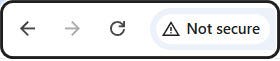
Imagine you open a website that shows "Not Secure" in the browser.
You enter your email and password to log in.
But behind the scenes, that information is being sent without encryption.
This means anyone on the same network — like public Wi-Fi — could potentially see your data.
The Problem No One Notices:
Now imagine you're connected to public Wi-Fi at a café.
You log in to a website that doesn't use HTTPS.
An attacker on the same network can:
- Capture your login request
- Read your username and password
- Even modify the data being sent
And the worst part?
You won't even notice it happening.
Enter HTTPS — The Secure Layer:
HTTPS is just HTTP with an extra layer of security.
That extra "S" stands for Secure.
It uses encryption (via SSL/TLS) to protect communication between your browser and the server.
Now the data is:
- Encrypted
- Protected
- Verified
Instead of a postcard, it's like sending a locked box.
Only the receiver has the key.

What Actually Changes?
From the outside, nothing looks different.
You still:
- Type a URL
- Press Enter
- Load a page
But behind the scenes, everything changes.
- Encryption:
Your data is scrambled before being sent.
Even if someone intercepts it, they can't read it.
2. Integrity:
The data cannot be modified during transmission.
If someone tries to change it, the connection will fail.
3. Authentication:
HTTPS ensures you are talking to the real website — not a fake one.
This is done using digital certificates.
Why It Matters More Than You Think:
Without HTTPS:
- Passwords can be stolen
- Sessions can be hijacked
- Data can be exposed
With HTTPS:
- Communication becomes secure
- Users are protected
- Trust is established
From User to Thinker:
Before learning, a website is just something you open. After learning, it's something you question.
You stop trusting what you see. You start questioning what's happening.
Is this connection secure? Is my data exposed? Who else can see this?
The internet doesn't feel simple anymore. It feels layered. Intentional. Vulnerable.
And that small lock icon?
It's no longer just a symbol — it's the difference between trust and risk. 🔐