"Before attacking, first know the target." This phrase is almost always a key principle in the world of web security. The most important starting points in web security testing are: information gathering, service enumeration, and vulnerability identification.
Why is Information Gathering Important?
In web security, information gathering is the process of gathering information about a target website without directly exploiting it.At this stage, we can find out:
- What technology does the website use?
- What server and CMS are used?
- Are there any sensitive endpoints?
- Potential security vulnerabilities?
The more complete the information, the more focused the security testing process will be.
A. Information Gathering & Service Enumeration
1. Information Gathering
Some basic information that is usually collected:
- Domain & IP Address
- Web server (Apache, Nginx, etc.)
- Language & framework
- CMS (WordPress, Joomla, Drupal)
- Directory structure
Command Example
WhatWeb

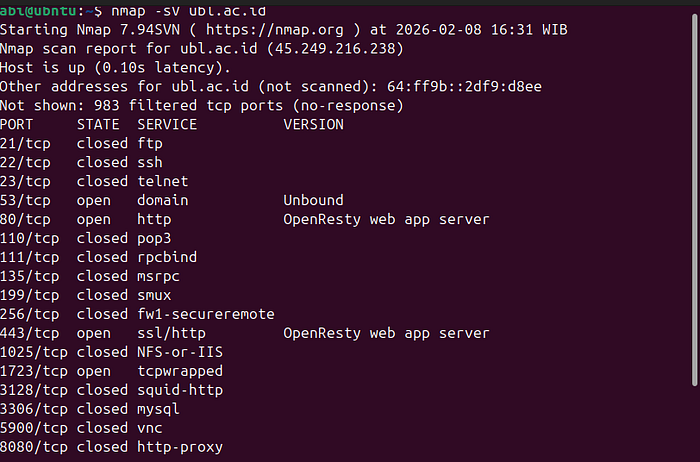
Nmap (Service Enumeration)
2. Service Enumeration on Web & CMS
Once you understand the technology, the next step is service enumeration. The focus is:
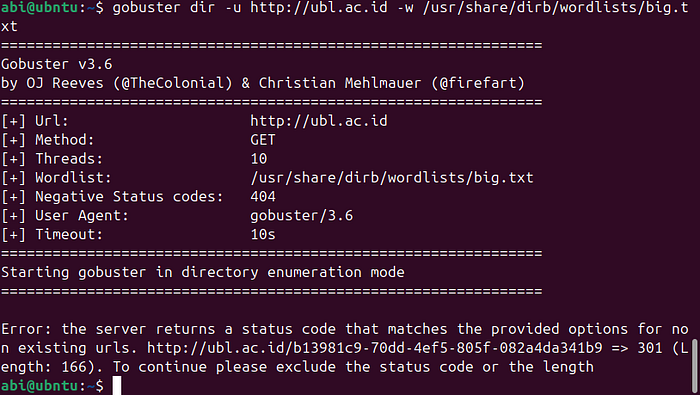
- Hidden directories
- Admin pages
- CMS plugins & modules
- Sensitive endpoints
Command Example
Gobuster (Directory Enumeration)
Nikto (Web Server Scanner)

B. Web Application & CMS Vulnerability Identification
Vulnerability identification stage. Here, the focus is on finding security holes, not directly exploiting them. Common vulnerabilities:
- SQL Injection
- XSS
- Broken Authentication
- Vulnerable CMS plugins
- Security misconfiguration
Vulnerability Scanner Tools + Commands OWASP ZAP
An open-source tool for scanning web vulnerabilities. Basic mode:
zap.sh -quickurl http://example.comfor:
- Early XSS detection
- SQL Injection
- Misconfiguration
WPScan (WordPress)
Specifically for WordPress CMS.
wpscan - url http://example.com - enumerate p,t,uUsed for:
- Plugin enumeration
- Theme enumeration
- Check WordPress users
- Detect vulnerable plugins
CMSmap
Multi-CMS enumeration & vulnerability scanner.
cmsmap http://example.comSupports:
- WordPress
- Joomla
- Drupal
Don't Scan Randomly!
While tools are helpful, scan results aren't always 100% valid. There are many possibilities: False positives,Patched vulnerabilities, Special server configurations Therefore, tool results should be analyzed, not taken at face value.
Conclusion
Information gathering and service enumeration are the main foundations of web security. Without these steps, vulnerability scanning will be unfocused. By understanding:
- Web technology
- CMS structure
- Running services
- The right tools
A security analyst or pentester can conduct security testing more effectively and systematically.
Sources:
https://levelup.gitconnected.com/information-gathering-first-step-towards-website-hacking-462dcad56c5a https://hack.technoherder.com/website-enumeration/ https://0xsanz.medium.com/web-enumeration-methodology-8b44e52730d6 https://www.thehacker.recipes/web/recon/cms