June 3, 2026
Nairobi is Cold, the Ugali is Perfect, and Nobody is Talking About Cybersecurity on the…
A practitioner’s journal from Nairobi and Entebbe. PART 2

Jed
5 min read
The Hacktive Campaign at CBD: Fliers, Scepticism, and Grace

I brought my work with me. Part of what I do through The Hacktive Campaign is take cybersecurity awareness to the streets, radio stations, community spaces, and anywhere the message hasn't fully landed yet. In Nairobi's CBD, I spent time distributing fliers. Printed, physical, deliberately approachable.
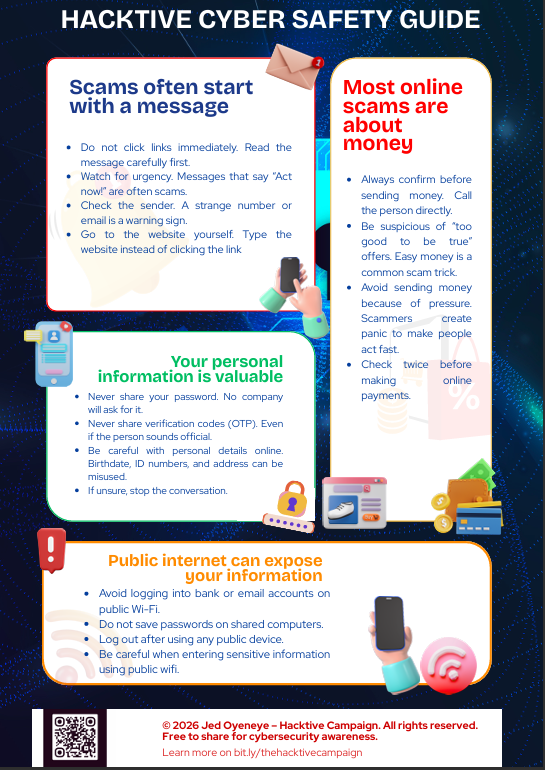
The majority of people took them. Not grudgingly, albeit, with genuine curiosity, reading as they walked away or folding them carefully into bags. A few declined. The declinations were interesting: there was a particular body language to them, to wit, a slight recoil, a polite but firm refusal and that, I recognised. In Lagos it reads as suspicion of an approaching stranger. Here it read the same. There is a universal urban assumption that someone handing you something unsolicited either wants your money or is about to inconvenience you. Healthy scepticism, honestly. I understand it. In cybersecurity awareness terms, that scepticism is actually the correct first reflex to anything at all. It just needs redirecting toward the right threats. That's the Zero Trust mindset.
The majority who accepted gave me something I hadn't expected as strongly: engagement. People stopped. People asked questions. The appetite for this information, in the middle of a busy East African CBD, from people with phones in their hands and M-PESA running their lives, was real and it was warm.
The Conference, the Emirati, and the Inconvenient Truth About African Markets
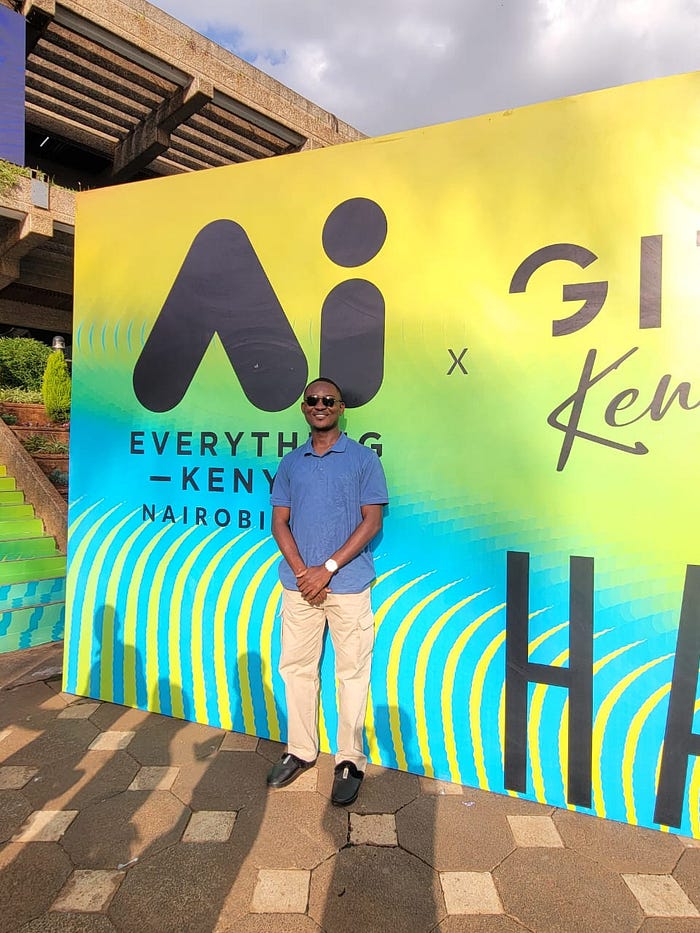
AI Everything Nairobi was energising. It was a gathering of founders, researchers, policymakers, and practitioners who are thinking seriously about where artificial intelligence intersects with African realities. The energy in the room was the particular kind you find when people are working on problems that feel genuinely consequential.
But the conference didn't run uninterrupted.
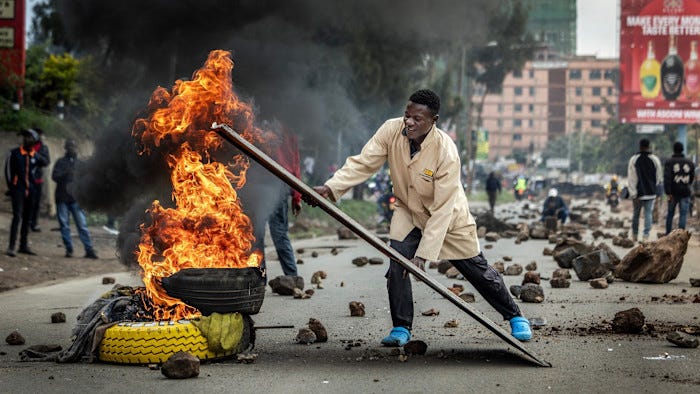
The unrest over fuel prices cast a shadow over the proceedings for a day or so. Kenya's recurring friction between government fiscal policy and street-level economic pain had surfaced again. Fuel prices had been raised sharply amid global oil supply disruptions, with petrol increasing by over 16% and diesel surging by more than 24%, which triggered transport strikes and protests that blocked major roads into Nairobi. The streets outside told a different story from the optimism on the conference stage. As reported by CNBC Africa.
During one of the breaks, I found myself in conversation with an Emirati businessman whose trade was plied in hardware distribution, pan-African operations. He was a man who had clearly been doing this long enough to have an unsentimental view of the continent. We were talking about expansion, about the digital economy, about where the opportunities were sharpest. And then he said something I have been thinking about ever since.
"The biggest challenge with trading in Africa is not logistics. It's not even regulation. It's that you build something solid, you establish a presence, you invest and then something happens. Political instability. Civil unrest. A fuel crisis. Something. And everything pauses."
He was not dismissive. He said it with the weariness of someone who had experienced it enough times to have learned not to be surprised. He was right, and the honesty of it stung a little, because he was not wrong. The continent's promise and the continent's instability have always lived in close proximity. The best response I could give was that every major market in the world carries political risk. The question is whether the institutions and infrastructure have matured enough to absorb shocks without full collapse. Kenya, for all its turbulence, mostly has. But the perception lingers, and perception shapes investment flows in ways that compound the underlying problems.
What Everyone Knows About Nigeria
At various points during the trip including at the conference, in casual conversation, at a hotel bar, I told people I was from Nigeria. Some could tell without having to ask. The responses formed a pattern that I am still processing.
Some: Juju. Said with the particular weight of genuine belief, not irony.
Some: Scam. 419. Said quickly, as a reflex, before anything else.
Some, encouragingly: Jollof rice. Which I accepted with pride.
And others, more than I expected, and this genuinely moved me: Pastor Nathaniel Bassey. Dunsin Oyekan. Nigerian gospel music, crossing borders, carrying a different image of the country than the one that leads every conversation.
That last category gave me something to hold onto. Against the backdrop of the 419 association, the juju caricature, the accumulated weight of decades of negative international framing, Nigerian gospel artistes are doing quiet cultural diplomacy that no government campaign has matched. People knew the songs. People knew the names. And their eyes changed when they made the connection.
This is why the image laundering problem matters so deeply. I had a conversation during the trip with a government official, a senior figure, and at some point Nigeria came up. What followed was a casually delivered inventory of Nigerian stereotypes, offered without embarrassment, as settled fact. I am a Nigerian cybersecurity practitioner. I have spent time working to close the very gaps that produce the reputation being described to me. To be measured against that caricature in a professional context, by a peer from a neighbouring African country, is infuriating in a particular way that motivates rather than deflates.
The solution is not denial. It is not PR. It is sustained, visible, credible work. More Nigerians showing up in spaces like this conference. More Nigerian practitioners publishing, speaking, distributing fliers on foreign CBDs. More of us, everywhere, doing the work loudly enough that the data starts to shift.
The Food. Specifically, the Ugali.
I need to talk about the food because the food was important.
I searched for Nigerian pepper soup. Searched genuinely, with the quiet desperation of someone who has been eating well but not home-well. I found it, eventually, improbably, at BlaBla in Westlands, a club that had no business also being the place where I finally found something that reminded me of Lagos. The discovery was joyful in the specific way that familiar food in an unfamiliar city is joyful. I ate with unreasonable enthusiasm.
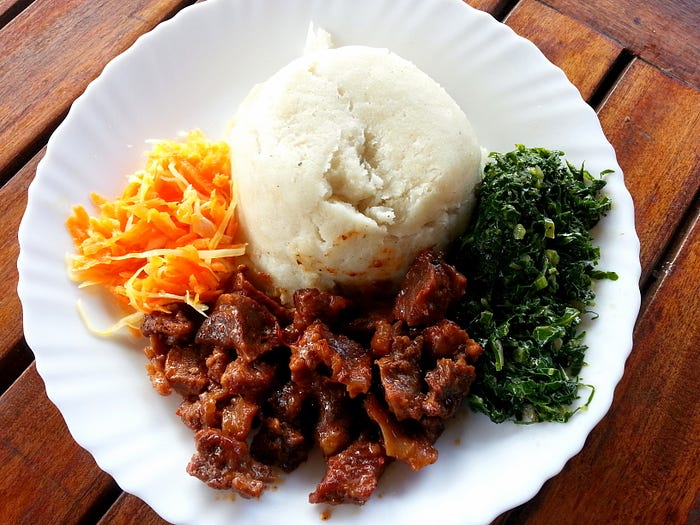
But the meal that owned the trip was ugali. Simple, dense and honest. Eaten with kienyeji chicken and whatever protein was available, at a price that made Lagos's inflation feel particularly criminal by comparison. Nairobi's street food is accessible. A full, proper plate, the kind that actually fills you, cost the equivalent of pocket change. The affordability of good food relative to Lagos is a commentary on economics that I will leave without further elaboration.
Kenyans and tea require a separate paragraph. Tea is not a beverage here. It is a rhythm. You sit, tea arrives, conversation begins. I had more useful conversations over chai than I did in formal settings. There is a social infrastructure around tea in Kenya that I deeply respect and that Nairobi's cold weather makes feel entirely right.
TO BE CONTINUED IN PART 3
I am a cybersecurity practitioner and advocate based in Lagos, Nigeria. I lead The Hacktive Campaign taking digital security education to communities, Media, and anyone willing to listen. If this piece found you, share it with someone who needs it.