
I've been on the internet for about 18 years now, I'm still quite young (turning into my mid-twenties). Back then, when I first got online, I had an incredibly shoddy hand-me-down laptop that released in the year 2000, given to me about 8 years after it came out. Before then I'd had some internet experience using my dad's Dell tower PC for Youtube and some browser gaming (remember Adobe Flash?), but not with the level of unrestricted freedom my own device gave me.
I, and a lot of people who experienced this era of the internet also, remember a time when Youtube and the wider internet was much less commercial. Of course, in 2011 when Smosh was acquired by Alloy Digital we would see the first big change in social media, especially as this happened during the big boom of Facebook and the slow rise of Twitter and Instagram. This wasn't the first incident of commercialisation in what would later be dubbed as "Content Creation" though, years before 2011 google advertisements was providing payouts to creators alongside independent companies like Machinima funding creators throughout this period, of course we know how that ended up.
'Content creation' is a pretty ambiguous term that's used nowadays to refer to most forms of internet published media production, generally due to the easy access nature of creating your own account and publishing as much or as little 'content' as you want with the views and interactions you get being the primary driving force of your revenue. The idea of doing this for free and having the ability to create and make whatever you want on the internet for free, is a core belief of what 'the free internet' is supposed to be. I mean, I am only writing and publishing this article because Medium lets me sign up for free and write what I want.
From a user perspective the internet has shifted from dial-up to router and now mobile data and near permanent connectivity with smartphones. If you reframe it through a cybersecurity lens we've gone through the wild west of the 90s into more structured targeted attacks/data breaches followed by operational & cloud resistance (cloudflare and the growth of cybersecurity as an industry) till now with the rise of AI and the need for cybersecurity to adapt once again. Whenever rapid technological development happens, what follows is short periods that are defined by their key events or traits. In turn with fast development of any field or platform, the misunderstanding of terms as well as new definitions/phrases/concepts quickly becoming outdated ends up affecting the surrounding culture. The speed at which we moved from forum culture to modern social media has already made a lot of words dissipate from the zeitgeist, RSS feeds or IRC anyone?
My favourite example of this is the caution exercised around public wi-fi, and where this originated from. Back in the nineties and noughties, most websites would use HTTP, which simply stands for Hypertext Transfer Protocol. All it does is use a hypertext link, like this, to load a webpage.
Now, what you might have noticed (or already know about) is that at the start of links nowadays you will see 'HTTPS' rather than HTTP. That extra 'S' at the end stands for 'Secure', and it refers to the fact that HTTPS communications are encrypted, whereas HTTP was not. The same applies to wi-fi with and without a password. When you use your home wi-fi (assuming its password protected), that password is actually your encryption key. So, any data sent to a site, even using HTTP, is encrypted on your local network. But if you connect to public wi-fi and then connect to a server via HTTP, all of your data would be sent in open-air and could be read by a network adapter that had been toggled to promiscuous mode.
It only required a malicious actor with the right equipment and a public network with people sending important data via HTTP to steal credit card info or bank details. However, since the 2010s this problem was almost entirely faded out, and during that decade most smart phone apps would end up using encrypted communications by default around 2016 onwards, as well as most websites today using HTTPS and your browser warning you if you connect to a site that is not using HTTPS.
But back in the noughties there was some serious damage caused with this, if you're interested give TJ O'connors book, Violent Python, a read. As it covers how to quickly write a program used to extract data from unencrypted networks and talks about how someone did that to steal credit card information from his hotel room back in 2007.
I'm not going on a tangent to cause paranoia or fear, it just shows how fast development happened in the earlier, much less stable and secure days of the internet. We developed a lot of procedures you don't hear talked about as often now. Public wi-fi still isn't necessarily secure, but you aren't going to have your most crucial data read via open air because you connected to it and there isn't a serious need to push rhetoric now that it shouldn't be used at all (although I argue some education on it is good just to help people decide what they are comfortable with, and you should always verify that your connecting to a legitimate network).
And this applies to the majority of anything and everything about the Internet, a lot of people talk about things they don't know like they have the Akashic records saved to their desktop (that is if they're not using a phone or tablet now) and I have been guilty of this all too many times in my past, especially with parroting the information that using public wi-fi is mortally unsafe without learning why, you can be right and also still need to learn more.
The rhetoric I keep seeing on twitter, is that "the free internet", as we knew it, is dying in the modern day. We're walking towards commercialisation and it's the fault of capitalism and it'll never be the same again and there's bots everywhere, dead internet theory! And well, we all know social media is prone to superfluous usage of buzzwords (just look at how AAVE and other dialects have been appropriated since they became easier for people to discover and learn), but there is some truth and a large amount of misconception involved here, which is the topic of this essay and also why I think it's drastically important that we improve digital literacy across the population.
The free internet has never, and will never, exist.
I've always disliked this term, as much as I agree with it in theory, it's not very practical. The problem being that the internet doesn't operate in real-time. You're downloading and locally reading a webpage, which is why even if your internet goes down you will still be able to finish reading what you've already loaded or buffered, and possibly cached.
Even online games are just a simulation, it's your client (computer) simulating the current state of the game as told to you by the server. In your simulation you'll play the game, send what you did to the server, which then adds that and the actions of the other players, to the server's own recollection of events which it then ships back to you. This is why bad connections and laggy games can seem strange, as the server is reporting to you what it thinks happened. Sometimes it's because you are not receiving information from the server as frequent as you need to be for a smooth experience or because another player is not sending their information to the server quickly or accurately enough for a smooth experience.
This is all layman definitions of how connections between computers work, they're important to talk about because they define what the internet really is. It really is just a connection of wires and servers — a series of tubes even. What do wires and servers incur? Manufacturing, maintenance — Time and cost.
I know I'm taking the term 'free internet' quite literally here, but it goes a lot deeper than just saying "nothing in the world is free." and I'll talk about this later when we cover web services, social media and DNS. Some of you may remember back around 2012 when a collective on Reddit created and tried to pass the Free Internet Act over in the United States. This isn't the first instance of any organisation pushing for a Free Internet, and it never really went anywhere although they tried their best. It did receive a deal of praise, but also some strict criticism for its attitudes to copyright.
As a proposed US legislature, the Free Internet Act was about 4 core points of discussion:
- Privacy.
- Censorship.
- Free speech.
- Copyright.
Privacy is a fundamental right, one that everyone should have the choice to control their own degree of. There has been a lot of progress in this front, and this is an element of the proposed Free Internet Act that we should be striving to implement everywhere. I won't spend long talking about privacy in this article because there is only one stance to be had on it — it is a human right — and GDPR was a gigantic step forward. In terms of the free internet movement, they claim that any actions taken to protect privacy (vpn, private DNS, etc) cannot be illegalised.
Censorship refers to the fact that Federal and State Governments should not be allowed to censor content online other than illegal materials. The free internet act was supposed to be US legislature but any form of ban on censorship is hard to apply on the internet at all, especially as data laws apply to the country within which the data is held unless the law is explicitly written otherwise. This is why GDPR, to some extent, has had a global knock-on effect, as you would lose out the ability to provide your platform to the EU if you don't follow GDPR for EU users even if your platform operates outside of the EU. So, unless global legislation was enacted, you can't truly stop or deny government censorship from being applied to the internet.
Free speech. I don't have much to say about this one, you will never apply a US amendment to the whole internet and the idea of "free speech" is often used perversely in these discussions, like to enable racism or harassment. At the end of the day any company or individual that provides or hosts an online service has the exclusive right to decide what is and is not allowed to be said on their platform, and to try and revoke them of that right would frankly be against the idea of the free internet in the first place, if every website had to conform to some sort of rule like that we wouldn't be on the 'free internet'. No harm in letting someone who pays for and develops a platform choose whether you can hurl slurs on it or not. I'm not advocating for censorship here, but you would need to go to war with a million forum administrators just to argue that they can't have rules in their own spaces, and more importantly you agreed to those rules and terms of services when you signed up, you chose what site to use and you had the option to read those terms. If you're desperate for "free speech", whatever it means to you, there exists a platform for it out there.
I could agree to some extent that you shouldn't be allowed to have platforms that explicitly exclude alternate viewpoints, but that's also a cultural issue and far beyond anything I could give a meaningful opinion on. Either way, you're never going to enact "free speech" on every website that exists let alone forcing big corporations to remove their rules and policies. As much as Elon's twitter will tell you he brought free speech back, I must admit that before the Musk take over, I never felt silenced on Twitter, nor did I know anyone that had.
Lastly, was Copyright. I'm not going to dive into this too much, as essentially when this Free Internet Act fiasco happened they tried to push laws on how Copyright can be punished and monitoring content being downloaded/uploaded/edited would not be allowed without legal permission, such as a warrant, as well as websites being unable to remove content without a court order. Which is laughable as denying a website host its right to monitor and take down content on their own site is once again going against the core idea of having a "free internet", it's strange how every discussion around the "free internet" is incredibly user-centric without respecting both the rights of the person paying for and providing a service, as well as your ability to just go and make your own website?
But a term so many people are using on social media today couldn't just be coined over things that didn't happen. It's very difficult to trace the etymology of the 'free internet', as it's not got a formal definition on any major source. Rather searching for it leads to multiple articles talking about the death of the free internet, or what happened to all the talks about it in the early 2010's.
The only other meaning for some people is that the free internet refers to an internet without paywalls, which whilst it's a nice idea there's an inherent cost to running any website. You need a server and a domain for a start, and unless major economic reform occurs this will stay the same as it was since 1985. Nothing online was ever free, but people offer their creations for free. There's an element of generosity that often goes thankless, although I'm not defending websites that pander daily about how much they need donations (looking at you Wikipedia!).
This is where I want to flip the discussion on its head. In these next sections, I'm going to propose to you what the free internet really is as well as the reasons as to why it's neither dead nor dying, while talking about the current direction of the web and where it's going next.
A brief history of YouTube, and the precedent it sets.
Remember the start of the article? I linked a, time-stamped, Tom Scott video where he talks a lot about the evolution of the internet and services once offered for free. After that I talked a little about HTTP and Youtube, especially how it was slowly commercialised. This is where we come back around and talk about the internet in practice.
Youtube has realistically been in 4 or so major phases now, depending on how you want to look at it.
We had early Youtube, from its launch in 2005, to the Google acquisition in 2006 and ultimately until around 2011 where you can argue Youtube accounts slowly became commercialised.
It then moved into an Era I will refer to as 'commercial Youtube', the idea being here that Youtube had rapidly grown in size and became a gold rush. Just take a quick look at their statistics in 2013, one hundred hours of video uploaded in every minute is an enormous volume of data (think back to our server costs and maintenance, a site like Youtube that is continually expanding will face rising costs along with needing more labour hours for upkeep/maintenance/moderation).
At this point content on Youtube had proven itself to be profitable (especially when paired with your own website or merchandising), slowly the website began to transform a hobby into a full-time job for many creators, and that job started to require people with other skillsets. For merchandise alone you would need a storefront, manufacturer and designer. If you wanted to make more high-quality videos in a month you might need a dedicated editor or scriptwriters, something which most Youtube accounts today have even if only a few did back then.
The last trait I consider important for commercial Youtube was the increase in corporations, music artists and other commercial entities creating Youtube accounts to push their branding and advertising or simply to explore new faucets of mass-media production. It had grown from being a very independent user-driven platform, to seeing more and more big names on your home screen, as anything with this kind of userbase would be a key marketing tool for any brand.
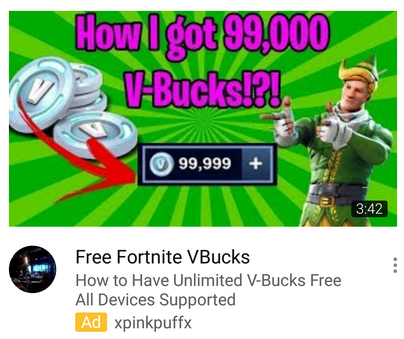
The next era of Youtube would go on to be the 'Adpocalypse', this phrase has been attributed to being coined back around 2017, and referred to a large volume of major advertisers pulling from the platform. There were four total 'Adpocalypses' and in the wake of so much fat cat revenue leaving the Google ads scheme, scam adverts became prominent.
Well as they say, money makes the world go round and Youtube was handling unprecedented volumes of data at this point, so much so that people thought that "the web could grind to a halt" due to the volume of video being uploaded, that was in 2007 by the way. No matter how much capital Google possessed back then, they needed to keep pumping more due to the ever-rising cost of maintaining Youtube and the risk of having some of its biggest accounts leave or produce less content.
The Adpocalypse actually led to stricter requirements for the partner program (Youtube's payout scheme), despite not leading to better vetting processes for purchasing ad space on Google ads, something also seen with other major internet advertising firms and arguably something that should be kept in a 'free internet'.
We even saw recently a major adpocalypse over on Twitter, with a large number of key advertisers pulling out of the site due to rhetoric being pushed by users and most awkwardly, the website's current owner Elon Musk. This wasn't the be all and end all for Youtube though. Around 2019 it entered its current era, which we can simply refer to as the AdBlock era as not much has defined it yet outside of attempts since 2023 to detect and punish users who install adblockers to their web browser.
I'm not saying Youtube has improved a lot now, but it has sealed some of its cracks, arguably at the expense of its content and creators to secure less risk in advertiser pullouts. As of 2019 Youtube tightened its monetisation policies further, created a new anti-bullying and harassment policy and lastly had a quite successful re-branding of Youtube Red into Youtube Premium with Youtube Music also coming with your subscription. By 2019 this would be in other 60 territories with regional pricing too.
What's crucial about this time for Youtube, is that its faucets of monetisation are a little less advertiser dependant. In a way that is quite similar to investors owning a stake in a company, key advertisers effectively have a stake in a web service when that service predominantly relies on advertisement for its monetisation.
Once again, none of this is to say Youtube has perfected its profiteering, as they've recently come under fire for a new feature that tries to block adblockers. The EU declared this unlawful, and beyond that it's received a large amount of public backlash. Personally, I think the attempt to force users into watching adverts is clearly a hint that the amount of money Youtube itself makes is likely being outweighed by the expense google pay to run the website itself.
I feel like advertisement is a very flawed way to make money on the internet, because we have the freedom to use whatever browser we want and to browse with adblockers if we choose. This is yet something I would personally consider an individual's own right. The ability to purchase a computer/smart phone/etc, or build one, and do what you want with it. If google were to start detecting and blocking individual browsers, I would consider that unlawful. But this is where we come to a large crossroads for the Internet, the ad-blocker debate.
Being charged for social media is not "the death of the free internet".
A lot of social media and online platforms have been born from opportunity. There is a consistent presence between the companies that have found the most success in the digital age, either the monopolisation of some form of operating system and/or hardware (Intel chips, Nvidia GPUs, Apples hardware ecosystem, Google's android OS, Microsoft windows and Microsoft office, Adobe creative cloud).
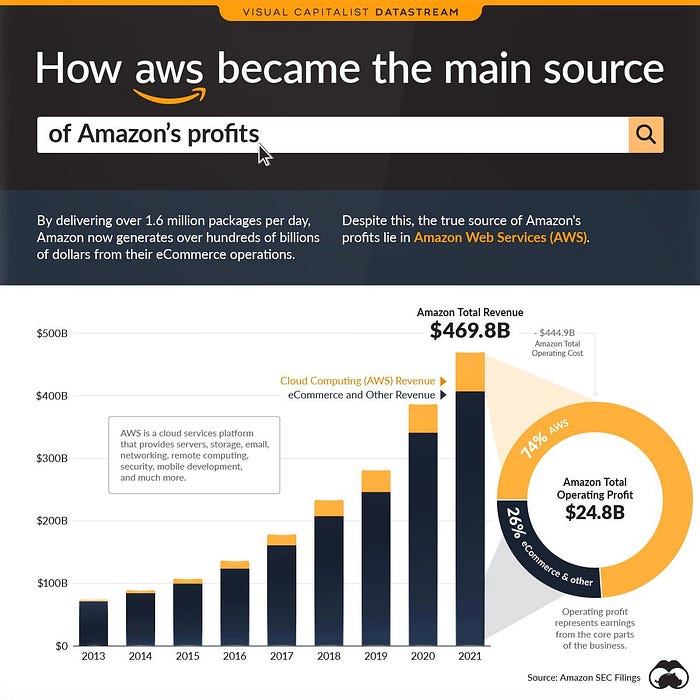
The other presence is the existence of web services which are, in simple terms, large monopolies on different cloud-based operations, services and systems that you can rent from a company to use on your own website. AWS (Amazon Web Services) is an example of this, and I cannot understate just how many websites and storefronts actually use AWS. Let's say for example, you wanted to truly boycott Amazon — to do that you need to mass boycott every site that uses AWS, because it makes up 74% of their profit! (As claimed by Visual Capitalist in 2022).
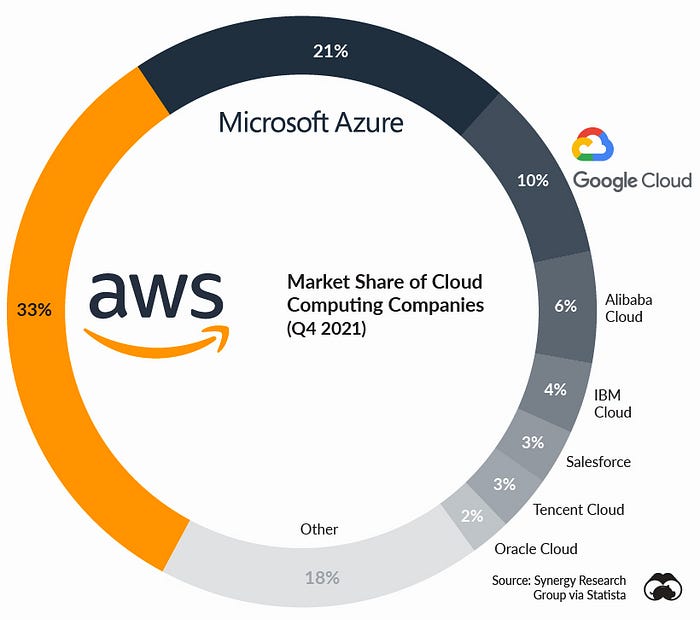
Even other large companies, like Netflix and Facebook/Meta, rely on AWS for their infrastructure and are happily paying each month for the service. As a result, Amazon, Microsoft and Google all have a 3-way split majority over the internet via their production of web services and the sheer volume of demand they supply for. Any form of web service is incredibly lucrative, of course this is relative to the volume of resources they require to deliver cloud computing on such a large scale, you may also know that Cloudflare (a service that provides denial of service protection) also has a monopoly here, you'll see it every time their service goes down and takes half the internet with it.
This is where discussions about the free internet come from, a large volume of 'doom posting' happens because of the amount of control some companies have over the internet and because of the more recent push towards blatant monetisation. The issue here though is that a lot of these problems don't stem from the fact that we used to have 'the free internet' but rather they stem because truthfully, most of the business decisions made back then were terrible.
Now we can come full circle: the Tom Scott video, Youtube commercialisation, HTTP and lastly the wires and servers that make your internet work in the first place.
The cost behind the internet matters for its structure — not its users. And it needed structure, it was never going to be the Wild West era of the internet forever, it's simply too profitable of a human invention for any governments or large actors to leave it alone like that. The underlying problem is that the effect of that 'golden age' is heavily felt today, for many reasons.
Why is there a pushback on monetisation like twitter blue? Because we are used to having these services for free, but with their natural increase in scale they now operate at a loss. This was always the obvious destination, as with constant expansion you need constant growth, but the expansion of a platform and the rise of advertisement payouts aren't a linear graph, with expansion comes the need for more labour, offices and servers, just to name a few. We already see echoes of that with Youtube accounts becoming companies (Smosh, Rooster Teeth and Linus Media Group as examples) due to the demand needed to expand their revenue or simply due to the size of the audiences they had established and investors being interested in funding them as a result.
Why is there a pushback on removing adblockers? Do I even need to explain this one? People hate adverts. Really hate adverts. I use an adblocker myself and have done for years, I won't be disabling it unless I feel a website truly needs my support and I personally like or approve of the people behind it. Well sometimes I partially disable it because it also blocks JavaScript and that breaks a couple websites but that's an aside.
Why is there a pushback on new policies and 'censorship'? Because moderation was pitifully lacklustre before and some truly awful things got said casually in the earlier days of the internet without any real thought behind their impact. An era that some people call the 'golden age' of the internet, whilst incredibly unique and something I am glad I did get to experience (albeit maybe too young to be experiencing), has had a very harmful knock-on effect in wider culture due to a heavy lack of moderation and the confidence people get when speaking behind a screen.
I could keep going, but I'm not here to defend any corporations. Rather to talk about the precedent set by them, and how the wider culture reacted. To some extent there was no real way to predict how the internet would evolve and grow, I can imagine some incredibly wild (…and some stupid) things had been said about the future of the internet and in turn, they got meme'd to absolute death as is the culture.
But truthfully? Most of these companies had nestled themselves on some very flammable foundations, and when you look at revenue and stocks for a lot of corporations built during that earlier internet era, it speaks volumes of how stability should be prioritised.
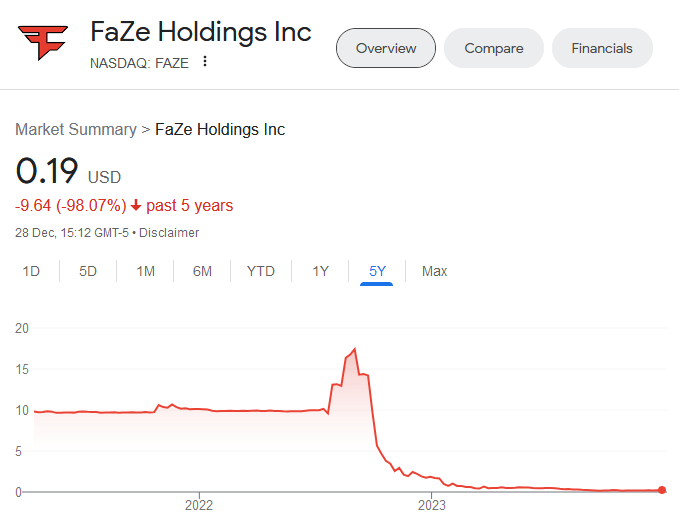
I find it incredibly funny that people see this and claim it the death of the free internet though. The loss of some corporations and websites that, whilst iconic, are replaceable, is hardly the death of the 'free internet'. More importantly, additional paywalls are not the death of the free internet either. I'd argue once more that the free internet doesn't exist, because it's simply just called the internet.
What the internet really is.
Don't worry, I'm not making a bad reference this time.
I grew up before the smart phone boom around 2008 with Apples release of the app store to pair with their iPhone released the year before. I didn't have a proper smartphone until around 2013, in which I had my dad's old HTC before I got handed down my brother's iPhone 4 a year or two after. So, for most of my earlier years, I only knew Laptops and Computers, as a result I learned programming (not too much proficiency until I was a teen). Computers being the precedent before phones with the older operating systems holding your hand much less, really helped me to grasp digital literacy and touch typing without any thought at all. It came to me through using and exploring these devices, no external assistance.
With the smart phone, you have a secure closed source OS (iPhone) that doesn't let you have any browser that isn't based on safari and you also have Android an open source, more freeing and less secure OS, that still doesn't really push you to take it out of the box. Even Modern operating systems like Windows 10/11 have newer, more watered-down interfaces and streamlined features.
The difference I'm trying to point out from when I was growing up and nowadays, is the fact that there is a standard set. One that started from the smartphone market explosion and onwards. Most devices these days come with a lot of express settings that you quickly get comfortable with, and the result of such smooth, boxed-in experiences is digital literacy becoming a skill you develop by either having an express interest in learning it or by owning a computer/laptop and putting the time into learning how to use it inside and out.
When so many defaults exist, it's easy to just accept them and uphold the status quo. And I'm not telling you off for that, there's nothing wrong with it. The internet needed structure and standards, it used to be horribly unstructured and worryingly insecure. This isn't a cyber-security essay, but if it was a lot of the concepts I'd be talking about would have a litany of real-world examples from the 2000's because it simply was so easy to hack anything back then.
But when we take something new, and fill it with rigidity and rules, it doesn't necessarily change what it is but rather it changes how it appears. There are a lot more standards on security now, on the programming side a lot of libraries — a programming term referring to pre-built code you can put into your own programs — will already have security features written into them to protect newer engineers or hobbyists.
And yet, if I wanted to make the absolute worst, easily hackable, visual garbage website and publish it online. I could do that. I can do what I want with the internet, there's just a few things I must adhere to which you always had to adhere to. Nothing has changed except for the fact that there are some websites and services that allow you to easily create a functional website, rather than needing the skill yourself or someone else with that skill.
You still need servers and money to pay for those servers, the device you make your website with, working internet connection and to pay for your domain name. You always needed to pay for all of this, which is again why the 'free internet' was always so funny to me. Nothing is stopping you now, nothing was stopping you then. You just needed the know-how, and you also needed the funding. This simply isn't accessible for everyone, we shouldn't assume it is either and making it accessible is a responsibility for us to work on as a society in the coming decades.
Even back when Yahoo pipes was letting you make webpages for "free", somebody out there was still footing the cost for it. No matter how many adverts you run, they make the money when they get impressions (views) and they make more when they get clicked on and interacted with. Your biggest websites might make a lot of money, but that won't be enough when you have employees to pay, office space to fill and a hundreds of thousands of other websites to keep hosting. This is why these kinds of services cost money, it's just not realistic to offer them for free.
In terms of free content, yeah the free internet is dead. That's not a bad thing, people's jobs and livelihood were at stake because of those business decisions. It's seemingly harmless when millions of users flock to something, but without proper revenue pathways your profits will quickly turn into dust. It's why video games make a good return on investment when they have a pricetag, but free to play games like rumbleverse can't survive on playerbase alone when nobody is making in-game purchases:
"We had millions of people playing it. We just didn't have people spending money on it"
But still, in the Internet we have today, the same one as always, we can download powerful software to make our own video games with little know-how and go on to self-publish them. We can self-publish books, videos, articles, just about anything. If the free internet was ever "dying" it might be if we got paywalled by something other than but our ISP just to get online, or if the functionality of VPN's and proxies get removed from our computers. Maybe I'll see a reason to exclaim the death of the 'free internet' when they revoke my right to change my DNS server from the default even.
But we still have the right to privacy now, when you connect to a network you don't have to use default functionality, you just have to route your data through your Internet Service Provider. They might provide you with a default Domain Name Server (for those without a tech background — this is part of how they translate a hyperlink into an IP address), like one owned by the ISP which they might use to check which websites you visit and block certain websites from you. This censorship or tracking from your ISP can be circumvented by using a private/encrypted DNS server which the ISP can't view as your data gets routed through them, and it merely takes changing one setting on your PC.
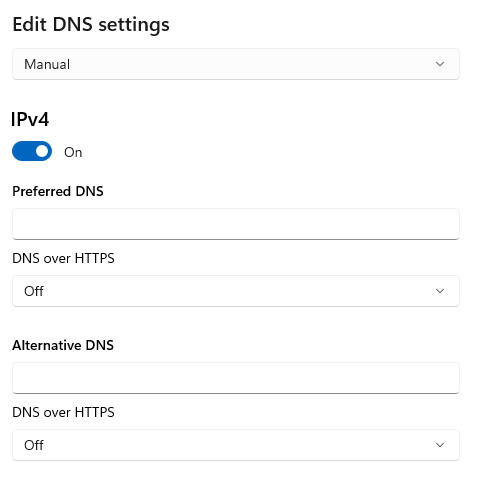
There are lots of ways to protect your privacy, you can still do whatever you want with the internet, and the paranoia about this is predominantly born from a lack of understanding behind how the technology you're holding and using works. There's nothing wrong with that either, it's not taught to people and despite having some formal education I learnt almost everything from self-study and still do to this day, a lot of this information is just out-there if you know where to look for it.
Either way, the commercial side of the internet will undergo change. Unprofitable models will either be faded out or rely more on the other divisons in the company (like web services and other products they push). Security will keep improving, even today I'd argue the average user has minimal security threats outside of Phishing attempts and data breaches. You should never be paranoid of your online security as long as you don't take any silly risks without spending some time studying how to mitigate them. With a larger userbase comes a much more divided, argumentative and in collective spaces, sanitised culture. It's not the same. But I'm still free to do whatever I want with it, the same as I always have been.
Thank you for reading and supporting my work on Medium! I heavily appreciate feedback in the comments as well as sharing my article if you enjoyed it. Make sure to follow me if your interested in reading more of what I write, and to keep updated on the other projects I have in the works.
Just before you go, I did cover a lot of computer science and IT concepts during this article, most of which I did quite quickly without much depth to them despite having an education in the subject. I didn't want to complicate it given they weren't the main point of the article.
However, I also talked about wanting general digital literacy and computer education to be better, so if you finished this article being more interested in anything mentioned, then I've got a few recommended videos for you below. I also suggest looking at more of their content if you haven't heard of either channel already.