
Abstract
EU GDPR (General Data Protection Regulation) has changed the way businesses handle personal data across the globe. One important part of this law is EU GDPR – Article 3 (Territorial Scope) which determines who must follow GDPR rules. In simple terms, it says GDPR applies not only to companies in the European Union (EU) but also to businesses outside the EU if they deal with personal data of people living in the EU. This means even if your company is based in another country, you might still need to comply with GDPR if you process data of EU residents.
Explanation
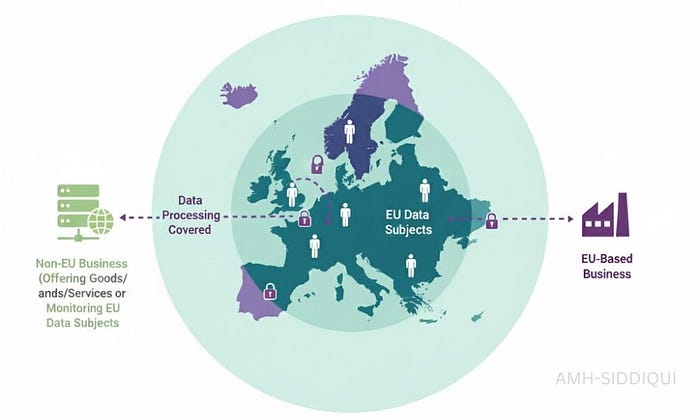
Article 3 ensures that personal data of EU citizens is protected no matter where the business handling it is located. Essentially, it has two main parts:
- Businesses in the EU: Any company operating in the EU, whether big or small, must comply with GDPR when collecting, storing, or processing personal data.
- Businesses outside the EU: If a company outside the EU offers goods or services to people in the EU or monitors their behavior (like tracking online activity), GDPR rules apply to them too.
This broad territorial scope is one of the reasons GDPR is considered a global standard for data protection. It's designed to make sure EU citizens' personal information is safe, regardless of the physical location of the business processing it.
Key Points
- EU-based companies must comply: No matter the size, any controller or processor in the EU must follow GDPR.
- Non-EU companies may also be affected: If your business targets EU residents or monitors their online behavior, GDPR rules apply.
- Focus on personal data: GDPR applies specifically to personal data, meaning any information that can identify a person directly or indirectly.
- Compliance is mandatory: Violating GDPR, even as a non-EU business, can result in heavy fines.
In short, Article 3 makes GDPR rules apply beyond borders, creating a safer environment for personal data.
General Activation Steps
If your business falls under the scope of GDPR, here are the steps to make sure you comply:
- Identify data processing activities: Understand what personal data you collect, store, or use, and whether it involves EU residents.
- Appoint a Data Protection Officer (DPO): If required, designate someone responsible for GDPR compliance.
- Update privacy policies: Make sure your privacy policy clearly explains how you collect, use, and store personal data.
- Obtain consent: If necessary, get clear consent from users before processing their data.
- Implement security measures: Protect personal data with encryption, secure storage, and access controls.
- Regular audits: Conduct regular reviews to ensure GDPR compliance is maintained.
Use Cases
Article 3 applies in several real-world situations, such as:
- E-commerce websites outside the EU selling to EU residents: A store in the U.S. shipping products to Europe must follow GDPR.
- Global marketing campaigns: Businesses targeting EU customers with ads or newsletters must comply.
- Social media platforms: Platforms tracking the behavior of EU users, even if the company is based outside the EU, must follow GDPR rules.
- Cloud services: Providers storing or processing data of EU users need GDPR compliance regardless of their location.
These examples show how wide the reach of Article 3 is, affecting both small and large businesses worldwide.
Dependencies
Compliance with Article 3 relies on understanding several factors:
- Data type: Only personal data falls under GDPR rules. User location: GDPR applies if the data subject resides in the EU.
- Business activity: Offering goods, services, or monitoring the behavior of EU residents triggers compliance.
- Existing agreements: Contracts with processors or partners must include GDPR clauses.
Without understanding these dependencies, businesses risk unintentional GDPR violations.
Tools and Technologies
To manage GDPR compliance effectively, businesses can use:
- Data mapping tools: To track where personal data comes from and where it is stored.
- Privacy management software: Helps automate consent collection, user rights management, and reporting.
- Encryption solutions: To secure personal data both at rest and in transit.
- Monitoring and auditing tools: To ensure ongoing compliance and detect potential breaches.
- Legal and consulting platforms: Offer guidance for non-EU businesses on GDPR obligations.
These tools make it easier to stay compliant without slowing down business operations.
Let's Wrap
EU GDPR Article 3 sets a clear rule: personal data of EU residents must be protected, no matter where the business is located. Understanding its territorial scope is crucial for businesses inside and outside the EU. By identifying data processing activities, updating privacy policies, securing data, and using the right tools, your business can comply with GDPR and avoid penalties.
Whether you run a small online store or a multinational company, GDPR compliance under Article 3 is not optional if you handle EU residents' data. Following these guidelines ensures trust, security, and legal safety for both your business and your customers.
Read more at:
Website: https://mdmteam.org/
LinkedIn: https://www.linkedin.com/company/mymdmteam/
Instagram: https://www.instagram.com/mdm.team321?igsh=MXBtcHVkajZxa25zbA==
For further reading: