

ticket + length - ID_LENWhere ID_LEN is 32 bytes. The only guard before that logic was:
if (length > 0) {That's the problem.
What Actually Happens If someone provides a ticket smaller than 32 bytes, say 8 bytes:
length = 8Then:
length - ID_LEN = 8 - 32 = -Now the pointer becomes:
ticket - 24So instead of reading from the actual ticket buffer, the code reads 24 bytes before it. That's an out-of-bounds read. Not a write. Not a crash guaranteed. But still undefined behavior. And in a crypto library, undefined behavior is not something you want anywhere near session handling.
Why This Matters Reading memory before a buffer means you're pulling in data that doesn't belong to that structure. Depending on the heap layout, that memory could contain:
- Other session data
- Heap metadata
- Possibly sensitive material
Even if it "just works" most of the time, it's still unsafe. And unsafe in crypto code is always high impact.
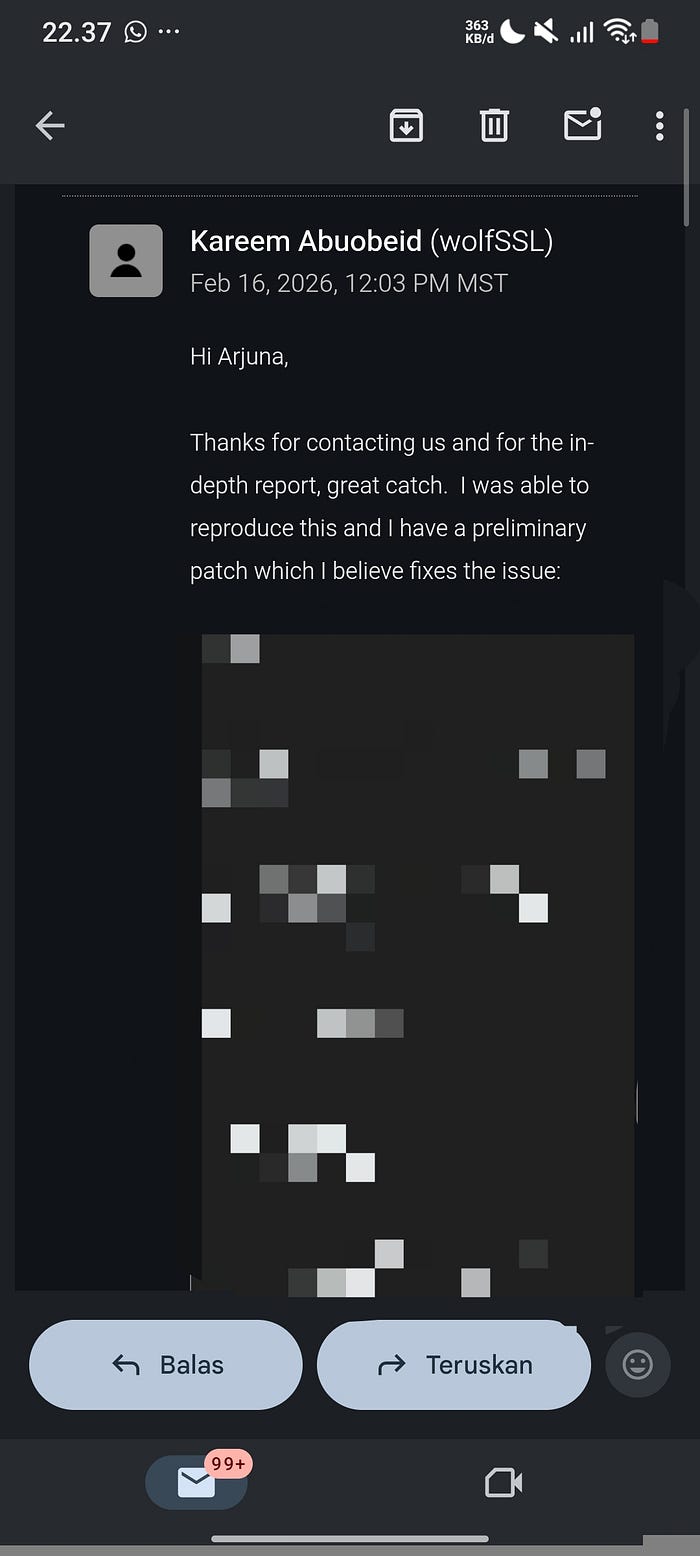
The Fix The patch changes:
if (length > 0)To:
if (length >= ID_LEN)That's it. Now length - ID_LEN can never go negative. No pointer underflow. No reading before the buffer. One character difference. Completely different safety guarantees.
How I Found It This wasn't dynamic fuzzing or a crash trace. It was just reviewing the logic and asking:
- What happens if this assumption is wrong?
Whenever you see:
length - constant