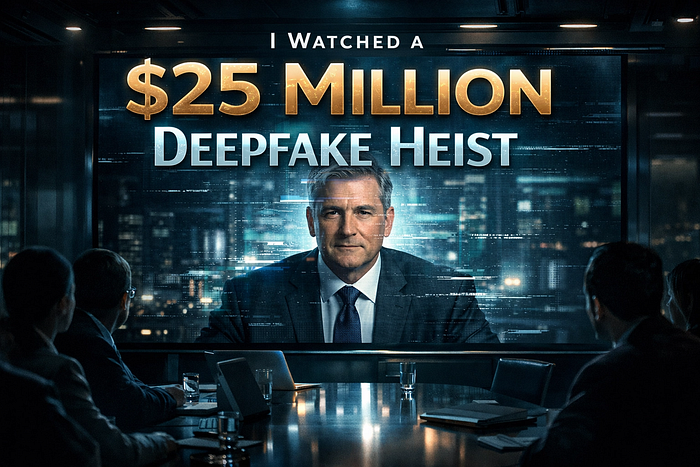

A finance worker at a multinational firm in Hong Kong received what he thought was a confidential email from the company's UK-based CFO, requesting a massive, secret transfer of funds.
Suspicious of phishing, the employee did exactly what we've been trained to do: he verified. He joined a video conference call with the CFO and several other staff members. He saw their faces. He heard their voices. He even recognized their office mannerisms.
Satisfied, he authorized the transfer of 200millionHongKongdollars( 25.6 million USD).
The chilling reality? Every single person on that screen — except the victim — was a digital ghost. A deepfake. According to the Hong Kong Police, the scammers had used publicly available footage to create a real-time, AI-driven boardroom heist.
If that was 2024, Welcome to 2026.
If hackers could pull off a $25 million heist two years ago using early-stage AI, imagine what they can do today. In 2026, AI doesn't just mimic a voice; it mimics your boss's specific vocabulary, your partner's typing rhythm, and even your bank's real-time security prompts.
The era of "don't click suspicious links" is over. We are now in the era of "don't trust your own senses."
Why Phishing in 2026 is Unstoppable (By Traditional Means)
The 2025 Verizon Data Breach Investigations Report highlighted a terrifying trend: 94% of successful breaches now involve a human element, with AI-powered phishing leading the charge.
We used to look for broken English and weird email addresses. But today, LLMs (Large Language Models) generate perfect, natural-sounding emails in any language.
The 2026 Problem: Phishing has moved from "Mass Marketing" to "Laser-Targeted Warfare."
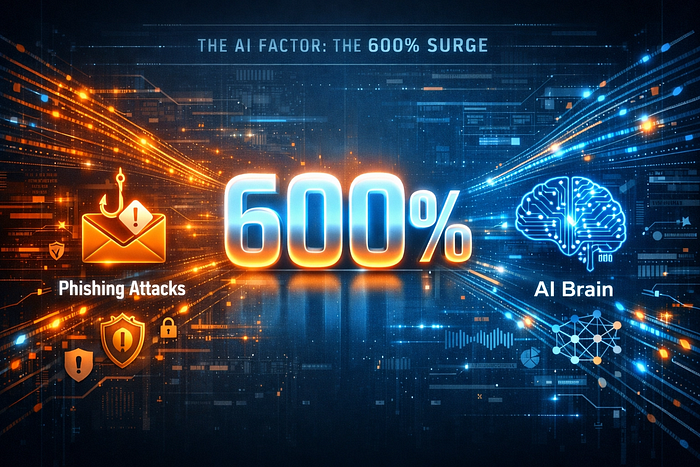
The AI Factor: The 600% Surge
Since the explosion of generative AI, phishing attacks have increased by 600% . Here is how the landscape has shifted:
FeaturePhishing in 2024Phishing in 2026ToneGood, but often roboticIndistinguishable from humansTargetingBasic LinkedIn scrapingDeep-dive AI analysis of your social mediaVoiceStatic clipsReal-time, interactive AI cloningBypassEasy for 2FA to catchAiTM (Adversary-in-the-Middle) steals 2FA live
The most dangerous weapon in 2026 is AiTM (Adversary-in-the-Middle). These are phishing sites that act as a proxy between you and the real website. When you enter your 2FA code, they capture it and log in before you even realize what happened.
The Psychology of the "Perfect" Scam
Why do smart people still fall for this? Because attackers target biology, not technology. They use six cognitive triggers:
- Urgency: "Your payroll is blocked. Fix it in 1 hour."
- Authority: "This is the CEO. I need this done now." (Using a cloned voice).
- Context: Sending you a "shipping update" exactly 10 minutes after you actually ordered from Amazon.
- Fear: "Unauthorized login from Russia detected. Click to secure."
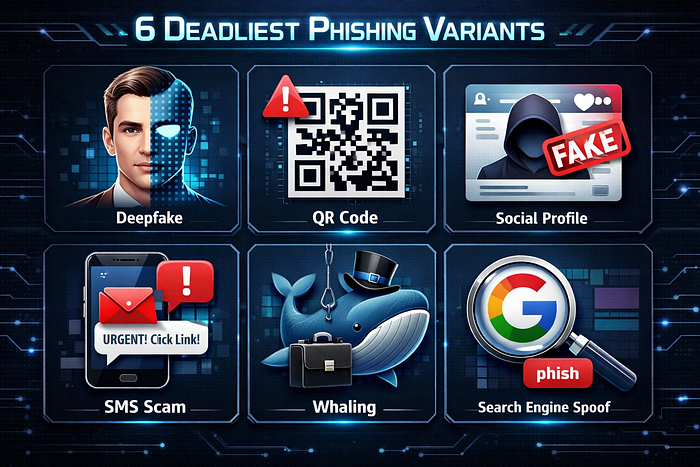
6 Deadliest Phishing Variants You'll Face This Year
1. Vishing & Deepfakes (The $25M Lesson)
Using just 3 seconds of your voice from a YouTube video or a LinkedIn clip, AI can clone you. Hackers now call employees pretending to be IT support, using the exact voice of their manager.
2. QR Code Phishing (Quishing)
You'll see them on parking meters, restaurant tables, or in "urgent" HR emails. Scanning a malicious QR code bypasses most email security filters entirely.
3. Spear Phishing on Steroids
Attackers use AI to read your public social media posts and craft an email about your specific interests, your recent vacation, or your specific job project.
4. Smishing (SMS Phishing)
With a 98% open rate, SMS is the preferred method for "Bank Alert" or "Delivery Failed" scams.
5. Whaling
High-stakes phishing targeting CEOs and CFOs. One successful "Whaling" attack can bankrupt a mid-sized company.
6. The "Search Engine" Trap
Attackers buy Google Ads for popular software (like Zoom or AnyDesk). You click the first link, download the "app," and unknowingly install a backdoor for hackers.
The 3-Second Rule: Your Only Defense
Before you click, before you type, and before you trust — look at the URL.
The domain is always the last part before the first single slash.
- Safe: https: //portal.microsoft .com/ (It's microsoft .com)
- Danger: https ://microsoft.security-update .com/ (It's security-update .com)
For the complete step-by-step guide, visit the detailed resource at Cyber-X Protocol .
5 Protection Strategies for 2026
- Move Beyond SMS 2FA: Use hardware keys like YubiKey. They are the only defense against AiTM (Adversary-in-the-Middle) attacks.
- Use a Password Manager: Tools like Bitwarden won't auto-fill on a fake site. If your password manager doesn't recognize the site, it's a scam.
- Verify via a Second Channel: If your "boss" calls with an urgent request, hang up and message them on a different app (like Slack or WhatsApp) to confirm.
- Zero-Trust Mindset: Treat every unsolicited link, even from friends, as a potential threat.
- Report & Delete: Don't just ignore it. Report it to your IT team or services like ic3.gov.
If you want a complete breakdown of modern phishing attacks, I've explained it step-by-step here: https://cyberxprotocol.com/blog/phishing-2026-en.html
The Bottom Line
The Hong Kong heist was a warning shot. In 2026, the technology to steal millions — or your entire identity — is available to anyone with an internet connection.
Phishing isn't a "tech problem." It's a human problem. And in a world of AI-generated lies, your skepticism is the most powerful firewall you own.
Be skeptical. Be slow. Be secure.
Sources:
- CNN Business: Hong Kong firm loses $25 million in deepfake scam (Feb 2024).
- BBC News: Deepfake CFO scam report.
- Verizon 2025 Data Breach Investigations Report (DBIR).
- Threat Intelligence updates from [Cyber-X Protocol] .
- Read the full Phishing 2026 Guide here: https://cyberxprotocol.com/blog/phishing-2026-en.html
📢 About CyberX Protocol
Cyber-X Protocol is a learning platform focused on helping students understand cybersecurity through practical roadmaps, tools, and real-world concepts.
Follow Cyber-X Protocol for more cybersecurity insights and learning resources.
Tags: #Cybersecurity #Phishing #AI #Deepfake #InfoSec #TechTrends #DigitalSafety