
If you think your company is secure because your website passed a penetration test last quarter… you might already be exposed
That's not fear-mongering but the reality of how modern applications are built
Today's digital products aren't just websites. They're ecosystems of APIs, microservices, mobile clients, third-party integrations, and cloud-native infrastructure. And here's where most companies stumble:
They protect the front door but leave the side entrances wide open
Let's unpack what that means and why it's costing companies far more than they realize
The Illusion of Web Security
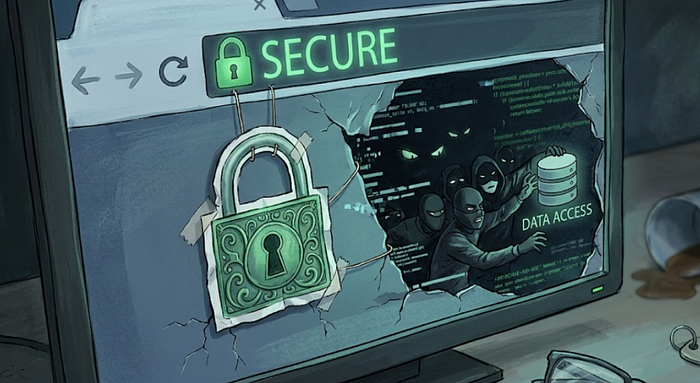
Most organizations still treat web security as the primary defense layer. Think:
- WAFs (Web Application Firewalls)
- SSL/TLS encryption
- Secure headers
- Regular web app pen testing
All important? Absolutely yes
But here's the catch:
Modern Attackers are no longer targeting your UI. They're targeting your logic
Moreover, your business logic doesn't live in your frontend; it lives in your APIs and other backend components that your applications use
APIs : The real attack surface
Every time your app pulls user data, processes a payment, tweaks a profile, or syncs with some third-party service, APIs are fired back to back. So, that means your application is more of backend APIs than the frontend, and that's exactly why securing the APIs is paramount
Where Startups get it wrong
Let's analyze the common misconceptions that become extremely costly
1. "If the Website is Secure, the System is Secure"
This is the biggest myth.
Web security focuses on:
- Input validation at the UI layer
- Browser-based threats
- Session management
But APIs bypass the browser entirely
Attackers can:
- Call APIs directly
- Manipulate requests
- Automate attacks at scale
Reality check: Your API doesn't care if the request came from your frontend or a malicious script.
2. Authentication ≠ Authorization
Many systems verify who the user is, but fail to verify what they're allowed to do
This leads to Broken Object Level Authorization (BOLA), one of the most exploited API vulnerabilities
Example:
- User A requests /api/orders/123
- Changes it to /api/orders/124
- Gains access to User B's data
No hacking tools required. Just curiosity is enough to break your system
3. "We Use HTTPS, So We're Safe"
Encryption protects data in transit.
It does nothing to stop:
- Logic flaws
- Excessive data exposure
- Rate abuse
- Business logic attacks
HTTPS is a just a baseline and not a security strategy
4. Ignoring Shadow APIs
Shadow APIs are:
- Undocumented endpoints
- Old versions still running
- Debug or test endpoints accidentally exposed
They're invisible to your security team, but not to attackers
And they're often the weakest link
5. No Rate Limiting = Unlimited Abuse
Without proper controls, attackers can:
- Brute-force credentials
- Scrape massive datasets
- Trigger resource exhaustion
All through your APIs.
Silently. Quickly. Repeatedly
Why This Gap Exists
This gap isn't the result of negligence, but it's a natural outcome of how technology has evolved. Most companies originally built monolithic web applications, focusing on getting products to market quickly. Over time, as the need for scalability and flexibility grew, they gradually transitioned to API-driven architectures. During this rapid expansion, the primary focus remained on growth and performance, often leaving security architecture to lag behind. As a result, while development practices advanced significantly, security strategies did not evolve at the same pace. This has ultimately created a mismatch between modern application design and the security frameworks meant to protect it
What High-Maturity Teams Do Differently
Here's where leading organizations stand apart:
They Treat APIs as First-Class Citizens
APIs aren't an afterthought, they are the backbone of the application.
They Maintain a Real-Time API Inventory
You can't secure what you can't see.
They Implement Fine-Grained Authorization
Every request is evaluated based on context,not assumptions.
They Monitor Behavior, Not Just Traffic
It's not about how many requests; it's about what those requests are doing
They Test Business Logic, Not Just Endpoints
Because real attacks exploit logic, not syntax
The NovaShield Perspective
At NovaShield, we've seen a pattern across startups and enterprises alike:
The more modern the architecture, the more underestimated the API risk.
That's why our approach is built around continuous, intelligent API security:
- Discover every API documented or not
- Identify vulnerabilities in real-time
- Simulate real-world attack scenarios
- Provide actionable insights, not just reports
Because security shouldn't just tell you what's wrong
It should help you stay ahead of what's next