
Building Secure Applications in 2026 A Practical Guide
Web applications are more powerful than they've ever been. From banking systems to healthcare platforms, e-commerce stores to AI-powered dashboards, modern apps process huge loads of sensitive data every second. Developers prioritize features, performance and user experience, with security often being an afterthought.
That's a risky strategy.
Cyber attacks are on the rise and attackers are always looking for vulnerabilities in web applications. One security bug can leak passwords, financial information, customer records or even full server access. Data breaches cost companies millions of dollars in reputational damage, legal penalties, downtime and more.
That is why the OWASP Top 10 is so important.
The OWASP Top 10 is an internationally recognized list of the top 10 most critical security risks to web applications. It allows developers to learn about common vulnerabilities and how to stop them before attackers can take advantage of them.
We shall now take up this article:
· What is OWASP ?
· What is the importance of web application security?
· Top 10 Vulnerabilities in OWASP
· Examples from real life
· Best practices to prevent security vulnerabilities
· Security tools and modern development practices
By the end you will have a good knowledge of how to build secure and more secure web applications.
What is OWASP?
OWASP Open Worldwide Application Security Project. It is a non-profit organization dedicated to making software security visible, so that individuals and organizations can make informed decisions about their use of software. The OWASP Top 10 is updated periodically to take into account the current security trends and the new threats. It serves as a reference for developers, security engineers, DevOps teams and organizations globally.
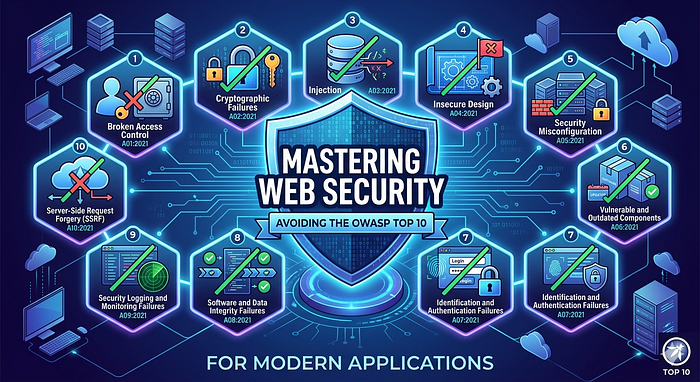
The latest OWASP Top 10 categories are:
1. Broken Access Control
2. Cryptographic Failures
3. Injection
4. Insecure Design
5. Security Misconfiguration
6. Vulnerable and Outdated Components
7. Identification and Authentication Failures
8. Software and Data Integrity Failures
9. Security Logging and Monitoring Failures
10. Server-Side Request Forgery (SSRF)
1. Broken Access Control
Broken access control occurs when users are able to perform actions or access data they are not authorized to access.
For example:
· A regular user accessing admin pages
· Viewing another user's personal information
· Modifying records without permission
This is one of the most dangerous vulnerabilities, as it directly affects sensitive data and system controls.
Example
Think of an e-commerce platform where users can access orders using a URL:
/orders/1001If changing the ID allows access to another user's order:
/orders/1002Access control to the application is broken.
How to Prevent It
Use Role-Based Access Control (RBAC)
Assign permissions based on user roles:
· Administrator
· Editor
· Customer
· Guest
Enforce Authorization on the Server
Never rely only on frontend validation.
Bad practice:
if(user.isAdmin){
   showAdminPanel();
}
The backend should verify permissions.
Apply the principle of least privilege
Users should only receive the minimum permissions they need.
Disable directory listing
Attackers should not be able to browse sensitive directories.
Validate every request
Every API request should verify:
· User identity
· User permissions
· Ownership of resources
2. Cryptographic Failures
Cryptographic failures occur when sensitive information is not properly protected.
Examples include:
· Storing passwords in plain text
· Using weak encryption
· Sending data over insecure connections
Example
If a database stores passwords like this:
password123Instead of hashed values, attackers can instantly read user credentials after a breach.
How to prevent it
Use HTTPS everywhere
Always encrypt communications using TLS.
Hash passwords properly
Use strong hashing algorithms:
· bcrypt
· Argon2
· PBKDF2
Never use:
· MD5
· SHA1
Encrypt sensitive data
Protect:
· Credit card information
· Personal records
· API keys
· Tokens
Secure Secret Management
Never hardcode secrets in source code.
Bad example:
const API_KEY = "123456";Instead:
· Use environment variables
· Use secret managers
Rotate keys regularly
Encryption keys should be updated periodically.
3. Injection Attacks
Injection vulnerabilities occur when attackers send malicious input to execute unexpected commands.
Common injection types:
· SQL injection
· NoSQL injection
· Command injection
· LDAP injection
SQL injection example
Bad code:
SELECT * FROM users WHERE username = '$username';Attacker input:
' OR '1'='1This can bypass authentication entirely.
How to prevent injection
Use parameterized queries
A good example:
db.query(
  "SELECT * FROM users WHERE username = ?",
  [username]
);
Validate user input
Check:
· Length
· Format
· Permitted characters
Escape special characters
Prevent malicious query handling.
Use ORM libraries
Modern ORMs reduce direct SQL vulnerabilities.
Examples:
· Prisma
· Sequelize
· Hibernate
Restrict database permissions
Applications should not be associated with full administrator privileges.
4. Insecure Design
Insecure design is a poor security architecture or poor planning during development.
Security should be built into the application from the start and not added later.
Example
A banking application allows unlimited password reset attempts with no rate limit.
Attackers can easily abuse this system.
How to prevent it Perform threat modeling
Identify:
· Assets
· Attack surface
· Potential risks
Follow the security development life cycle (SDLC)
Incorporate security:
· Planning
· Development
· Testing
· Deployment
Use security design patterns
Examples:
· Input validation
· Failure to secure
· Defense in depth
Conduct security reviews
Review the architecture before deployment.
Apply business logic validation
Not all attacks are technical. Some abuse application workflows.
5. Security Misconfiguration
Security misconfigurations occur when systems are misconfigured.
This is extremely common in cloud-native applications.
Examples · Default passwords
· Open cloud storage buckets
· Debug mode enabled in production
· Unused services running
· Inappropriate CORS settings
How to prevent it Disable default accounts Change all default credentials immediately.
Use secure headers
Important HTTP headers:
· Content-Security-Policy
· X-Frame-Options
· Strict-Transport-Security
Keep environments separate
Never mix:
· Development
· Testing
· Production
Automated configuration
As code tools help maintain infrastructure consistency.
Examples:
· Docker
· Kubernetes
· Terraform
Perform regular security audits
Scan configurations regularly.
6. Vulnerable and Outdated Components
Modern applications rely heavily on third-party libraries and packages.
Outdated dependencies can contain publicly known vulnerabilities.
Example
Using an older version of a JavaScript package with a known remote code execution vulnerability.
Attackers scan applications looking for outdated software.
How to prevent it
Regularly update dependencies
Keep:
· Frameworks
· Libraries
· Plugins
· Operating systems
Up-to-date.
Use dependency scanners
Useful tools:
· Dependabot
· Snyk
· npm audit
Remove unused components
Unused packages increase attack surfaces.
Monitor vulnerabilities
Monitor CVE databases and security advisories.
Use trusted sources
Only install packages from trusted repositories.
7. Identification and Authentication Failures
Authentication failures occur when login systems are poorly implemented.
Examples · Weak passwords
· Session hijacking
· Misplaced MFA
· Predictable session IDs
How to prevent it Implement multi-factor authentication (MFA)
MFA significantly improves security.
Enforce strong password policies
Require:
· Minimum length
· Complexity
· Password rotation
Secure session management · Regenerate session IDs after login
· Set session timeouts
· Use secure cookies
Rate limit login attempts Prevent brute-force attacks.
Store passwords securely
Always hash and salt passwords.
8. Software and Data Integrity Failures
This vulnerability focuses on untrusted software updates and insecure CI/CD pipelines.
Example
A malicious dependency is inserted into the build pipeline and deployed automatically.
Supply chain attacks are becoming increasingly common.
How to prevent it
Verify software integrity
Use:
· Digital signatures
· Checksums
Secure CI/CD pipelines
Protect:
· Build server
· Application secrets
· Automatic tokens
Restrict third-party integrations
Review external tools carefully.
Use trusted package registries
Avoid downloading software from unknown sources.
Implement code reviews
Human reviews can help identify suspicious code.
9. Security Logging and Monitoring Failures
Without proper monitoring, attacks can go undetected for months.
Example
Even if an attacker tries to log in repeatedly, no alert is generated.
How to prevent it
Log important events
Track:
· Login attempts
· Permission changes
· Failed login
· Payment activity
Monitor logs continuously
Use SIEM systems for analysis.
Example:
· Splunk
· ELK Stack
· Graylog
Set up alerts
Notify teams of:
· Suspicious activity
· Failed login
· Traffic spikes
Preserve log integrity
Logs should not be editable by attackers.
Create incident response plans
Teams should know how to respond during attacks.
10. Server-Side Request Forgery (SSRF)
SSRF occurs when attackers force servers to send unauthorized requests.
Example
An image upload service retrieves a remote URL without validating it.
Attacker input:
http://internal-server/adminThe server is inadvertently accessing internal systems.
How to prevent SSRF
Strictly validate URLs
Allow only trusted domains.
Block internal IP ranges
Prevent access to:
· localhost
· Internal networks
· Cloud metadata services
Use whitelists
Clearly define allowed destinations.
Disable unnecessary outbound requests
Reduce external communication wherever possible.
Monitor network activity
Identify suspicious outbound traffic.
Secure Development Best Practices
Avoiding the OWASP Top 10 takes more than just bug fixes. "Security has to be a part of the development culture. 1. Push security to the left Security needs to be built into development from the start, not at deployment time. 2. Conduct frequent penetration testing Ethical hackers find vulnerabilities before malicious hackers do. 3. Use static and dynamic analysis tools Static Analysis Security Testing (SAST) It scans source code for vulnerabilities. Dynamic analysis (DAST) Tests for running applications. 4. Train the developers Developers need to know:
· Secure Programming
· Authentication
· Security of the API
· Security in the cloud 5. Embrace DevSecOps Security should be built into:
· CI/CD pipelines
· Automated tests
· Infrastructure management
Modern Security Challenges in 2026
Security threats are constantly evolving.
Modern applications face the following additional challenges:
Cloud Security Risks
Misconfigured cloud environments expose sensitive data.
API Security
REST and GraphQL APIs are prime attack targets.
AI-Powered Attacks
Attackers are now using AI to:
· Generate phishing content
· Discover vulnerabilities
· Automate attacks
Supply chain attacks
Compromised packages can infect thousands of applications.
Remote work risks
Distributed teams increase security complexity.
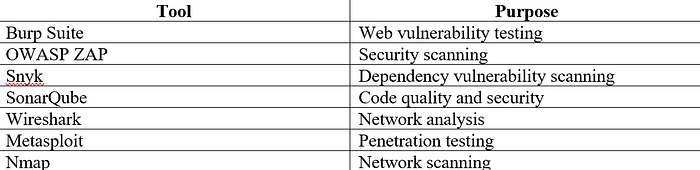
Essential Security Tools for Developers
Essential security tools for developers:
Conclusion
The OWASP Top 10 provides an essential roadmap for understanding and preventing the most common vulnerabilities in web applications. While modern frameworks and cloud platforms provide many built-in protections, security still relies heavily on developer awareness and responsible implementation.
Neglecting security can lead to devastating consequences:
· Data breaches
· Financial losses
· Legal issues
· Service disruptions
· Loss of customer trust
By understanding the OWASP Top 10 and following secure development practices, developers can build safer, more robust and more reliable applications.