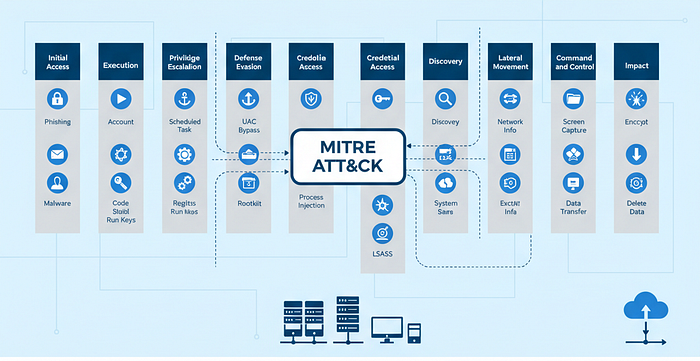

Task 1 : Introduction
In your cyber security journey so far, you've likely come across the name MITRE, perhaps when researching a known exploit or exploring various tactics used by attackers. MITRE is a not-for-profit organization that conducts research and development across a range of domains, including cyber security, artificial intelligence, healthcare, and space systems, all to support its mission: "to solve problems for a safer world."
In this room, we will focus on MITRE's cyber security frameworks and resources, including MITRE ATT&CK®, the CAR Knowledge Base, D3FEND, MITRE Engage™, and other relevant tools. These resources have become crucial in modern security, enabling both red and blue teams to understand adversary behavior, develop more effective detections, and enhance their defenses.
Learning Objectives
- Understand the purpose and structure of the MITRE ATT&CK® Framework
- Explore how security professionals apply ATT&CK in their work
- Use cyber threat intelligence (CTI) and the ATT&CK Matrix to profile threats
- Discover MITRE's other frameworks, including CAR and D3FEND
Prerequisites
- Complete Cyber Kill Chain to build a foundational understanding of how cyber attacks unfold from start to finish.
Q1. I understand the learning objectives and am ready to learn about MITRE! (No answer needed).
Task 2 : ATT&CK® Framework

The MITRE ATT&CK® framework is "a globally-accessible knowledge base of adversary tactics and techniques based on real-world observations. The ATT&CK knowledge base is used as a foundation for the development of specific threat models and methodologies in the private sector, in government, and in the cyber security product and service community."
In 2013, MITRE recognized the need to document and categorize the standard tactics, techniques, and procedures (TTPs) used by advanced persistent threat (APT) groups. To better understand how adversaries operate, it's helpful to break down what each part of TTP represents:
- Tactic: An adversary's goal or objective. The "why" of an attack.
- Technique: How an adversary achieves their goal or objective.
- Procedure: The implementation or how the technique is executed.
ATT&CK Evolution
The ATT&CK framework has evolved significantly over the years. Focused initially on the Windows platform, it has expanded to cover a range of environments, including macOS, Linux, cloud platforms, and more, under the Enterprise matrix. Additionally, specialized frameworks exist for Mobile and Industrial Control Systems (ICS). The framework continues to grow through contributions from the cyber security community. While incredibly valuable from a defensive perspective, red teams also rely on the framework to plan realistic attack simulations and test organizations' defenses.
ATT&CK Matrix
The MITRE ATT&CK Matrix is a powerful visual representation of all tactics and techniques that exist within the framework. You can also utilize the ATT&CK Navigator, a handy tool for annotating and exploring matrices. The tactics are represented across the top of the matrix. Each tactic contains techniques nested below, which can be expanded to reveal sub-techniques.
Let's check it out.
- Tactic: Let's say that an attacker wants to perform Reconnaissance on their target. This is the attacker's goal.
- Technique: They may utilize the Active Scanning technique. This is how they achieve their Reconnaissance goal.
- Sub-technique: Active Scanning comprises three specific methods: Scanning IP Blocks, Vulnerability Scanning, or Wordlist Scanning.
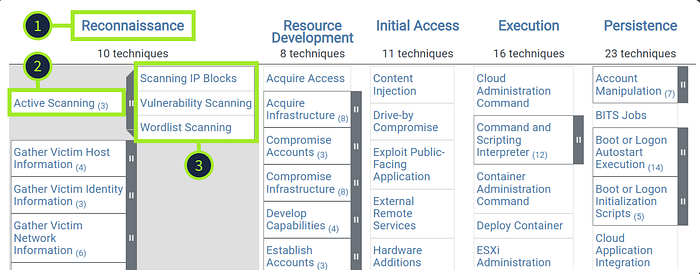
Diving Deeper
Let's take a closer look at the Active Scanning technique. On the technique's details page, you will see the sub-techniques listed again. The linked page also includes all relevant information, including a description and the technique's ID, which you will often encounter in your cyber security research.
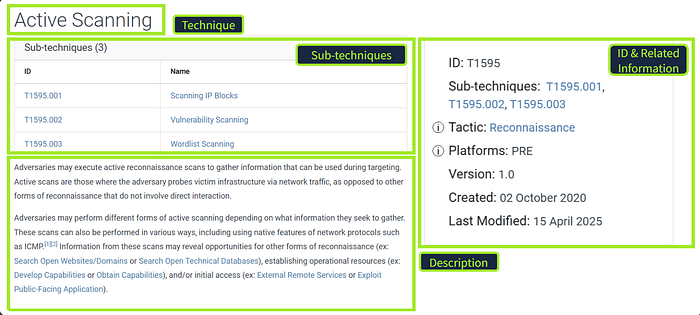
Alongside the information discussed above, each tactic and technique page includes procedure examples (groups, software used, and campaigns), mitigations, detections, and references. ATT&CK can be overwhelming at first, simply due to the vast amount of information available. Let's take a step back and answer a few questions to gain a better understanding.
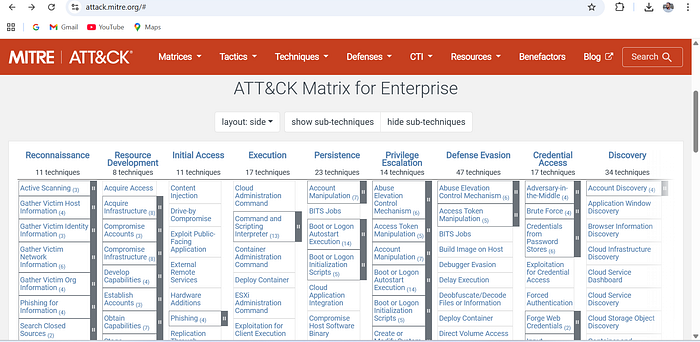
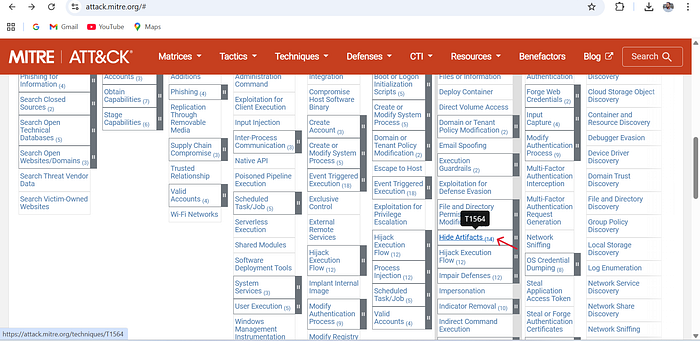
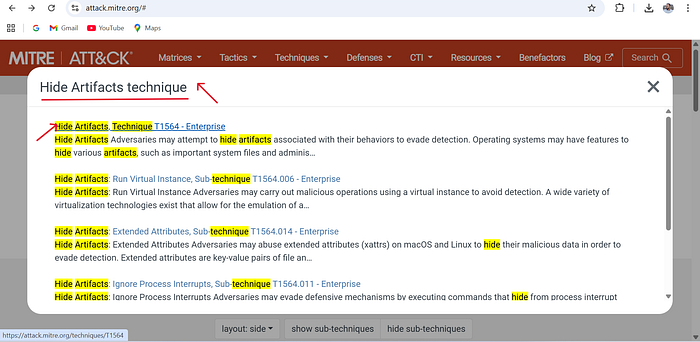
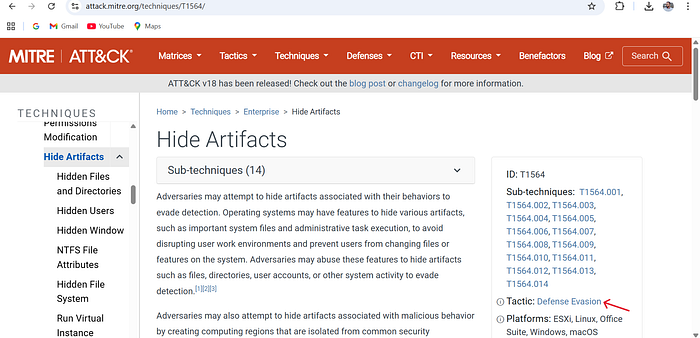
Q1. What Tactic does the Hide Artifacts technique belong to in the ATT&CK Matrix?
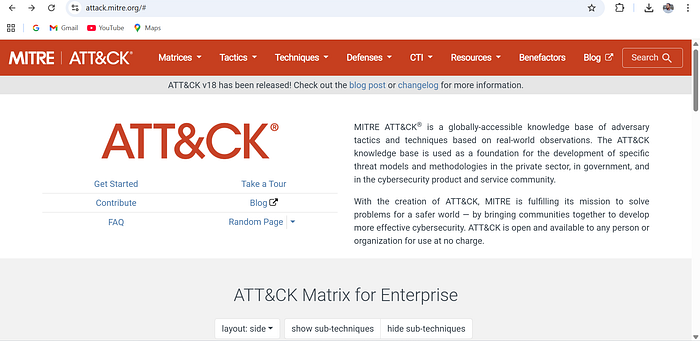
- First visit the official https://attack.mitre.org/ website, scrolled down to ATT&CK Matrix, try to find keyword "Hide Artifacts", then follows it's tactic column.
- Else, you can use Search🔍 option then enter your keyword "Hide Artifacts", click the relevant first link, that redirects to techniques & sub-techniques and there, you'll find relevant tactic.
Answer : Defense Evasion
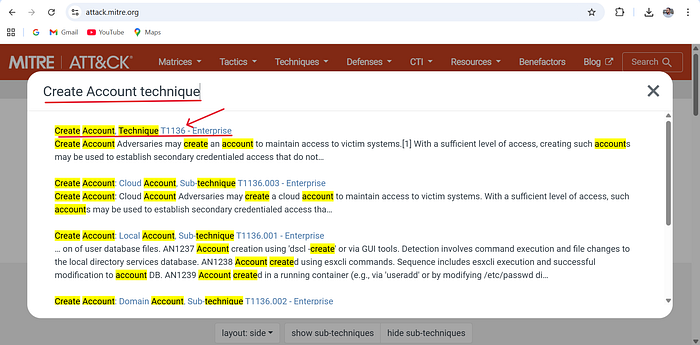
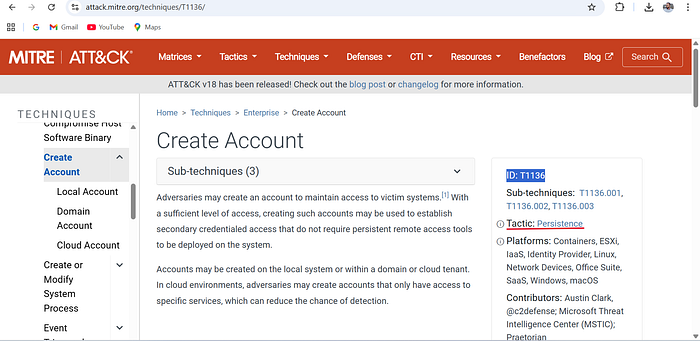
Q2. Which ID is associated with the Create Account technique?
- Stays on the same page and use search option again
- Keyword "Create Account technique", click that link. After that, just take a note on ID.
Answer : T1136
Task 3 : ATT&CK in Operation
Now that you know what ATT&CK is and the kind of intelligence it contains, let's take a closer look at how and why it's used. With so much data available, how do organizations actually make sense of it all? Let's explore how defenders, researchers, and red teams implement ATT&CK.
Why ATT&CK Matters
ATT&CK provides cyber security professionals and organizations with a standard and consistent language for describing adversary behavior. In your cyber learning journey, you've probably seen the same action or technique referred to by several different names. By providing standard terminology and unique IDs, the framework makes it easier to compare data and incidents, enabling effective communication across the security community.
Threat Intelligence and Defense
Beyond improving communication, ATT&CK also helps bridge the gap between threat intelligence and defensive operations. A threat report might describe what an attacker did, but not how to turn that information into usable detection measures. Through mapping threat activity to TTPs, defenders can translate intelligence into real detection logic, queries, and playbooks. Later in the room, we will discuss some of the tools that MITRE has made available to support these efforts.
Who Uses ATT&CK?
ATT&CK is used across the cyber security industry. The table below highlights how various teams and professionals apply it in their daily work and how it supports offensive and defensive operations.

Mapping in Action
Let's say your organization has been the victim of an attack. In a post-incident scenario, it is crucial to analyze how the attack unfolded and map each stage in a structured format. This will allow your team to better prepare for future campaigns targeting your organization.
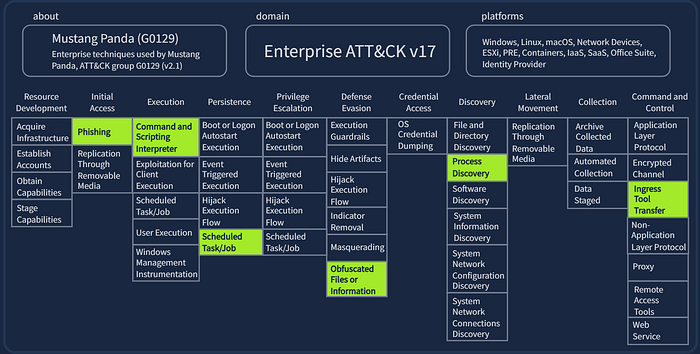
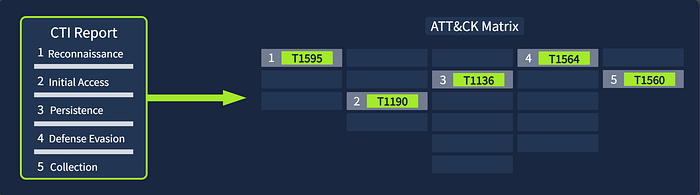
The group Mustang Panda (G0129) has been mapped to a variety of ATT&CK techniques based on its years of attacking government entities, non-profits, and NGOs. Below, you can see that Mustang Panda prefers phishing techniques for initial access, persists via scheduled tasks, obfuscates files to evade defenses, and uses an ingress tool transfer for command and control. For the questions in this task, you will analyze Mustang Panda's dedicated page and associated matrix using the ATT&CK Navigator.
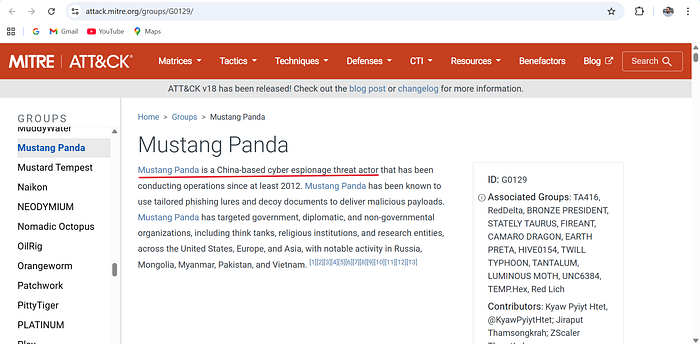
Q1. In which country is Mustang Panda based?
- click and open both Mustang Panda and matrix link
- to get first answer, On Mustang Panda description, just read first paragraph, you''ll get your answer.

Answer : China
Q2. Which ATT&CK technique ID maps to Mustang Panda's Reconnaissance tactics?
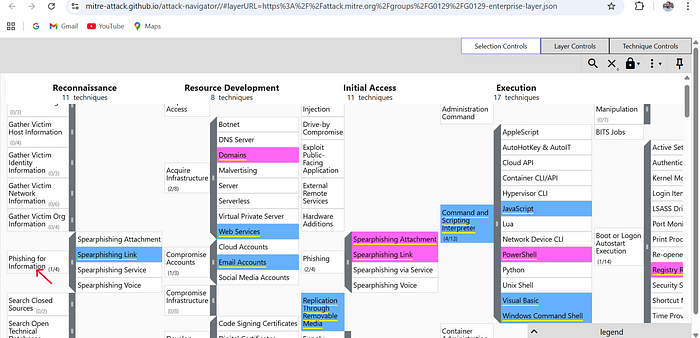
- Open matrix link, under Reconnaissance tactic, have a look on high-lighted Sub-technique "Spearphishing Link" and note down the Technique "Phishing for Information".
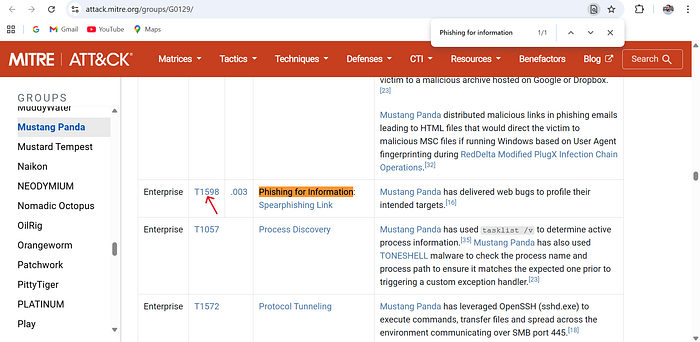
- Come back to Mustang panda page and use find(CTRL + F), search for "Phishing for Information" and take a look the technique ID, copy it and paste it on TryHackMe.
Answer : T1598
Q3. Which software is Mustang Panda known to use for Access Token Manipulation?
- Stays on Mustang Panda's page.
- Again, use find (CTRL + F) and search "access token" and follows it.
- You'll get the Software name.

Answer : Cobalt Strike
Task 4 : ATT&CK for Threat Intelligence
In the previous task, we explored how organizations and teams utilize Cyber Threat Intelligence (CTI) to understand adversary behavior and inform defense strategies by mapping intelligence to the ATT&CK framework. You also gained some experience using the Navigator to analyze a group's TTPs. Now, you'll use your newly gained knowledge to research threat groups that might target your organization.
Scenario
You are a security analyst in the aviation sector, and your organization is migrating its infrastructure to the cloud. Your task is to use ATT&CK to gather intelligence on APT groups known to target this sector, identify their tactics and techniques, and assess any potential gaps in your defensive coverage.
You'll use the Groups section on the ATT&CK website to find an appropriate group and analyze its behavior using the Navigator layer and technique pages.
Q1. Which APT group has targeted the aviation sector and has been active since at least 2013?
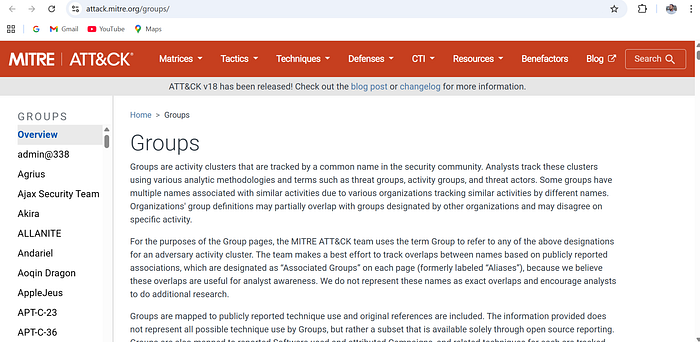
- Visit the MITRE Groups , CTRL + F (to find), search for "aviation", then just copy the APT name and paste it on the answer field.
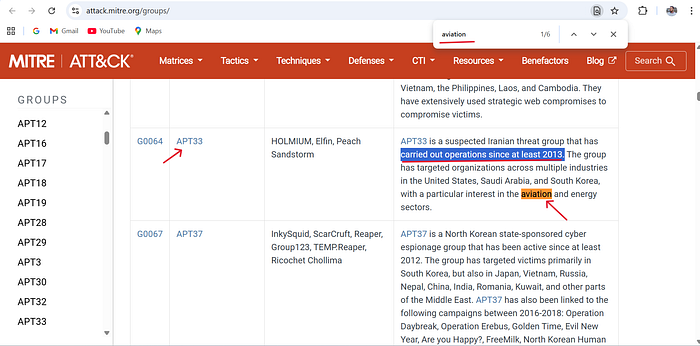
Answer : APT33
Q2. Which ATT&CK sub-technique used by this group is a key area of concern for companies using Office 365?
- Stays on the MITRE group page, use find (CTRL + F), search for office 365.
- Next, look on it's sub-technique column
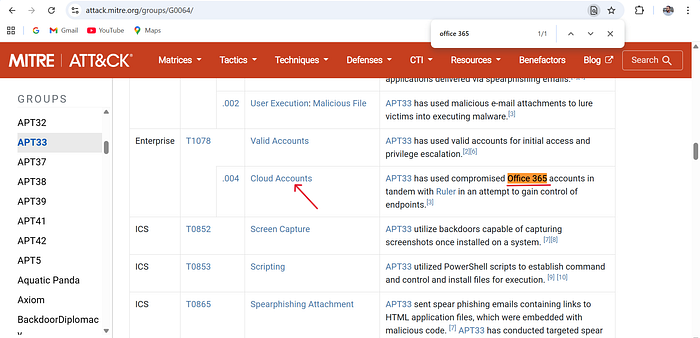
Answer : Cloud Accounts
Q3. According to ATT&CK, what tool is linked to the APT group and the sub-technique you identified?
- Again use find (CTRL + F), search for "office 365" and just have a look for the description column and read it, you'll get the too linked to APT group.
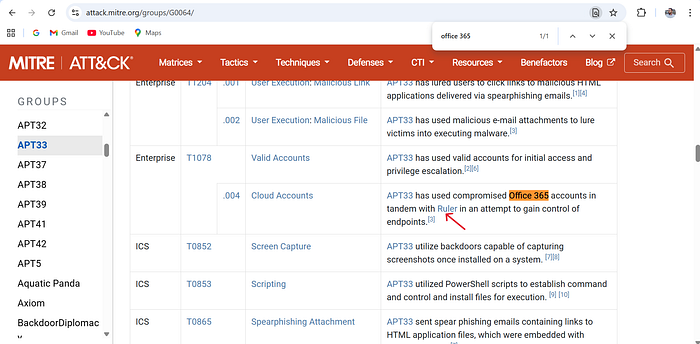
Answer : Ruler
Q4. Which mitigation strategy advises removing inactive or unused accounts to reduce exposure to this sub-technique?
- First open the sub-techniques "Cloud Accounts" hyperlink.
- Then, used find(CTRL + F) and search for "inactive" and just look under the Mitigation column of Mitigations strategy. This will be the answer.

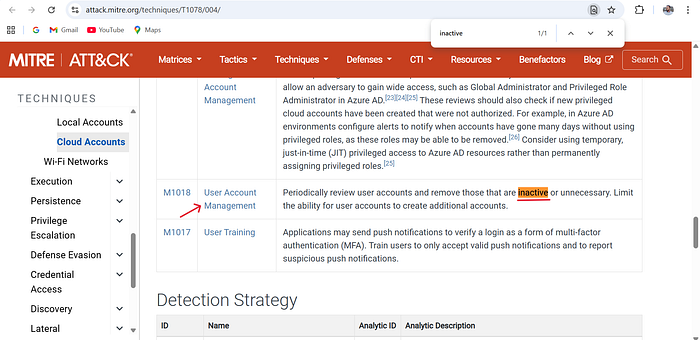
Answer : User Account Management
Q5. What Detection Strategy ID would you implement to detect abused or compromised cloud accounts?
- Stays on "Cloud Accounts" sub-technique and use find (CTRL+F), search "Detection Strategy" and look on ID column.
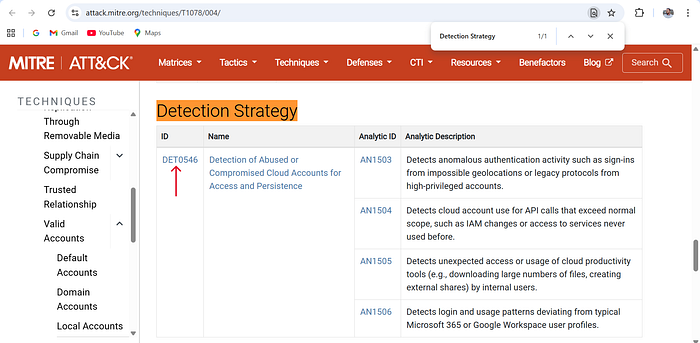
Answer : DET0546
Task 5 : Cyber Analytics Repository (CAR)
MITRE defines the Cyber Analytics Repository (CAR) as "a knowledge base of analytics developed by MITRE based on the MITRE ATT&CK adversary model. CAR defines a data model that is leveraged in its pseudocode representations, but also includes implementations directly targeted at specific tools (e.g., Splunk, EQL) in its analytics. With respect to coverage, CAR is focused on providing a set of validated and well-explained analytics, in particular with regard to their operating theory and rationale."
This all sounds a bit complex, so let's break it down. CAR is a collection of ready-made detection analytics built around ATT&CK. Each analytic describes how to detect an adversary's behavior. This is key because it allows you to identify the patterns you should look for as a defender. CAR also provides example queries for common industry tools such as Splunk, so you, as a defender, can translate ATT&CK TTPs into real detections.
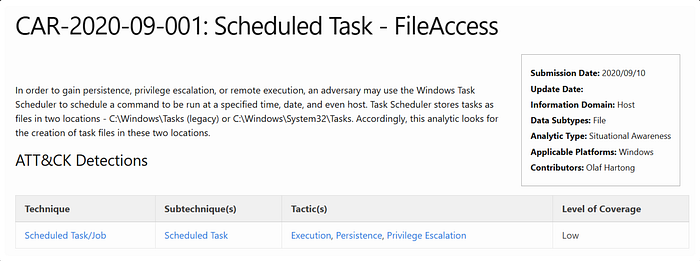
Let's dive in and get some hands-on experience with CAR. We will begin by examining CAR-2020–09–001: Scheduled Task — File Access. Upon visiting the page, we are given a description of the analytics and references to the associated ATT&CK tactics and techniques.
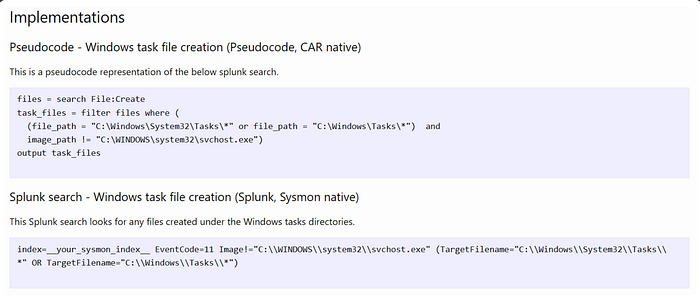
In the Implementations section, you are provided with Pseudocode, a Splunk query, and a LogPoint search as examples of how an analyst may filter for this technique using their organization's Security Information and Event Management (SIEM) platform. Pseudocode is a plain, human-readable way to describe a set of instructions or algorithms that a program or system will perform. Note that not every analytic within CAR will have the same implementation examples. Some analytics even include Unit Tests, which an analyst can use to validate whether the analytic works as intended.
CAR also has its own ATT&CK Navigator layer in which techniques are mapped to a matrix similar to what you saw previously when investigating groups. You will utilize the CAR Analytics List and matrix for the questions in this task.
Q1. Which ATT&CK Tactic is associated with CAR-2019–07–001?
- Click and open "CAR Analytics List" link.
- Use find(CTRL+F), Search "CAR-2019–07–001" and open that link.
- Do look carefully under Tactic(s) column to get first answer and have a look on "Analytic Type" to get second answer as well.


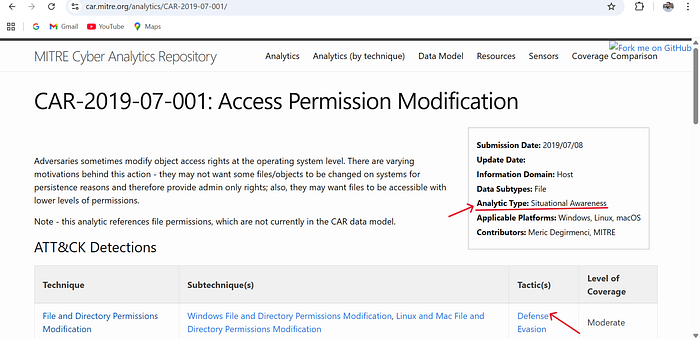
Answer : Defense Evasion
Q2. What is the Analytic Type for Access Permission Modification?
Answer : Situational Awareness
Task 6 : MITRE D3FEND Framework
With MITRE ATT&CK, you learn how attacks happen, but with MITRE D3FEND, you discover how to stop them.
D3FEND (Detection, Denial, and Disruption Framework Empowering Network Defense) is a structured framework that maps out defensive techniques and establishes a common language for describing how security controls work. D3FEND comes with its own matrix, which is broken down into seven tactics, each with its associated techniques and IDs.
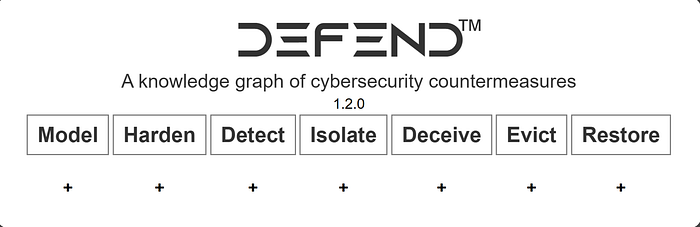
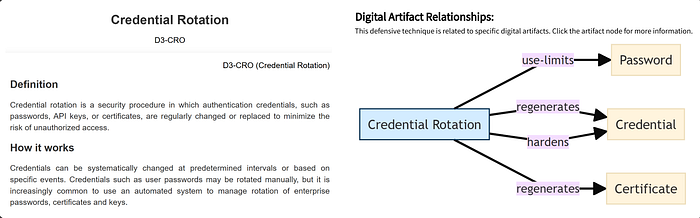
For example, the Credential Rotation D3-CRO technique emphasizes the regular rotation of passwords to prevent attackers from reusing stolen credentials. D3FEND explains how this defense works, what to consider when implementing it, and how it relates to specific digital artifacts and ATT&CK techniques, helping you see both perspectives: the attacker's move and the defender's countermeasure.
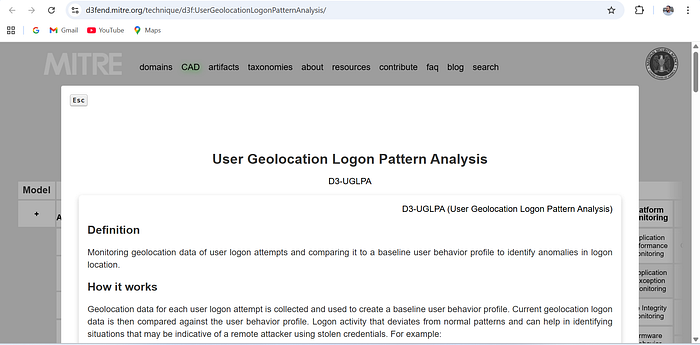
Q1. Which sub-technique of User Behavior Analysis would you use to analyze the geolocation data of user logon attempts?
- Click the mentioned User Behavior Analysis link, utilize find (CTRL + F), search "geolocation data" and under name column of Technique Subclasses.
- Copy it and paste it.

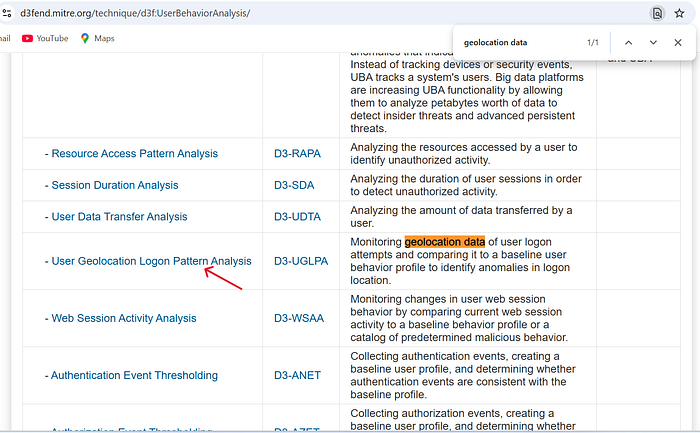
Answer : User Geolocation Logon Pattern Analysis
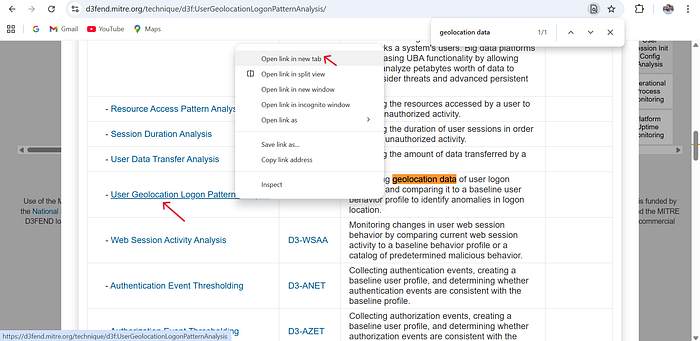
Q2. Which digital artifact does this sub-technique rely on analyzing?
- Stays of the same page, right-click and open the link into new tab.
- Scroll down a bit, there you'll get your answer.
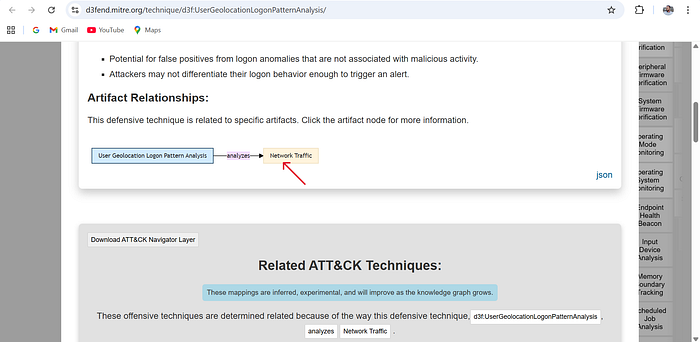
Answer : Network Traffic
Task 7 : Other MITRE Projects
Beyond the frameworks and tools we have discussed previously, MITRE offers several other projects designed to help cyber security professionals strengthen their skills, test their defenses, and outsmart attackers. In this task, we will briefly explore these tools and how they can support your growth in the field.
Emulation Plans
MITRE's Adversary Emulation Library, primarily maintained and contributed to by The Center for Threat Informed Defense (CTID), is a free resource of adversary emulation plans. The library currently contains several emulations that mimic real-world attacks by known threat groups. The emulation plans are a step-by-step guide on how to mimic the specific threat group.
Caldera
Caldera is an automated adversary emulation tool designed to help security teams test and enhance their defenses. It provides the ability to simulate real-world attacker behavior utilizing the ATT&CK framework. This allows defenders to evaluate detection methods and practice incident response in a controlled environment. Caldera supports offensive and defensive operations, making it a powerful tool for red and blue team exercises.
New and Emerging Frameworks

AADAPT (Adversarial Actions in Digital Asset Payment Technologies) is a newly released knowledge base that includes its own matrix, covering adversary tactics and techniques related to digital asset management systems. AADAPT follows a similar structure to the ATT&CK Framework we covered previously and aims to help defenders understand and mitigate threats targeting blockchain networks, smart contracts, digital wallets, and other digital asset technologies.
ATLAS (Adversarial Threat Landscape for Artificial-Intelligence Systems) is a knowledge base and framework that includes a matrix, focusing on threats targeting artificial intelligence and machine learning systems. It documents real-world attack techniques, vulnerabilities, and mitigations specific to AI technology.
Q1. What technique ID is associated with Scrape Blockchain Data in the AADAPT framework?
- Just follow on Scrape Blockchain Data link, you'll get the technique ID.

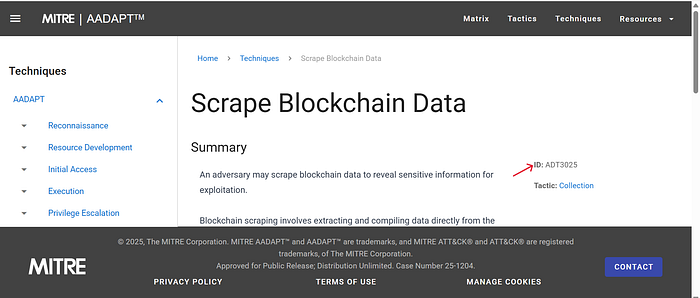
Answer : ADT3025
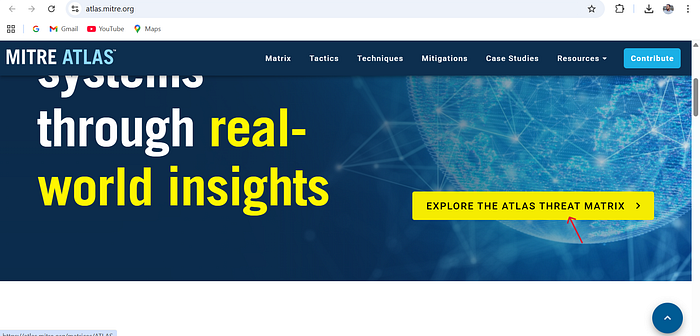
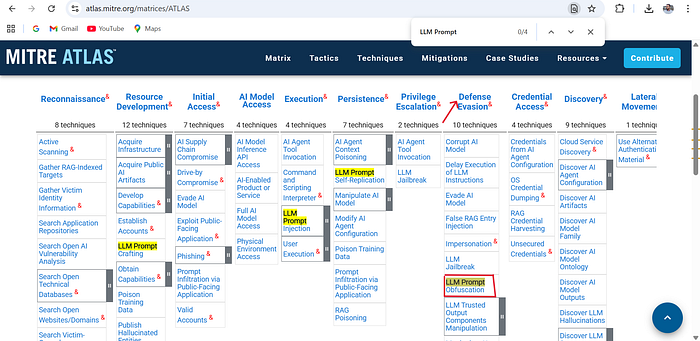
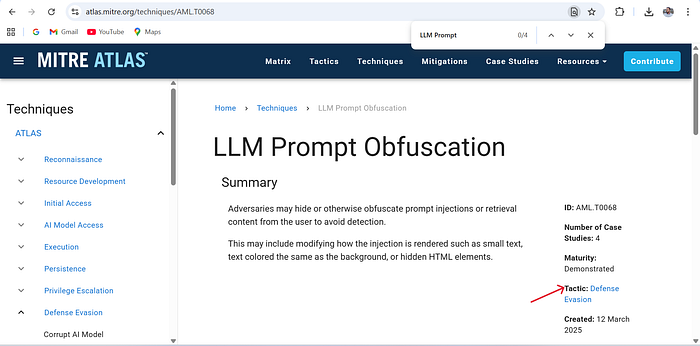
Q2. Which tactic does LLM Prompt Obfuscation belong to in the ATLAS framework?
- Now, click on ATLAS or LLM Prompt Obfuscation link
- Next, Explore the ATLAS THREAT MATRIX
- use find (CTRL + F) and search for "LLM Prompt" Obfuscation and look for relevant Tactic column. You can open it as well to view it in a more organized way.

Answer : Defense Evasion
Task 8 : Conclusion
In this room, you explored the tools and resources that MITRE has provided to the security community. The goal is to introduce you to these resources and provide you with a foundational understanding of their uses. Many vendors of security products and security teams worldwide consider these resources invaluable in their day-to-day efforts to thwart attackers. The more information we have as security professionals, the better equipped we are to fight back!
Q. Complete the room and continue on your cyber learning journey! (No answer needed)
NOTE : All the Theoretical content credit goes to it's original creator (tryhackme.com)
If you want more such TryHackMe room write-ups. Follow me on