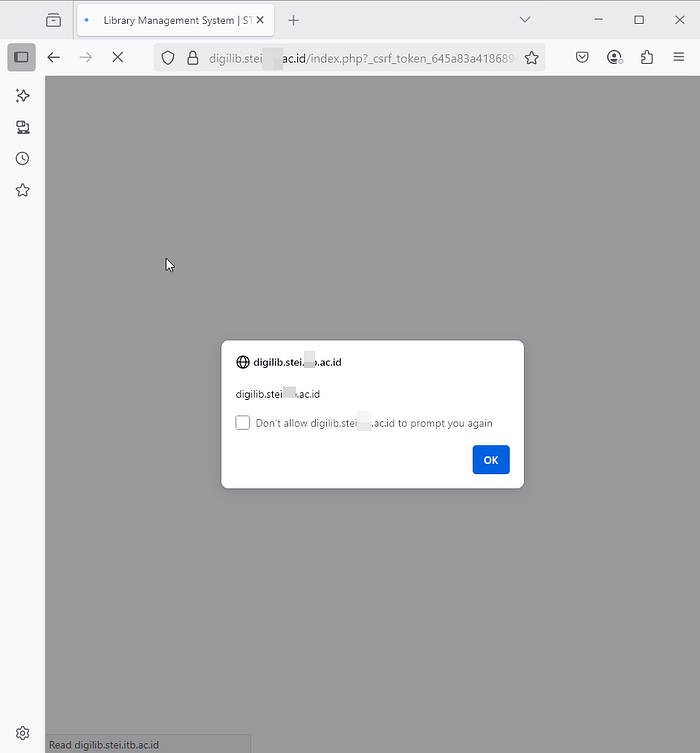
In an age where modern frameworks promise built-in security, it's surprising how even seemingly minor lapses can lead to critical security vulnerabilities. In this article, I share how I discovered three reflected XSS (Cross-Site Scripting) vulnerabilities on an academic web application — all of which were exposed using basic URL encoding techniques.
What made this interesting wasn't the complexity of the payloads — but rather how overlooked vectors and improper sanitization opened the door to full client-side code execution.
🧠 What Makes Reflected XSS Dangerous?
Reflected XSS vulnerabilities allow attackers to inject malicious scripts into a web page by reflecting unsanitized input directly back into the HTML response. If the browser interprets this input as executable JavaScript, it could allow:
- Account takeover via stolen cookies
- Redirection to malicious sites
- Unauthorized actions on behalf of users
But what makes this case special is how URL encoding helped bypass naive filtering and demonstrated the importance of context-aware output escaping.
💥 Vulnerability #1: XSS via Malicious Encoded Path
🔗 Payload (URL Encoded)
https://target-site.com/index.php/%22--%3E%3Cscript%3Ealert(document.domain)%3C/script%3E/index.php🧪 Decoded View:
/"--> <script>alert(document.domain)</script> /index.php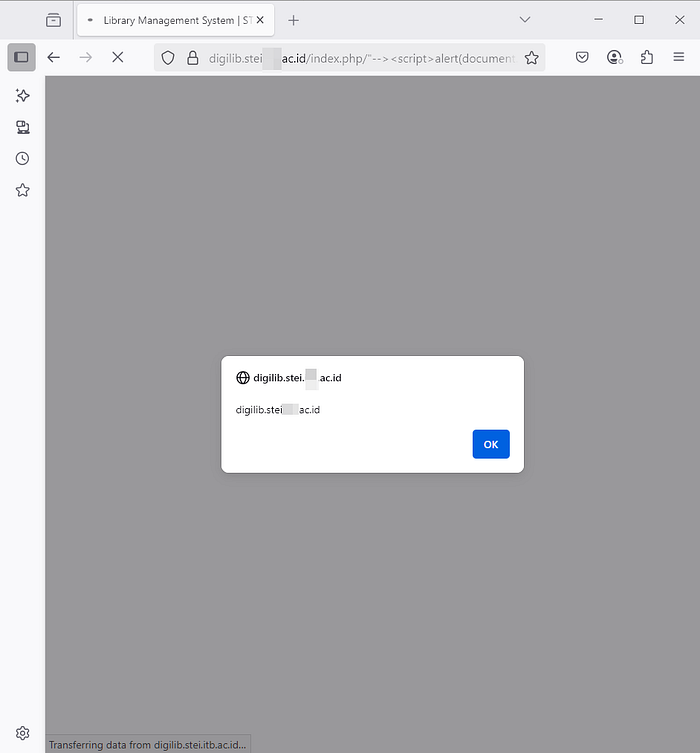
🕵️ Discovery Method:
I noticed the application reflected parts of the URL path in the page (possibly as part of breadcrumbs or error messages). This inspired me to craft a path payload instead of the usual query param.
The encoded portion %22--%3E%3Cscript%3E... breaks out of HTML context and executes the script. Let's break it down:
EncodedDecodedDescription%22"Closes an attribute--%3E-->Closes a comment (HTML)%3C<Begins <script> tag%3E>Ends a tag%28(Begins function argument%29)Ends function argument
🧩 Insight: The injection worked because the path input was interpolated directly into HTML without any escaping. By encoding the payload, I bypassed potential WAFs or regex-based input checks.
💥 Vulnerability #2: Classic XSS via Encoded Query Parameter
🔗 Payload (Encoded):
https://target-site.com/index.php?destination=%22%3E%3Cscript%3Ealert(document.domain)%3C/script%3E&p=member🧪 Decoded View:
destination="><script>alert(document.domain)</script>🕵️ Discovery Method:
I noticed that the app used a destination parameter to redirect users after login or actions. These parameters are often rendered in anchor tags or JavaScript redirection code.
The idea: inject into an HTML attribute or inline JS, break the context, and run code.
Technique Highlight:
%22(") breaks out of the attribute value.><script>...</script>injects new HTML.- The application reflected the
destinationparameter unsanitized into the DOM.
🧩 Insight: This is a textbook example of reflected XSS, but URL encoding gave it stealth — making the payload less obvious in logs and to input filters.
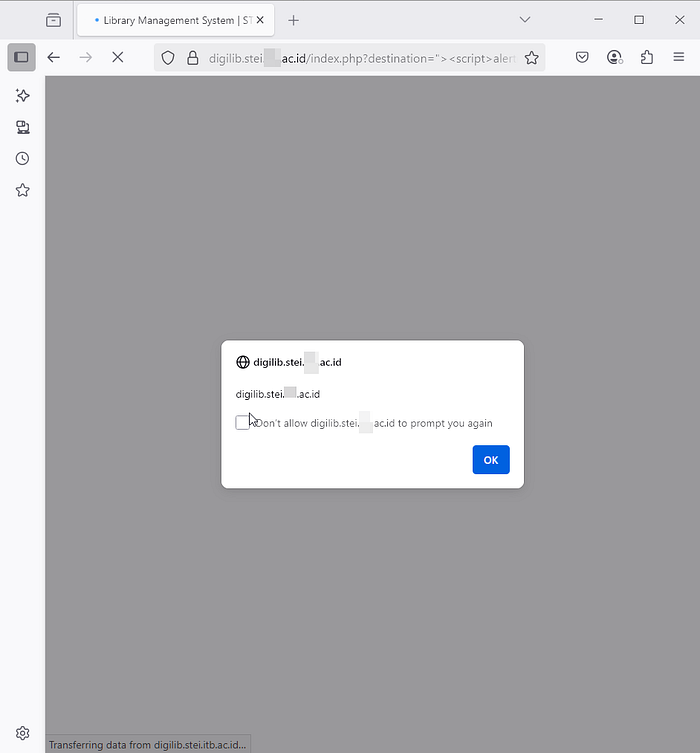
💥 Vulnerability #3: Login Flow XSS With Encoded Redirection
🔗 Payload (Encoded):
https://target-site.com/index.php?_csrf_token=...&destination=zbuip%22%3E%3Cscript%3Ealert(document.domain)%3C/script%3Ejgoihbmmygl&logMeIn=Login&memberID=admin&memberPassWord=password&p=member🧪 Decoded Segment of destination Param:
zbuip"><script>alert(document.domain)</script>jgoihbmmygl🕵️ Discovery Method:
After inspecting how the site handled failed login redirects, I found it used the destination parameter to determine where to redirect or display messages post-login.
This meant that if the app reflected the destination back in the HTML—perhaps in a form or a message—it could be a hidden XSS vector. And it was.
🧩 Insight: Even though CSRF tokens and login forms were present, the XSS was purely in the rendering of the destination. I didn't need valid credentials—just a cleverly encoded string.
🔬 Why URL Encoding Matters
URL encoding is a double-edged sword:
- To developers, it's a way to safely pass characters via URLs.
- To attackers, it's a way to obfuscate payloads, bypass filters, and sneak malicious input through shallow input validation.
In these cases, the vulnerable system failed to:
- Properly decode and validate input server-side.
- Encode output based on its context (HTML, attribute, or JS).