June 6, 2026
Nigeria Is Bleeding!
The Morning Everything Changed

Herijay || Web3 Researcher
9 min read
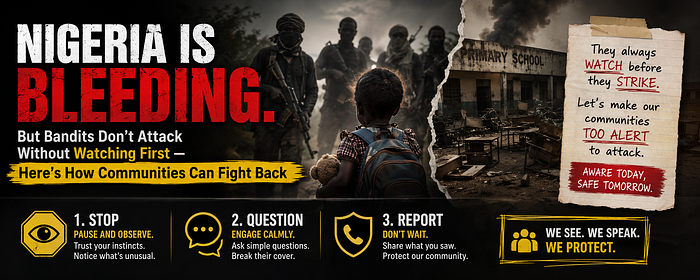
Nigeria Is Bleeding! But Bandits Don't Attack Without Watching First ~ Here's How Communities Can Fight Back
On the morning of May 15, 2026, armed men stormed three schools in the quiet communities of Yawota and Ahoro-Esinele in Oriire Local Government Area, Oyo State.
Their targets were schools. In coordinated raids, they abducted students and teachers, forcing them into the bush. Witnesses described the attackers as heavily armed, moving swiftly and leaving behind panic and destruction.
The gunmen moved between Yawota and Esinele communities, located only about five to eight minutes apart by road. They first struck in Yawota, abducting nine students, before moving to Esinele to seize more students and teachers, then returning to Yawota again.
In total, 46 people were taken, seven teachers and 39 students. The youngest was a two-year-old toddler named Christianah Akanbi, from Yawota Baptist Nursery and Primary School. A child still learning to walk, dragged into the forest by armed men.
A teacher who attempted to escape through a window during the attack was shot. A commercial motorcyclist passing by was also hit by gunfire after the kidnappers mistook him for someone pursuing them.
One of the abducted teachers was Michael Oyedokun, a mathematics teacher born September 26, 1968. He was beheaded by the bandits two days after the abduction.
This was not random. This was planned. And the most painful part? The warning signs were already there, two days before the attack.
Two days before the strike, there was a woman selling beans and bread in the community. Normally her daily earnings were around ₦5,000 to ₦7,000. But for those two days before the attack, she was suddenly making ₦20,000, ₦22,000, even ₦25,000 per day. She assumed business was booming, perhaps a market day she didn't know about. She never told the Baale, never told the teachers, never told anyone.
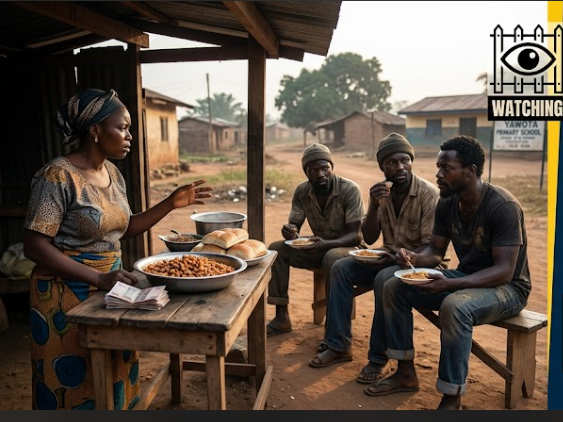
It later turned out that those people buying food were the criminals conducting surveillance, eating, watching, studying the schools, timing the movements, and preparing to strike.
This is Nigeria in 2026. We wake up every morning not knowing if our children will come home from school. We send them out with a lunch box and a prayer, because that is all we have. We live in fear, not the distant fear of something that happens to other people but the close, suffocating fear of people who have watched it happen to their neighbors, their relatives, their communities. And still, when the warning signs appear, we don't act. Not because we don't care. But because nobody ever taught us how.
Someone saw something. Nobody knew what to do with it.
But before we talk about what to do, we need to understand something most Nigerians have never been taught, that every attack has a before. And that before is where everything can still be stopped.
They Always Watch Before They Strike
Bandits and armed groups do not attack blind. Before every school raid, every village massacre, every kidnapping, there is a surveillance phase. Someone visits and studies the layout. Someone notes how many teachers are on the compound. Someone watches gate patterns and counts students. Someone eats beans and bread from a local woman while memorizing every detail of the community they plan to destroy.
Investigators have confirmed that criminal gangs use the Old Oyo National Park forest as a launchpad, moving in, watching communities, retreating into the park, and coming back when they are ready to strike.
As far back as January 2026, the Oyo State Police had already received credible intelligence of a planned bandit attack in Oriire Local Government Area and had issued warnings. The communities had been on the radar. The signs were there. But without a simple system for ordinary people to act on what they see, warnings remain warnings.
So what do ordinary Nigerians, teachers, parents, okada riders, food sellers, do with that knowledge? How do you act on what you see without putting yourself in danger? That is exactly what the SQR method was built for.
STEP 1 ~ STOP: Pause and Observe
Two days before the Oyo attack, the bandits were not hiding. They were sitting in the open, buying food, walking around, watching. A local food seller noticed her sales had jumped from ₦7,000. a day to ₦25,000. She saw unfamiliar faces buying more than usual. She felt something was different but she had no framework to interpret it, so she dismissed it as good fortune.
It was later established that those customers had allegedly been members of the kidnapping gang conducting reconnaissance ahead of the operation. That seller saw something real. Her instincts registered something unusual. But without knowing what to do with that feeling, she moved on. Two days later, 46 people were taken into a forest.
STOP is the step that changes this.
What It Means
Before anything else, pause and observe. Don't rush to conclude. Don't dismiss your gut. Just stop and look properly.
Suspicious doesn't mean someone looks poor or unfamiliar. It means their behavior doesn't fit the situation.
Watch for:
- Strangers eating or lingering in a community with no clear reason for being there
- Unfamiliar motorcycles or vehicles passing the same spot repeatedly
- People asking unusual questions about school routines: When does school close? How many teachers sleep here?
- A sudden spike in unusual activity, more strangers, more movement, more unfamiliar faces than normal
- People watching, communicating on phones, and scanning the environment
Give it ten seconds. Don't look away. Your instincts exist for a reason. If something feels different, treat it as different until you know otherwise.
Stopping and observing gives you information. But information sitting in your head helps nobody. The next step is doing something with it, without confrontation, without weapons, and without putting yourself at risk.
STEP 2 ~ QUESTION: Engage Without Confrontation
After the Oyo attack, Senator Abdulfatai Buhari, who represents the affected communities made a striking point on national television. He said the attackers left telltale signs that could have helped authorities nip the attack in the bud if only someone had spoken up, if the beans seller had told the Baale, if a teacher had asked the unfamiliar faces who they were, if anyone had simply broken the silence.
One question. That is all it would have taken to disrupt the plan.
When a suspicious person is calmly asked "Who are you looking for here?" they face a choice. They either provide a believable answer and move on, or they panic, get aggressive, or disappear quickly. Either way, their cover is broken. Either way, the community gains information. And most importantly, they now know they have been seen and that alone is often enough to make them abandon the plan.
What It Means
You are not an arresting officer. You carry no badge, no weapon, and no authority to detain anyone. Your only job is to let suspicious people know they have been noticed.
Try:
- Good evening, who are you looking for around here?
- Can I help you? This is a school compound.
- You've been around this area a while, is everything okay?
What their response tells you:
✅ Clear answer, moves on calmly = probably fine
🚩 Gets aggressive or gives vague, evasive answers = red flag
🚩 Pretends not to hear and walks away quickly = suspicious
Stay polite. Keep your distance. Do not touch anyone. The goal is simple, break their cover and let them know this community pays attention.
You have stopped. You have observed. You have asked a question and something still doesn't feel right. Now comes the most important step and the one most Nigerians skip entirely.
STEP 3 ~ REPORT: Don't Wait for Proof
Armed bandits had previously invaded the National Park Service office at Oloka village in Oriire, killing five forest guards. That was in January 2026, four months before the school attack. Residents of surrounding communities told investigators that they had long known criminals were using that forest as a base. They had seen things. They had sensed things. But there was no clear channel, no habit, no community system to push that information upward before it was too late.
By the time May 15 arrived, the bandits were no longer strangers to the area. They had been watching for months. And the community had been watching them but silently.
Reporting breaks that silence. It turns individual observations into collective intelligence. And collective intelligence stops attacks.
What It Means
If something felt wrong, report it immediately. Don't wait until you are certain. Don't assume someone else will handle it. Don't worry about being wrong, a false alarm is always better than a preventable tragedy.
Report to:
- Your school or community security WhatsApp group
- Your local vigilante group, CDA contact, or community leader (the Baale, the Sarkin Gari, the chairman)
- Neighbors, a knock, a shout, or an agreed community signal
Use this 30-second format:
📍 Location | 🕐 Time | 👁️ What you saw | ➡️ Direction they went
Report behavior, not just people:
❌ "Some strangers look suspicious near the school" causes arguments
✅ "Three unfamiliar men on motorcycles have been buying food near the school gate since yesterday. They keep looking toward the dormitory block and have not spoken to anyone." gets action
Facts move people. Vague labels start debates.
The SQR method works when it is followed completely. But there is another side to community security that nobody talks about, the mistakes people make in the heat of the moment that turn a manageable situation into a disaster.
WHAT NOT TO DO And Why It Matters
After the Oyo abduction, social media exploded. A viral video clip, falsely presented as footage of bandits torturing the abducted Oyo pupils, spread widely. Verification later showed it had been online more than two weeks before the abduction and was linked to a completely different incident in Burkina Faso.
Another widely shared clip claimed to show Nigerian soldiers suffering casualties during a rescue operation. It turned out to be a staged skit.
These false posts didn't just spread panic, they actively endangered the rescue operation. They gave wrong information to families, misled the public, and muddied the intelligence picture for security agencies working to bring the children home.
Good intentions, no discipline, real damage.
What It Means
- Don't chase or try to arrest anyone alone, observe and report, that is your role
- Don't post photos or videos online calling someone a criminal without verified proof, you could be wrong, and in a crisis, misinformation kills
- Don't confront anyone if you are alone and they appear armed, your life matters more than the confrontation
- Don't wait for someone else to report, if you saw it, you own it
- Don't share unverified updates during an active security crisis, check before you forward
Being brave is not the goal. Being smart, disciplined, and coordinated is.
Knowing what not to do is half the battle. The other half is making sure that what you should do becomes so natural, so practiced, so automatic, that when the moment arrives, your community doesn't freeze. It acts.
Train It Until It Becomes Normal
Awareness without practice fades. SQR only works when it becomes a community habit, as natural as locking your gate at night.
Try this at your next PTA meeting, CDA gathering, or community security briefing:
- Have one person act suspicious, others practice Stop, Question, Report
- Agree on what questions sound natural in your area
- Review past incidents and ask: "Where could SQR have stopped this?"
Senator Buhari himself stressed the critical importance of community vigilance and timely reporting, arguing that such information could make the difference in preventing future attacks on vulnerable communities.
When a community makes SQR a habit, criminals notice. Places where people ask questions and report unusual behavior get fewer attempts, because word spreads: "That community is too alert. Move on."
Training builds habit. Habit builds culture. And a community with a security culture is a community that criminals avoid. But all of this means nothing unless we are honest about what is at stake and who we are doing this for. None of us knows what tomorrow holds.
The families of Yawota didn't know on the morning of May 14th what May 15th would bring. We cannot predict the day or the hour, but we can prepare. We can practice. We can start today. Because the best time to build a security culture in your community was yesterday. The second best time is right now.
Final Word
A beans seller in Yawota watched her earnings jump from ₦1,200 to ₦20,000 in two days and thought God had blessed her business. Two days later, 46 people, including a two-year-old girl, were dragged into a forest.
A mathematics teacher named Michael Oyedokun was beheaded. Children were tied together eight at a time on motorcycles and driven deep into the bush.
Our government has failed us.
There is no softer way to say it. No soldiers came out. No policy stopped them. No leader was held accountable. Bandits walked into three schools in broad daylight, took 46 human beings including a two-year-old and walked back into the forest. And the same government that couldn't protect them showed up days later with press statements and promises.
We have heard the promises before.
So we cannot wait for them anymore. The fix has to start with us, parents, teachers, food sellers, okada riders, local leaders, and ordinary residents who decide that what they see matters.
The SQR method costs nothing. It breaks no law. It requires no weapon. It only asks that we stop pretending we don't see what we see.
The next time you notice an unfamiliar face lingering near your child's school, don't guess. Don't ignore it. Don't wait.
Stop. Ask. Report.
That 30-second action might be the difference between a story that ends in rescue and one that ends in mourning.