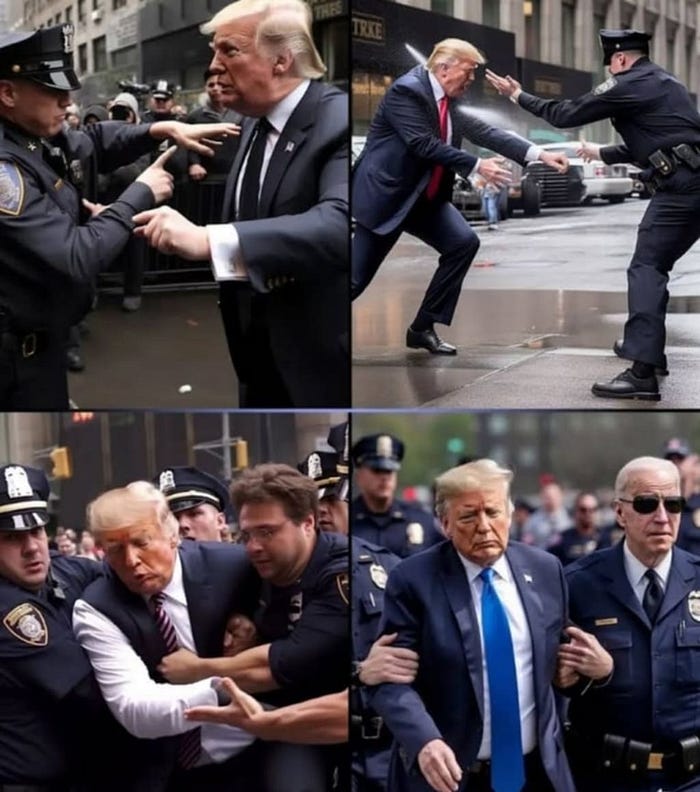


Something changed in how I verify what I see online
Opening
There was a time when seeing something felt like the end of the discussion. A video was enough. If someone appeared on screen saying something, it carried weight automatically, almost without question.
In 2026, that certainty doesn't feel as stable anymore.
Now I notice how easily a voice on a call can sound exactly like someone familiar. A video of a known person can prove actions that never actually happened. Even live video calls don't fully guarantee who is actually on the other side.
What feels unusual is that there wasn't a clear moment when trust broke. It didn't collapse suddenly. It faded more quietly, almost unnoticed.
When Reality Became Editable
When I first encountered deepfake technology, it didn't register as something dangerous. It looked more like an experiment at the edge of AI, face generation, voice cloning, and realistic video synthesis.
But that early impression doesn't hold for long.
With only a few seconds of audio and a single image, modern systems can recreate someone's face, voice, and behaviour patterns with a level of accuracy that feels uncomfortable when you really think about it. It doesn't look fake in an obvious sense anymore. It can pass as real in quick judgment moments.
And that's where things start to feel different.
The New Face of Scams
What stands out to me is how ordinary these scams can appear at first glance.
Traditional scams often revealed themselves through small flaws. Strange wording, awkward sentences, or obvious inconsistencies. There was usually something slightly "off."
Deepfake scams don't depend on that.
They rely on familiarity.
A video call that looks like a manager asking for an urgent transfer can feel completely normal. The voice matches expectations. The urgency feels real. There's no immediate reason to doubt it.
Until later.
Or a family member calling in distress, asking for help. The emotional pressure builds quickly, and in that moment, reasoning doesn't always lead.
It feels less like systems being broken, and more like instincts being used against themselves.
Why This Works So Well
One thing I keep coming back to is how strongly we rely on sight and sound.
For most of my life, visual confirmation felt like the most reliable proof. If I saw it, I accepted it. If I heard it directly, I trusted it enough.
Deepfakes quietly interrupt that assumption.
Now, authenticity isn't about appearance alone. It's about verification. But verification is not something people naturally slow down to do in real time, especially when there is pressure involved.
And that pressure is exactly what gets exploited.
The Collapse of "Digital Proof"
It feels like the internet is entering a phase where evidence itself becomes less dependable.
A video no longer guarantees truth. A voice recording doesn't confirm identity. Even live interactions can be artificially generated.
What makes this more complicated is that it doesn't only affect scams. It affects how trust works in general.
If anything can be fabricated, even real evidence can be questioned. And when that happens often enough, certainty starts to weaken.
It creates a kind of background doubt that doesn't fully go away.
The Human Cost
What feels most concerning is not the technology itself, but how easily emotion can be guided.
These scams often rely on urgency. Fear, panic, pressure, sometimes even relief. When emotions rise quickly, reflection becomes harder. That is usually the point where decisions slip.
Loss doesn't always come from ignorance. It often comes from moments where everything feels real enough to act immediately.
And with AI making emotional imitation more believable, that moment becomes harder to identify.
The Arms Race for Trust
There are efforts being made to respond to this. Verification systems, digital signatures, AI detection tools, and layered authentication.
But none of it feels final.
It resembles a continuous adjustment rather than a solution. As detection improves, generation methods also evolve.
So the real challenge doesn't feel like stopping fake content entirely. It feels more like figuring out what can still be trusted when both real and fake can look identical at the surface level.
What does this change for everyone
The shift here feels more psychological than technical.
A new habit seems necessary, one where verification comes before belief.
Not everything familiar is necessarily real anymore. Not every urgent message is legitimate. Not every convincing voice should be accepted immediately.
It doesn't require paranoia. But it does require slowing down reactions that once felt automatic.
Because that first instant, before checking anything, is often the moment these systems depend on.
Final Thought
There was a time when cameras felt like neutral witnesses. Then editing changed that assumption. Voices felt reliable until cloning made that uncertain, too.
Each layer of digital certainty seems to have been slowly rewritten.
What remains now is a more uncertain version of reality online, where seeing and hearing are no longer enough on their own.
The rise of deepfake scams is not only about fraud or technology.
It feels like a shift in how trust itself behaves.
And once trust can be reproduced, reality online starts to feel less fixed than it once did.