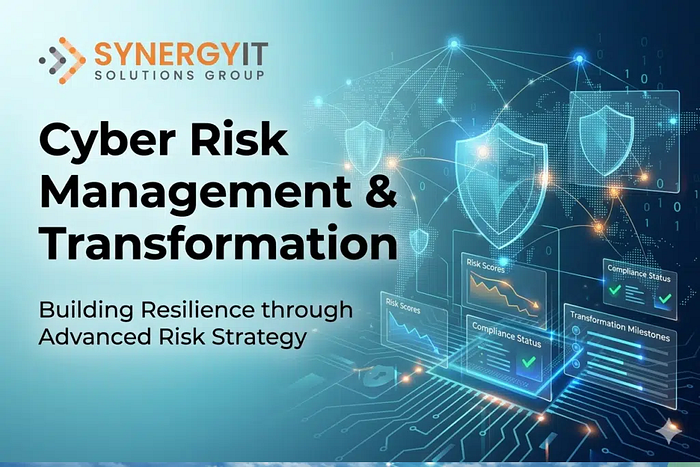
Cyber risk is no longer just an IT issue — it's a business risk that impacts revenue, operations, compliance, and reputation. In 2026, organizations across the U.S. are facing increasingly sophisticated cyber threats, regulatory pressures, and growing attack surfaces due to cloud, AI, and remote work.
Modern businesses need more than protection — they need continuous risk visibility, proactive defense, and strategic transformation. This is where Cyber Risk Management & Transformation becomes critical — helping you identify, prioritize, and reduce risk while aligning security with business growth.
Why Cyber Risk Management is Critical for Businesses Today
Most businesses assume they are secure — until an incident proves otherwise. The reality is that cyber risks are evolving faster than traditional security approaches can handle. Organizations today must deal with unknown vulnerabilities, identity-based attacks, supply chain risks, and compliance challenges — all at once.
Key Challenges Businesses Face:
- Increasing ransomware and phishing attacks
- Lack of visibility across cloud and hybrid environments
- Compliance pressure (HIPAA, SOC 2, NIST, etc.)
- Limited internal cybersecurity expertise
- Delayed response to threats and incidents
Without a structured risk management approach, businesses remain reactive instead of proactive. Assess Your Cyber Risk Exposure Today:
First Name *
Last Name *
Business Phone *
Business Email *
How can we help you to fulfill your IT needs? *
0 / 500
Get a FREE Consultation Quickly
What is Cyber Risk Management & Transformation?
Cyber Risk Management & Transformation is a strategic approach that goes beyond traditional security. It focuses on identifying risks, prioritizing them based on business impact, and implementing long-term, scalable security improvements. It's not just about tools — it's about transforming how your organization manages and responds to cyber risk.
What It Includes:
- Risk identification and assessment
- Continuous monitoring and threat detection
- Security strategy alignment with business goals
- Implementation of modern frameworks (Zero Trust, NIST)
- Ongoing optimization and improvement
The goal is to shift from firefighting threats → to preventing them. Get a Customized Risk Management Strategy.
Identify What Matters: Risk Visibility & Assessment
You cannot protect what you cannot see. Many businesses operate with hidden risks across endpoints, cloud environments, identities, and third-party systems. A comprehensive risk assessment provides clear visibility into vulnerabilities, threats, and business impact.
What You Gain:
- Full visibility into your IT and security landscape
- Identification of high-risk vulnerabilities
- Risk prioritization based on business impact
- Actionable insights for remediation
- Clear roadmap for improvement
This step forms the foundation of all cybersecurity decisions. Let's Find Out Hidden Risks in Your Environment.
Reduce Risk with a Proactive Security Framework
Reactive security is no longer enough. Businesses must adopt proactive, structured frameworks that continuously reduce risk. Modern frameworks like Zero Trust ensure that every access request is verified, every system is monitored, and every threat is addressed in real time.
Key Capabilities:
- Zero Trust implementation
- Identity and access control
- Endpoint and network protection
- Threat detection and response
- Continuous monitoring
This approach reduces attack surfaces and prevents lateral movement within systems. Strengthen Your Security Posture Now:
First Name *
Last Name *
Business Phone *
Business Email *
How can we help you to fulfill your IT needs? *
0 / 500
Get a FREE Consultation Quickly
Transform Your Security Strategy
Many businesses invest in tools — but still experience breaches. The missing piece is strategy and integration. Cyber Risk Transformation focuses on aligning people, processes, and technology to create a unified and effective security approach.
What Transformation Looks Like:
- Aligning cybersecurity with business objectives
- Integrating tools into a unified security ecosystem
- Automating processes to reduce human error
- Improving response time to incidents
- Building a scalable and future-ready security model
True transformation ensures that security becomes a business enabler, not a bottleneck. Transform Your Cybersecurity Strategy.
Compliance & Risk Alignment for U.S. Businesses
Compliance is no longer optional — it's a business requirement. Whether you're in healthcare, finance, or SaaS, meeting regulatory standards is essential to operate and grow. Cyber Risk Management ensures your organization is audit-ready and compliant at all times.
Key Compliance Areas Covered:
- HIPAA (Healthcare)
- SOC 2 (Service Organizations)
- NIST & CMMC frameworks
- Data privacy regulations
- Industry-specific compliance requirements
Compliance isn't just about avoiding penalties — it's about building trust with customers and partners. Ensure Your Business is Audit-Ready.
Continuous Monitoring & Real-Time Risk Reduction
Cyber threats don't operate on a schedule — so your security shouldn't either. Continuous monitoring ensures that risks are identified and addressed before they become incidents.
What Continuous Monitoring Delivers:
- Real-time threat detection
- Immediate response to suspicious activity
- Reduced dwell time of attackers
- Ongoing visibility into security posture
- Improved incident response efficiency
This ensures your business remains protected 24/7. Enable 24/7 Risk Monitoring:
First Name *
Last Name *
Business Phone *
Business Email *
How can we help you to fulfill your IT needs? *
0 / 500
Get a FREE Consultation Quickly
Business Benefits of Cyber Risk Transformation
Cybersecurity is no longer just a defensive measure — it's a business growth strategy. Organizations that invest in cyber risk transformation gain a competitive advantage by becoming more secure, compliant, and resilient.
Key Business Outcomes:
- Reduced risk of cyberattacks
- Improved operational continuity
- Increased customer trust
- Faster response to threats
- Better ROI on security investments
- Stronger competitive positioning
Businesses that prioritize cybersecurity are seen as more reliable and trustworthy partners. Future-Proof Your Business Today.
Why Businesses Are Shifting to Risk-Based Security
Traditional security focuses on tools — modern security focuses on risk. By prioritizing risks based on their impact, businesses can:
- Focus resources where it matters most
- Reduce unnecessary spending
- Improve decision-making
- Strengthen overall security posture
This shift ensures maximum protection with optimized investment. Start Your Risk-Based Security Journey.
Cyber Risk is Evolving — Is Your Business Ready?
Cyber threats, compliance requirements, and business expectations are evolving rapidly. Organizations that fail to adapt risk falling behind — not just in security, but in growth and competitiveness.
Cyber Risk Management & Transformation ensures your business is:
- Secure
- Compliant
- Scalable
- Future-ready
Not sure where your business stands? Get a personalized cyber risk assessment and uncover gaps before they become threats:
First Name *
Last Name *
Business Phone *
Business Email *
How can we help you to fulfill your IT needs? *
0 / 500
Get a FREE Consultation Quickly
FAQs:
1. What is Cyber Risk Management in simple terms?
Cyber Risk Management is the process of identifying, assessing, and reducing cybersecurity risks that could impact your business operations, data, and reputation. It helps organizations move from reactive security to proactive protection.
2. Why do businesses in the U.S. need Cyber Risk Management in 2026?
Cyber threats are becoming more advanced, and regulations are stricter than ever. U.S. businesses need cyber risk management to prevent data breaches, ensure compliance, and maintain customer trust while supporting business growth.
3. How is Cyber Risk Management different from traditional cybersecurity?
Traditional cybersecurity focuses on tools and protection, while Cyber Risk Management focuses on business impact — prioritizing risks, aligning security with business goals, and continuously improving security posture.
4. What are the biggest cyber risks businesses face today?
The most common risks include ransomware attacks, phishing, identity-based attacks, cloud misconfigurations, insider threats, and lack of visibility across IT environments.
5. How does Cyber Risk Transformation help my business grow?
It aligns security with business strategy, reduces downtime, improves operational efficiency, and builds trust with customers — helping your business scale securely and confidently.
6. What industries benefit most from Cyber Risk Management?
Industries like healthcare, finance, SaaS, retail, manufacturing, and legal services benefit the most due to strict compliance requirements and high-value data.
7. How do I know if my business is at risk?
If you lack visibility into your systems, haven't done a recent security assessment, or rely on outdated tools, your business may already be exposed to hidden cyber risks.
8. What is included in a Cyber Risk Assessment?
A cyber risk assessment typically includes vulnerability scanning, risk identification, threat analysis, compliance review, and a roadmap for improving security posture.
9. How often should a business perform a cyber risk assessment?
Businesses should perform assessments at least annually, or more frequently if they undergo major changes like cloud migration, remote work adoption, or compliance audits.
10. What is Zero Trust and how does it reduce cyber risk?
Zero Trust is a security model where no user or system is trusted by default. Every access request is verified, reducing the chances of unauthorized access and limiting potential damage.
11. Can small and mid-sized businesses benefit from Cyber Risk Management?
Yes, small and mid-sized businesses are often more targeted because they have fewer defenses. Cyber risk management helps them protect assets without requiring large internal teams.
12. How does Cyber Risk Management support compliance?
It helps businesses align with frameworks like HIPAA, SOC 2, and NIST by identifying gaps, improving controls, and ensuring continuous monitoring and reporting.
13. What happens if cyber risks are not managed properly?
Unmanaged risks can lead to data breaches, financial losses, downtime, legal penalties, and damage to brand reputation.
14. How long does it take to implement Cyber Risk Management?
The timeline depends on the size and complexity of your environment, but initial assessments and improvements can start delivering value within weeks.
15. What should I do as a first step?
The first step is to assess your current security posture to identify risks, gaps, and opportunities for improvement.
Contact : Synergy IT solutions Group US : 167 Madison Ave Ste 205 #415, New York, NY 10016 Canada : 439 University Avenue, 5th Floor, Toronto, ON M5G 1Y8 US : +1(917) 688–2018 Canada : +1(905) 502–5955 Email : info@synergyit.com sales@synergyit.com info@synergyit.ca sales@synergyit.ca Website : https://www.synergyit.ca/, https://www.synergyit.com/