

In bug bounty hunting, there is a golden rule: The more time you spend on a target, the more its secrets unfold. Many researchers move on after finding their first bug, but I prefer a "deep dive" approach. Today, I'm sharing how I discovered four different vulnerabilities — ranging from SVG XSS to IDOR — on a single VDP program by simply testing every function.
Note: This is a series of vulnerabilities I discovered in early 2024. Due to disclosure policies and timing, I'm only able to share the details with you now.
Bug 1–2: HTML Injection & XSS via Profile Description
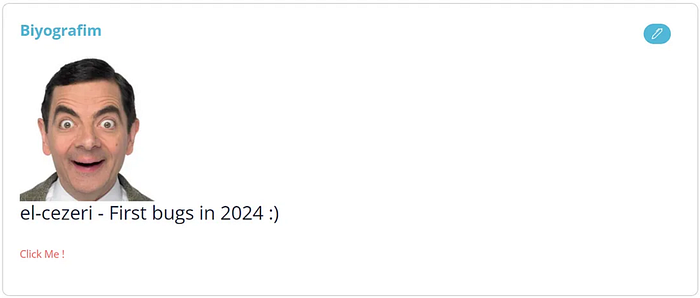
My first stop was the /profile section. I started by testing the "Edit Profile" description field with simple characters like 123<>.
- Discovery: The page source revealed that the input was reflected directly without any filtering or WAF protection.
- Exploitation: I injected
<h1>tags for visual impact and an<a>tag to redirect users. This confirmed that any user visiting the profile would execute my HTML/JS payload.
Bug 3: XSS via SVG (Bypassing the Content Filter)
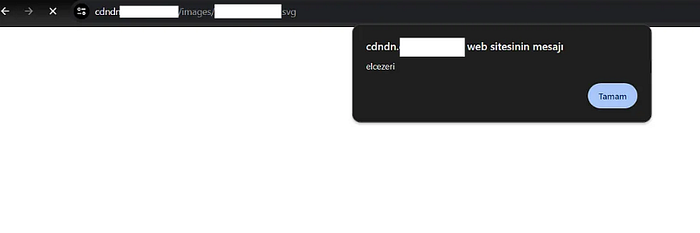
The application had a public dashboard where users could create posts. While standard tags like <script> were strictly blocked, I noticed the app allowed SVG file uploads for images.
- The Technique: I prepared a malicious
.svgfile containing an XSS payload. - The Result: Even when security filters are in place for text inputs, file uploads are often overlooked. When the SVG was opened in a new tab or viewed directly, the XSS triggered successfully.

Bug 4: IDOR — Unauthorized Post Deletion
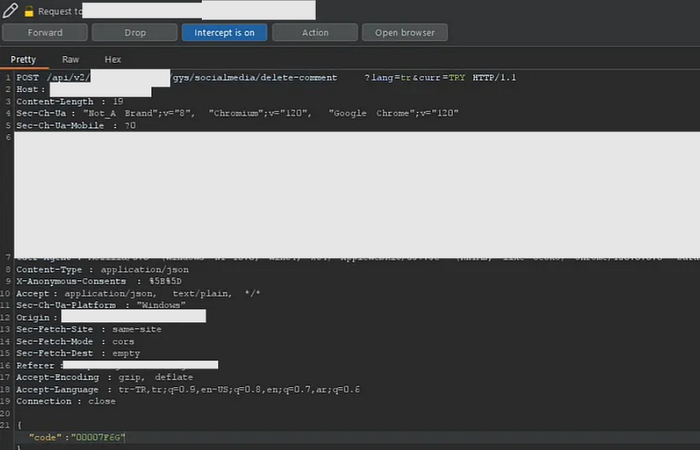
This was the most critical finding. While interacting with the dashboard, I captured a "Delete Post" request using Burp Suite.
- The Attack: I identified the
POSTIDparameter. I then initiated a deletion for my own post but swapped my ID with a victim'sPOSTID. - Result: The server failed to verify ownership, allowing me to delete any post on the platform.
Out of 4 reports, 3 were accepted immediately. This experience reinforced a key lesson: Don't just scratch the surface. If you find one bug, keep digging. There is a high chance that the developers made similar mistakes in other parts of the same application.
Stay Connected
- X (Twitter): @xelcezeri
- LinkedIn: Samet Yiğit