
Password spraying remains one of the most effective initial access techniques in enterprise environments despite widespread awareness and defensive tooling. Unlike brute-force attacks, password spraying exploits systemic weaknesses in authentication telemetry, identity governance, and alert fatigue. This post analyzes why password spraying scales, why detection frequently fails, and what defenders misunderstand about modern spraying campaigns, from a red team perspective.
What Makes Password Spraying Fundamentally Different
Password spraying is not a technical exploit — it is a behavioral and architectural exploit.
Key characteristics:
- Low authentication failure rate per account
- High aggregate success probability
- Abuse of normal authentication pathways
- Relies on statistical invisibility, not evasion
Unlike brute-force attacks, spraying operates below most alert thresholds, blending into legitimate authentication noise.
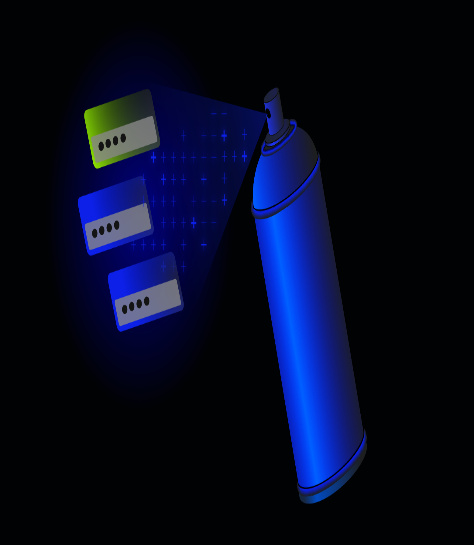
Why "Detection" Usually Fails in Practice
Alerting Is Account-Centric, Not Campaign-Centric
Most identity security systems evaluate:
- Failed logins per user
- Lockout thresholds per account
- MFA challenges per session
Password spraying operates horizontally, distributing attempts across many identities, which means:
- No single account appears under attack
- No lockout thresholds are triggered
- Alerts lack sufficient severity
This is a detection model mismatch, not a tooling failure.
Authentication Noise Masks Malicious Signal
In large enterprises:
- Failed logins are normal
- Legacy applications mis-authenticate frequently
- Mobile and conditional access policies generate false failures

Spraying traffic statistically resembles:
- User password mistakes
- Device re-enrollment
- Token refresh issues
- Misconfigured services
Detection engines struggle to separate intentional abuse from ambient failure noise.
Identity Infrastructure Weaknesses That Enable Spraying
Inconsistent Authentication Controls
Password spraying thrives when:
- MFA is inconsistently enforced
- Legacy protocols remain enabled
- Service accounts are poorly governed
- Password complexity ≠ password uniqueness
Attackers do not target "strong passwords" — they target shared password behavior.
Identity Sprawl Increases Attack Surface
Modern environments include:
- On-prem Active Directory
- Cloud IAM

- SaaS identity providers
- Federated trust relationships
Each introduces:
- Separate logging pipelines
- Different enforcement policies
- Detection blind spots at trust boundaries
Spraying succeeds when identity telemetry is fragmented.
Why Rate Limiting Rarely Stops Spraying
Rate limiting is effective against:
- High-frequency attacks
- Single-source abuse
- Scripted brute-force attempts
Password spraying bypasses this by:
- Remaining within "human-like" authentication patterns
- Leveraging distributed identity targets
- Operating across authentication surfaces (VPN, OWA, SSO, legacy services)
The issue is perceived legitimacy, not volume.
Red Team Perspective: What Makes Spraying "Scale"
From an offensive research standpoint, scalability comes from:
- Predictable enterprise password behaviors
- Poor password hygiene policies
- Incomplete MFA coverage
- Weak correlation across identity events
Notably, no exploit development is required — only an understanding of enterprise identity failures.
This is why spraying remains viable even in mature organizations.
Common Defensive Myths
Myth 1: "MFA Solves Password Spraying"

MFA reduces impact, but:
- MFA exclusions are common
- Legacy protocols often bypass MFA
- Push fatigue introduces new attack vectors
Myth 2: "Lockout Policies Are Enough"
Lockouts protect accounts, not campaign detection.
Myth 3: "SIEM Rules Catch This"
Most SIEM rules are:
- Threshold-based
- Time-window constrained
- Poorly correlated across services
What Effective Detection Actually Requires
Defending against password spraying requires behavioral and statistical detection, such as:
- Cross-user authentication correlation
- Failure distribution analysis
- Source reputation + identity context
- Temporal pattern recognition across services
This is significantly harder than detecting brute force — and often computationally expensive.
Why Red Teams Still Use Password Spraying
From a red team standpoint, spraying remains valuable because it:
- Mimics real adversary behavior
- Tests identity governance maturity
- Exposes MFA gaps
- Evaluates SOC correlation capability
When spraying succeeds, it is almost always a systemic failure, not a single misconfiguration.
Strategic Takeaways
- Password spraying is an identity problem, not a password problem
- Detection failure is usually architectural
- "Low and slow" is less important than statistically normal
- Enterprises underestimate horizontal attack patterns

Conclusion
Password spraying persists because enterprise identity systems were not designed to detect distributed, low-signal abuse. Until detection shifts from account-centric alerts to campaign-level analysis, spraying will remain one of the most reliable initial access techniques observed in real-world intrusions.