
How to Actually Find Real XSS with XSStrike
If you're new to this series, these posts set the mindset behind this one:
- How I Decide a Tool Result Is Worth My Time
- From Signal to Impact
- Why sqlmap Fails (And When It Doesn't)
- Mastering ffuf: From Discovery to Real Bugs
- Burp Suite Repeater: How Professionals Find IDORs
- Authorization Is a Graph, Not a Check
This post is about XSStrike — and why most people walk away thinking it's noisy, unreliable, or useless.
It's none of those.
It's just misunderstood.
🧠 The XSStrike Myth
People expect XSStrike to:
"Find XSS automatically."
What XSStrike actually does:
- Detects reflection
- Tests contexts
- Generates payloads
- Helps you explore sinks
It doesn't:
- Understand business logic
- Understand auth flows
- Understand state
- Understand real exploitability
XSStrike is a payload engine, not a bug finder.
🎯 Why XSStrike Feels Noisy
1️⃣ Reflection ≠ XSS
XSStrike finds reflection.
Reflection is not a vulnerability.
Reflection is a signal.
Most reflections are:
- Properly encoded
- In non-executable contexts
- Inside JSON
- Inside attributes
- Inside safe templates
XSStrike tells you where to look, not what is broken.
2️⃣ Context Matters More Than Payloads
XSS is about:
- Where your input lands
- How it's encoded
- What parser interprets it
- What sinks consume it
XSStrike can't reason about:
- CSP
- Framework sanitization
- DOM sinks
- Frontend state changes
You still need Burp + browser testing.
🧩 When XSStrike Is Actually Useful
XSStrike shines when:
- You've already identified reflection manually
- You want fast context-aware payloads
- You're testing weird encodings
- You're exploring edge-case filters
- You're testing legacy rendering paths
XSStrike helps you move faster, not smarter.
🔁 Where XSStrike Belongs in Your Workflow
XSStrike belongs after:
- Recon
- Endpoint discovery
- Parameter discovery
- Manual reflection confirmation
Workflow:
ffuf → katana/waymore → Burp → reflection found → XSStrike → manual exploit verification
Not the other way around.
🛑 Common XSStrike Mistakes
❌ Running XSStrike on every parameter ❌ Trusting "payload worked" without browser proof ❌ Ignoring CSP ❌ Ignoring DOM XSS ❌ Reporting reflections as vulnerabilities
XSStrike output is input to thinking, not output of testing.
🧠 Turning XSStrike Results into Real Bugs
When XSStrike flags reflection, ask:
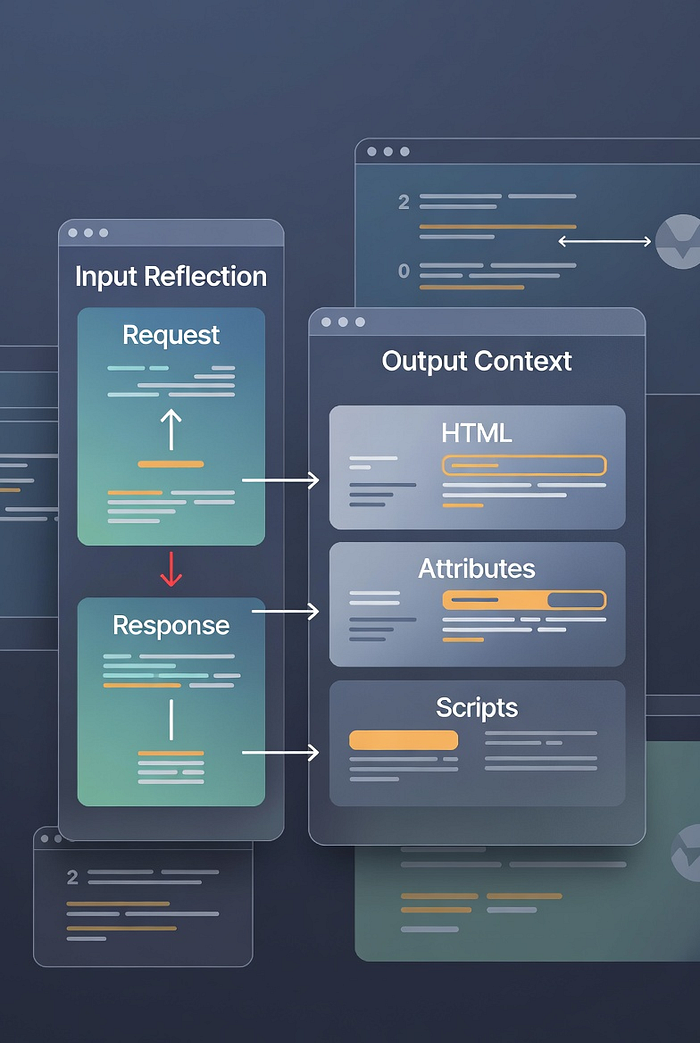
- Is it reflected into HTML?
- Attribute?
- JS context?
- DOM sink?
- Template literal?
Then test manually in-browser:
That's how you go from:
"XSStrike found reflection"
to:
"Stored XSS via comment rendering bypassing sanitizer."
🏁 Final Thoughts
XSStrike isn't magic.
It's a sharp tool.
Sharp tools are dangerous in untrained hands and deadly effective in trained ones.
If you treat XSStrike as:
- A reflection mapper
- A payload generator
- A speed tool
It becomes useful.
If you treat it as:
- A vulnerability scanner
You'll hate it.
👏 If this helped, please clap — this series is about real workflows, not tool worship.
☕ Support my work: 👉 https://buymeacoffee.com/ghostyjoe
💬 Your Turn
Have you found real XSS using XSStrike?
- What contexts worked best?
- What tripped you up?
- Do you mostly test DOM XSS manually?
Drop a comment — your patterns help shape future posts.