June 4, 2026
Everyone Says You Can Vibe Code. Nobody Talks About Security.
Over the last year, we’ve seen a massive shift in software development.

Prajwal Ahluwalia
2 min read
People who have never written production code are building SaaS products, mobile apps, AI tools, and internal platforms using AI-assisted development.
And honestly?
That's amazing.
The barrier to building software has never been lower.
But there is one question I rarely see people asking:
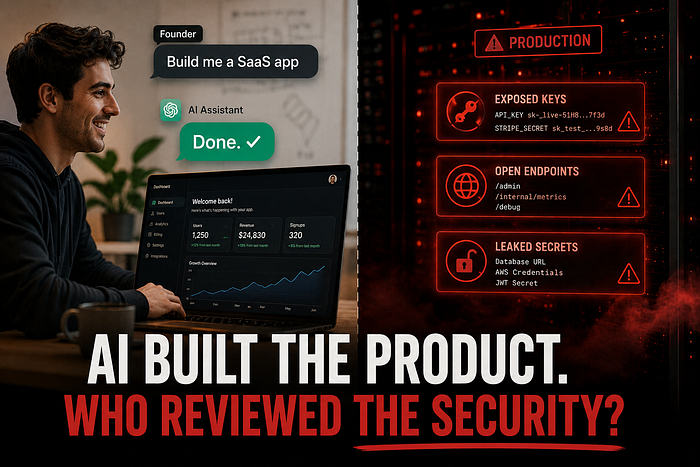
If AI is writing your code, who is reviewing your security?
The Hidden Problem With Vibe Coding
Most AI tools are optimized for one thing:
Getting your feature working.
They are not optimized for:
- Preventing secret leakage
- Detecting exposed API keys
- Finding hardcoded credentials
- Identifying insecure configurations
- Enforcing security best practices
When you're a non-technical founder, this becomes dangerous.
You see a feature working.
You push it to production.
You celebrate.
Meanwhile your repository may contain:
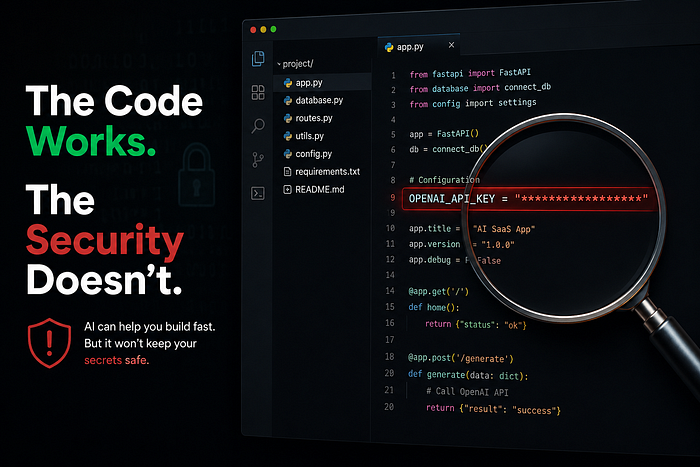
- OpenAI API keys
- AWS credentials
- Database passwords
- Internal service endpoints
- Access tokens
- Debug configurations
The application works.
But it isn't safe.
The Security Gap Nobody Talks About
Traditional engineering teams usually have:
- Security reviews
- Pull request reviews
- Senior engineers
- DevSecOps processes
- Automated scanners
Most solo founders have none of these.
Their entire development process often looks like:
AI → Copy → Deploy
And that is where security incidents begin.
Building A Local Security Layer
I started thinking about this problem while reviewing AI-generated code.
The idea was simple:
Before code reaches production, run it through a local security layer that analyzes the changes and identifies potential risks.
Instead of focusing on functionality, this layer focuses on questions like:
- Are secrets exposed?
- Are credentials hardcoded?
- Is sensitive data being logged?
- Are insecure endpoints being introduced?
- Are there dangerous configuration changes?
The goal isn't to replace developers.
The goal is to provide a security checkpoint before deployment.
Why Local Matters
One thing I cared about was privacy.
Many security tools require uploading source code to external services.
For startups working with proprietary products, that isn't always ideal.
Running security checks locally means:
- Source code stays on your machine
- No external uploads
- Faster feedback loops
- Better privacy controls
The security review becomes part of the development workflow rather than an afterthought.
The Future Of Software Development
I don't think vibe coding is going away.
In fact, I think we're only at the beginning.
The future will include:
- More AI-generated code
- More non-technical founders
- Faster product development
- Smaller engineering teams
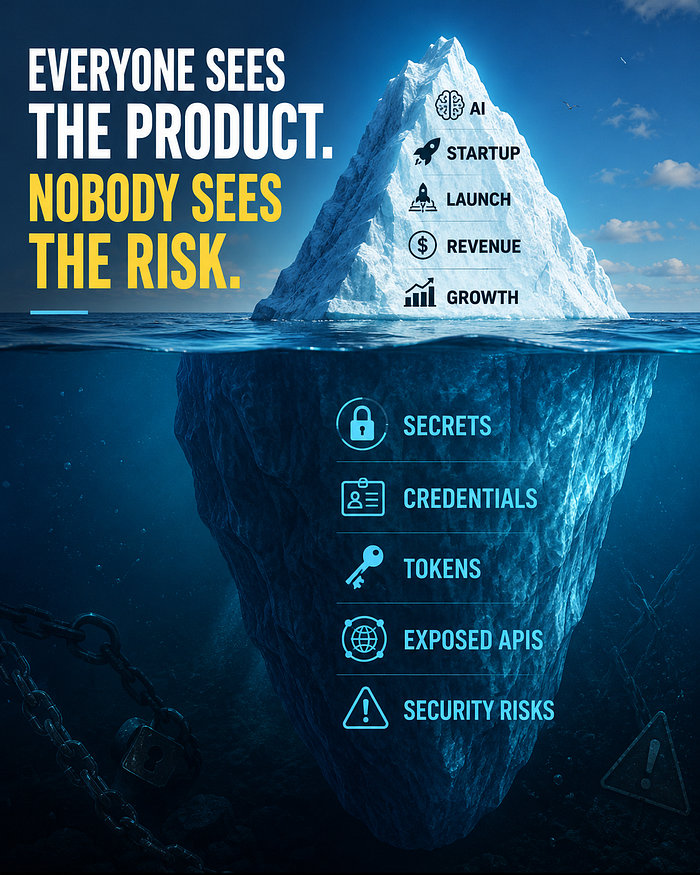
But speed without security creates risk.
As software becomes easier to build, security becomes more important — not less.
The next generation of developer tools won't just help us write code faster. They'll help us ship code more safely. Because the question is no longer:
"Can AI build this feature?"
The question is:
"Can we trust what we're deploying?"
And that's a problem worth solving.
This problem bothered me enough that I started building something to solve it.
I'll share that journey in a separate article.