June 2, 2026
What Texas IT Leaders Asked Me About the Builder Era
Four questions from a roomful of seasoned tech leaders and their underlying message.

Diana Stepner
4 min read
- 1 Four questions from a roomful of seasoned tech leaders and their underlying message.
- 2 Question 1: "Are we asking product people to build without guardrails?"
- 3 Question 2: "What happens when you don't think strategically?"
- 4 Question 3: "Are we losing what makes specialists great?"
- 5 Question 4: "How do we keep humans in charge of the model?"
Four questions from a roomful of seasoned tech leaders and their underlying message.
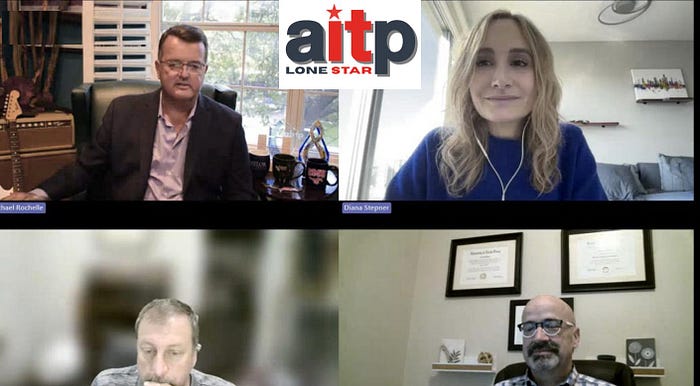
About ten minutes into my AITP Lone Star talk, a fractional CIO asked if anyone was preventing product managers from breaking production.
A chapter of IT professionals across Texas gathered for their 75th anniversary. Fractional CIOs. Cybersecurity chiefs. A CMO wearing three technology hats at once. IT directors from rural manufacturing companies. People who have been through change before and question sensational tech headlines.
The questions weren't about frameworks or best practices. They were about control, knowing what you don't know, and people breaking under pressure. Four stood out, pointing to the uncomfortable truth: the tools are moving faster than the guardrails, and nobody's admitting it.
Question 1: "Are we asking product people to build without guardrails?"
The fractional CIO knew this was a common push against AI. PMs often don't know the nuances like a deep technologist. AI does unwanted things and tries to convince you it's right. Is anyone keeping PMs from breaking production?
Here's what I told him: the guardrails haven't moved. They've dissolved.
Product people are building using Lovable and Base44, shipping things that work for demos and small audiences. Then engineers get involved to "productionize" it. But there's a gap. There's no clear line where a PM should stop and an engineer should take over. So PMs keep building. They ship more. They move faster. And the engineers are too busy cleaning up the last thing AI "accidentally" deleted and/or added to set boundaries on the next time.
The wall between roles didn't disappear. It got blurry. In that blur, people are making decisions they shouldn't, without realizing it.
One person in the room nodded hard. Another took a note. The core of the story is that discomfort.
Question 2: "What happens when you don't think strategically?"
It came from a leader in digital transformation.
"I think 5, 10, 15 steps ahead. I leverage AI to build modules that build on themselves. But that's because my background is rooted in process and methodology. Not everyone thinks that way. So from a workforce planning standpoint, do organizations have to differentiate between people who can think strategically and enable tools, versus those who can't?
Yes, some people naturally think broadly and others narrowly. AI tools won't fix that. They'll just make the gap more visible and more painful for those who treasure their fixed mindset.
He was really asking: Can I keep the strategic thinkers and let the others go? I believe it's a "fit" not a "strategy" question. But here's what occurs in practice.
The "second brain" (shared knowledge base, searchable context) helps some people think more strategically. It assists those who know what questions to ask. For everyone else, they're still guessing and unsure what to look for in the context ocean. They're making decisions without understanding or appreciating the full picture. Now they're doing it faster, with more confidence, and with less guidance.
The differentiation isn't strategic vs. non-strategic. It's self aware vs. unaware. The people who know what they don't know will ask for help. The ones who don't know what they don't know will ship it and hope.
That's one workforce planning problem that people prefer not to discuss.
Question 3: "Are we losing what makes specialists great?"
A leader asked with concern in his voice…t
"Good coders make terrible designers. Designers aren't always great at product strategy. When you bring generalists together, do you actually lose the strength of humans? Or is this a pendulum that's just swinging?"
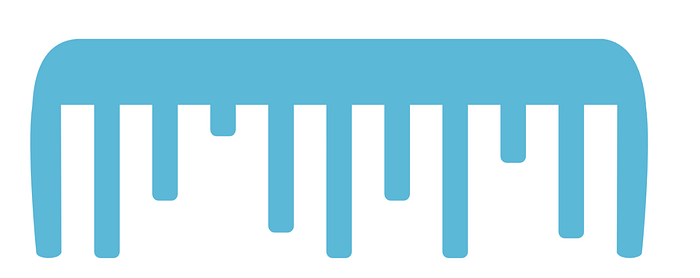
You may remember my octopus framing. Versatile individuals with extensive expertise spanning multiple capabilities. Or the broken comb where people can go deep in some areas (GTM, strategy, education, etc.) and shorter in others (pricing, legal, etc.) enabling coverage across many necessary for product success.
Here is where the genuine anxiety lives.
The specialist is terrified, and rightfully so. AI is commoditizing multiple aspects of their craft. A non coder can now generate decent code. A non designer can now generate decent layouts. Their prior range is becoming an AI-generated commodity.
Yes, specialists are losing something: the craft work that paid their bills.
The specialists who thrive will articulate taste and judgment, aka things AI can't replicate. But that's a smaller market than for "jack of all trades." Some specialists will move up. Others will move out.
Question 4: "How do we keep humans in charge of the model?"
Near the end a leader asked…
"You can be curious. You can lean in. But coding for 24 hours straight is not healthy. And being on at 100% utilization isn't healthy for a mind. Some people need more time. They need to turn it around in their head a million times. That flies in the face of efficiency. But it's important. So how do we keep the human in charge?"
He wasn't asking about productivity. He was asking: How do we prevent today's market from destroying people?
The honest answer is: We're not. Not right now.
Some companies that laid off staff are running the survivors on a 996 schedule (9am to 9pm, 6 days a week) then celebrating it as "AI efficiency."
The leader pushed back: "At some level, we have to raise the flag. Even if nobody wants to hear it right now." He's right. He's also describing a difficult situation.
Due to the layoffs, companies hold the power. Expectations rise. The agents can run 24/7, so why can't you? At some level, the human stops being in charge. The model is.
Companies that will last are willing to say, "We're not doing 996. Not here. Not to our people." They're rare. Find them, because right now the only guardrail that matters is your values. And, whether you run 24/7 is up to you, not the agents.
What stayed with me
At the end, one attendee said something I keep returning to.
"At the beginning of your presentation, I was enthusiastic. As you started going through the examples, I was retracting the enthusiasm. Do you understand what I'm saying?"
I do. Many of you do as well.
The tools are remarkable. The opportunities are real. But the cost is being extracted from people, and most organizations aren't honest about it.
The debate isn't about AI replacing humans or humans ignoring AI. It's about who decides the pace and whether we lose confidence in ourselves as it accelerates.
Right now, the answer is: the company decides and the people pay. AITP attendees already knew that was the answer. They just hoped it wasn't.
Is your company extracting your soul like a Harry Potter Dementor or enabling growth? If unsure, ask your team. They know.
Decide whether you will help your company create a partnership between AI and humans to make it a better place to work for everyone. Or stay silent