Nearly everyone knows Google — but far fewer know that its name can be traced back to a nine-year-old boy named Milton Sirotta. In 1938, his uncle, mathematician Edward Kasner, was searching for a word to describe the enormous number 10¹⁰⁰. Milton suggested "Googol," a playful term that Kasner embraced, and it soon became a recognized mathematical expression.
Decades later, in 1997, that same concept inspired the name of a new search engine designed to organize and process vast quantities of information: Google. Since then, Google has become synonymous with the digital age — collecting, indexing, and managing staggering volumes of data while shaping how billions of people access information. Today, it stands as the world's most visited website, supports users in more than 170 languages, and by mid-2020 was handling over two trillion searches each year.
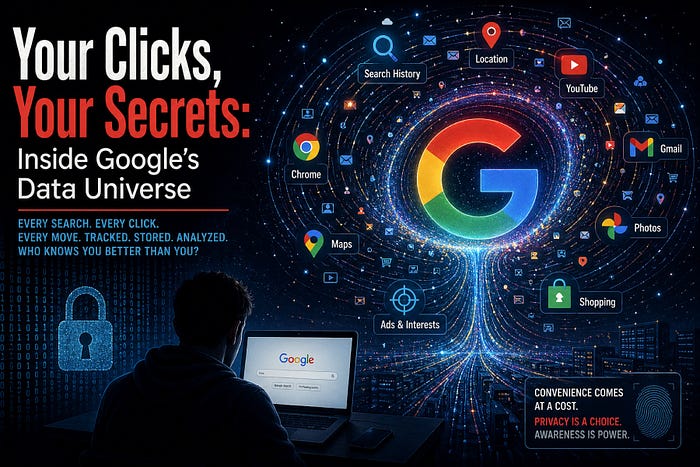
From online purchases and casual browsing habits to visits to controversial or sensitive websites, an extraordinary amount of human activity can be tracked and stored in the digital ecosystem. This immense reach has also raised serious concerns about privacy, personal data, and the permanence of one's online footprint. Recognizing these concerns, the European Court of Justice ruled in May 2014 that Google must honor requests to remove certain search results when they infringe upon an individual's privacy rights. That same month, Google introduced an online form to allow users to request the removal of specific content from search listings.
Yet this raises a deeper question: does removing a search result truly erase the digital traces a person has left behind? While certain links may disappear from public search pages, the broader reality is far more complex. Information may still exist on original websites, in archived databases, on social platforms, or within private data systems. In the digital era, privacy is no longer simply about deleting information — it is about understanding how data is collected, shared, preserved, and remembered. Google may help shape what the world sees, but the challenge of fully reclaiming one's digital identity often extends far beyond a single search engine.