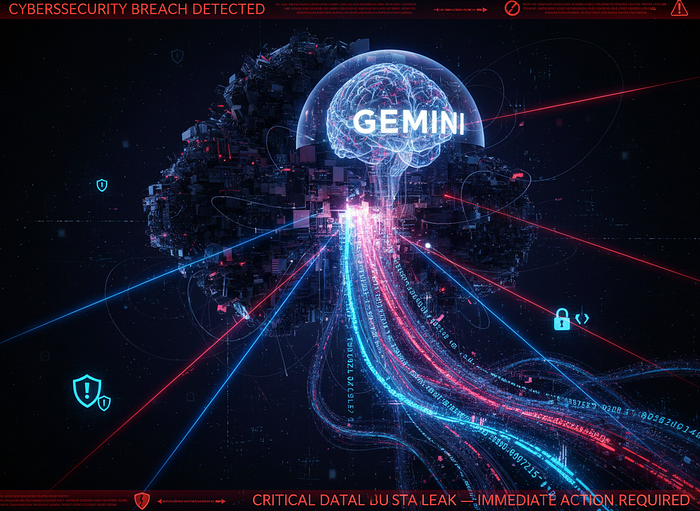

Cloud API keys were never meant to be secrets. They were designed substantially as design identifiers for billing and share shadowing. But new exploration shows that thousands of intimately exposed Google Cloud API keys can now be abused to authenticate to Gemini AI endpoints, potentially exposing private lines, cached data, and generating massive unanticipated bills. This is not just a misconfiguration problem. It's a design threat that turns offensive keys into important credentials.
🧠 What Was Discovered?
Security experimenters at Truffle Security set up nearly 3,000 Google API keys embedded in public customer- side aw( JavaScript on websites, mobile apps, etc.). These keys Were firstly used for services like Google Charts Analytics Frontend integrations Were noway intended to pierce AI systems Still, when vendors enabled the Gemini API on their Google Cloud systems, API keys automatically gained access to Gemini endpoints without warning. " Thousands of API keys that were stationed as benign billing commemoratives are now live Gemini credentials sitting on the public internet."

⚠️ Why This Is Dangerous
If a bushwhacker scrapes a website or mobile app and finds a crucial starting point with AIza. They may be suitable for Call Gemini API endpoints Access lines cachedContents Consume precious LLM coffers Rack up massive pall bills Potentially interact with connected pall services This turns ❌ a billing identifier into ✅ an AI authentication commemorative ✅ an AI authentication token
📉 Real-World Impact
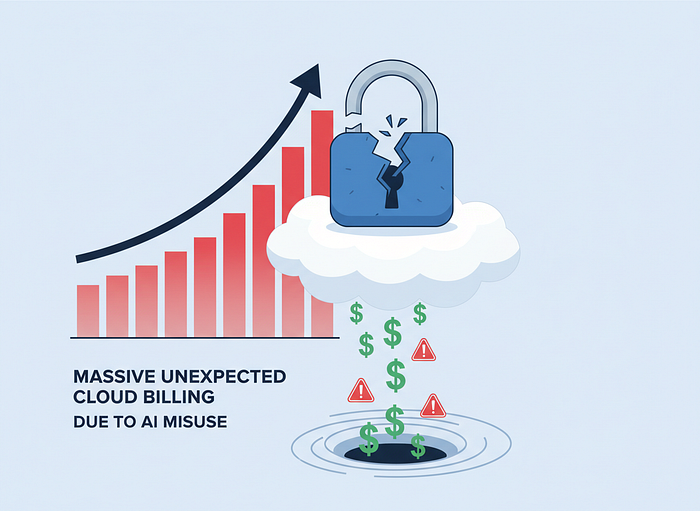
A Reddit stoner lately claimed that a stolen Google Cloud API key caused 💸$ 82,314 in charges in just two days ( over from a normal$ 180/ month operation) Indeed, if no private data is stolen Share theft AI abuse fiscal damage A formerly serious incident.
📱 Mobile Apps Make It Worse
Another security establishment, Quokka, scrutinized 250,000 Android apps and set up 📊 35,000 unique Google API keys hardcoded That means Mobile rear engineering App scraping customer- side exposure dramatically increases the attack face.
🔐 Root Cause: "Unrestricted" by Default
When inventors produce a new API key in Google Cloud, it defaults to Unrestricted Meaning It works with every enabled API in the design Including Gemini Including the nborn APIs added later This breaks the supposition that. " This key is only for Charts or frontend use."
🧷 Google's Response
Google conceded the issue and said it has Added discovery for blurted keys Blocked suspicious Gemini access attempts Worked with experimenters to alleviate exposure Still It's unclear if this was exploited extensively Numerous exposed keys may still live Inventors may not realize their keys have come AI- enabled
🧨 Why AI Makes This Risk Bigger
Traditional API abuse = cost or share loss AI API abuse = cost data changeable gesture AI endpoints can Process prompts Interact with pall coffers Generate sensitive labors Be chained with other services This expands the blast compass of a blurte cruciallyl dramatically.
🛡️ How Developers Should Protect Themselves
✅ circumscribe API keys by Service( only Charts, only Gemini, etc.) IP or sphere operation compass ✅ Rotate exposed keys incontinently ✅ noway expose unrestricted keys in frontend law ✅ Examiner billing anomalies ✅ Separate AI APIs into their own systems ✅ Use OAuth or service accounts for sensitive workloads

🧭 Final Thoughts
" AI APIs are no longer just tools; they are control points." What used to be safe to expose has still become dangerous. In the age of generative AI API keys must be treated like watchwords. The shift from billing commemorative ➝ AI credential happenedquietly- And thousands of inventors may not indeed know it yet.
📢 Call to Action
If you use Google Cloud Gemini API customer- side keys Inspect your keys momentarily. Because hereafter's breach might not be data theft- It might be an AI- powered bill shock.
#WRAP #CyberSecurity #CloudSecurity #APIKeys #GeminiAI #GoogleCloud #AIAbuse #DataProtection #HAK3RSD3N