June 3, 2026
What Are the Most Common Types of Investment Fraud?
What Are the Most Common Types of Investment Fraud?

Decode Help
2 min read
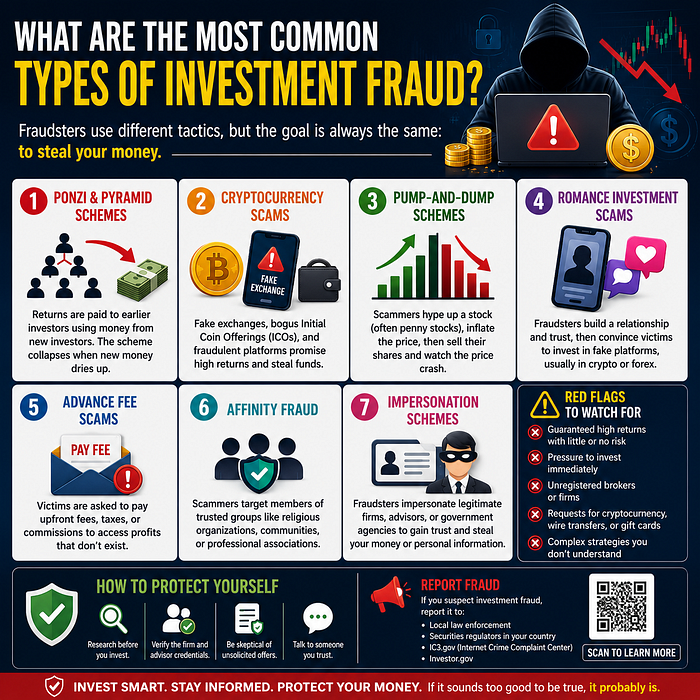
Investment fraud continues to be one of the most damaging financial crimes worldwide. Every year, thousands of investors lose money to scams that promise high returns, low risk, and quick profits.
While investment scams come in many forms, most share the same goal: convincing victims to transfer money into fraudulent schemes that provide little or no legitimate investment activity.
Understanding the most common types of investment fraud can help you recognize warning signs before it is too late.
- Ponzi and Pyramid Schemes
Ponzi schemes use money from new investors to pay returns to earlier investors. These payments create the illusion of a successful investment, encouraging more people to join.
Pyramid schemes operate similarly but often require participants to recruit new investors in exchange for commissions or rewards.
Both models eventually collapse when new investor funds stop coming in.
Warning Signs:
Guaranteed returns
Consistent profits regardless of market conditions
Heavy focus on recruitment
Lack of transparency
- Cryptocurrency Investment Scams
Cryptocurrency fraud has grown rapidly in recent years. Scammers create fake exchanges, fraudulent investment platforms, and fake token projects that appear legitimate.
Victims are often shown impressive account balances and profits that do not actually exist.
When they attempt to withdraw funds, additional fees or taxes are demanded.
Warning Signs:
Unrealistic returns
Unverified platforms
Pressure to deposit more funds
Requests for crypto-only payments
- Pump-and-Dump Schemes
In a pump-and-dump scam, fraudsters artificially inflate the price of an asset by spreading misleading information.
Once enough investors buy in, the scammers sell their holdings, causing the price to crash and leaving others with significant losses.
These schemes commonly target low-volume stocks and digital assets.
- Romance Investment Scams
Also known as "pig butchering" scams, these schemes begin with a relationship rather than an investment pitch.
The scammer spends weeks or months building trust through social media, dating apps, or messaging platforms.
Once trust is established, the victim is encouraged to invest in a fake platform controlled by the fraudsters.
Warning Signs:
Online relationships moving quickly
Investment advice from someone you've never met
Requests to use unfamiliar investment platforms
- Advance Fee Fraud
In advance fee scams, victims are told they must pay taxes, processing fees, legal costs, or account verification charges before accessing profits.
The promised profits never arrive.
Instead, scammers continue demanding additional payments until the victim stops sending money.
Warning Signs:
Unexpected withdrawal fees
Requests for additional deposits
Claims that funds are "frozen" until payment is made
- Affinity Fraud
Affinity fraud targets members of specific communities, including religious groups, professional organizations, retirees, and cultural communities.
Scammers exploit trust within these groups to gain credibility and attract victims.
Because recommendations often come from familiar faces, these scams can spread quickly.
How to Protect Yourself
Before investing:
Research the company independently
Verify licenses and registrations
Avoid pressure to act immediately
Be skeptical of guaranteed returns
Never invest money you cannot afford to lose
Consult a trusted financial professional
Final Thoughts
Investment fraud can take many forms, but the warning signs are often similar: guaranteed profits, little risk, urgency, secrecy, and pressure to act quickly.
Whether it's a Ponzi scheme, cryptocurrency scam, romance scam, or advance fee fraud, understanding how these schemes work is one of the best ways to protect your money.
When it comes to investing, caution and verification are always better than regret.