As businesses increasingly rely on digital systems, the demand for skilled cybersecurity professionals is growing rapidly. Every day, hackers find new ways to exploit vulnerabilities, putting personal data, company secrets, and critical systems at risk.
Have you ever wondered how cybercriminals manage to steal sensitive information so easily? Or why some companies suffer devastating data breaches while others stay secure? The truth is, organizations desperately need experts who can protect networks, detect threats, and respond before damage happens
Why This Course is So Important
Cyber threats are growing every day, and organizations worldwide are constantly at risk of attacks like malware, ransomware, and phishing. This course equips beginners with the skills to protect digital systems, detect threats, and respond to incidents effectively.
It provides a strong foundation in cybersecurity, combining theory with hands-on labs, real-world simulations, and exposure to industry-standard tools. Completing this course can help students kickstart their career in a high-demand field and open doors to advanced roles like SOC Analyst, Ethical Hacker, or Security Engineer.
What You Will Learn in the Course
A Junior Cybersecurity Analyst course covers both theoretical knowledge and practical skills. Key modules usually include:
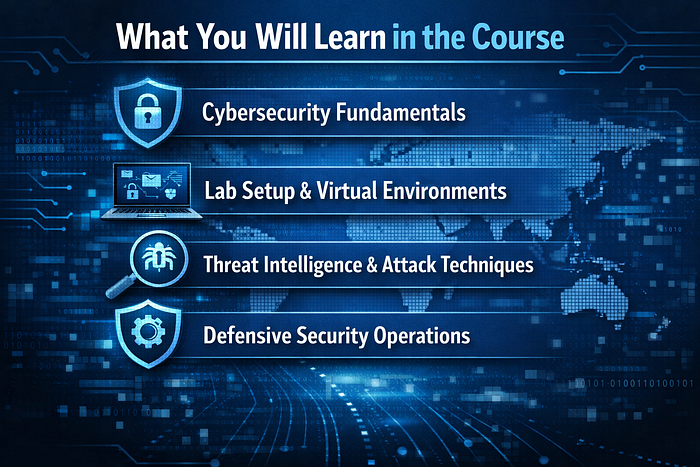
Cybersecurity Fundamentals
- Core principles of cybersecurity
- Risk management and protecting digital information
- CIA Triad (Confidentiality, Integrity, Availability)
- Common threats
Lab Setup & Virtual Environments
- Hands-on practice with VMware, Kali Linux, EVE-NG
- Simulated security exercises
Threat Intelligence & Attack Techniques
- Phases of hacking: reconnaissance, scanning, gaining access
- Types of attacks: phishing, malware, DDoS
Defensive Security Operations
- SOC workflows and incident response procedures
- Evidence preservation and cyber defense strategies
Career Roadmap for Beginners
To become a successful Junior Cybersecurity Analyst:

Step 1: Build Core Technical Skills
- Networking fundamentals
- Linux system knowledge
- Basic programming (Python)
Step 2: Gain Hands-On Experience
- Cybersecurity labs
- Home projects
- Virtual practice environments
Step 3: Earn Entry-Level Certifications
- CompTIA Security+
- Cisco Certified Support Technician (CCST) Cybersecurity
Certifications help validate your knowledge and improve job prospects.
Salary Expectations
Entry-level Junior Cybersecurity Analysts are in high demand globally. In Pakistan, salaries typically range from PKR 80,000 to PKR 150,000 per month, with growth potential as skills and experience increase.
Why Choose Adan IT Center in Gujrat?
Adan IT Center offers a comprehensive program:
Program: Cyber Security Track (PSDA Approved) Course Focus:
- Networking Essentials
- Ethical Hacking Fundamentals
- Core Cybersecurity Concepts
- Digital Asset Protection
- Cyber Attack Prevention Techniques
The program also includes opportunities through NAVTTC's free training initiative, giving students practical exposure in Digital Forensics and Cybersecurity.
Why Cybersecurity is a Great Career
Cybersecurity is one of the fastest-growing tech fields. Organizations across banking, healthcare, government, and technology need professionals to protect their systems. Starting with a Junior Cybersecurity Analyst course can lead to advanced roles like:
- SOC Analyst
- Ethical Hacker
- Security Engineer
- Digital Forensics Specialist
Final Thoughts
As digital technologies expand, the demand for cybersecurity professionals continues to rise. A Junior Cybersecurity Analyst course in Gujrat provides the foundation to start a successful career. With the right training, hands-on experience, and certifications, beginners can develop valuable skills and build a rewarding future in cybersecurity.
FAQs
1. Who can join a Junior Cybersecurity Analyst course? Anyone with basic computer knowledge and an interest in cybersecurity.
2. Do I need programming knowledge to start? Helpful, but not mandatory. Beginners can start with networking and security basics.
3. How long does the course take? Typically 3–6 months depending on the program.
4. What jobs can I get after completing this course? Roles include Junior Cybersecurity Analyst, SOC Analyst, IT Security Assistant, or Digital Forensics Assistant.
5. Is cybersecurity a good career in Pakistan? Yes. The demand for cybersecurity professionals is growing rapidly in Pakistan and worldwide.