

TABLE OF CONTENTS
=> Pillars of Machine learning and its content
=> Some introduction and what / where /which tools to use ?
=> How to grow in these field ?
So lets Start with ,
1) Pillars of Machine Learning
there are mainly three pillars of machine learning
- python or a foundational language like Javascript or C++
- Mathematics esp. ( "statistics" )
- Numpy / pandas / matplotlib
i will take to each of them step by step
A) Python
from where to learn it for free ?
Youtube channel channels : Simplilearn, Edureka, edX. patrick lober
Books : U can find it on repo in the bottom of the article 😊😊
tools : vs code , pycharm
B) Mathematics especially Statistics
see maths is very imp part of machine learning but stats is the main thing which u have to learn right , deep dive as much u can in stats , and other basic stuff
U have to learn linear algebra, Calculus basics ,eigen vector decompostion and stats
from where to learn it for free?
Youtube channels :
Books(esp for stats ) : U can find it on repo in the bottom of the article 😊
C) Numpy / Pandas / Matplotlib
NumPy stands for Numerical Python, and it's basically the math powerhouse behind Machine Learning. Every ML model whether it's Linear Regression or a giant Transformer works with data as tensors (multi-dimensional arrays). And guess who handles all that heavy lifting?
There is big bro of numpy known as scipy yup scientific python
Youtube video (for basics ):
Pandas is dataframe If NumPy is all numbers, Pandas is all organized data. Think of it as Excel inside Python, but way more powerful.
Most real-world datasets you'll get at the beginning come in files like:
.csv→ Comma-Separated Values.xlsx→ Excel spreadsheets.json→ Structured web data
Pandas reads them instantly into something called a DataFrame which is just a fancy word for a "table with rows and columns."me , In starting u will get data in the format of excel files or csv files (Comma Seprated Values )
there is big bro of pandas known as pyspark
Youtube video (for basics ):
Matplotlib stands for Matrix Plotting Library but don't worry about the name too much. What matters is this:
➡ It takes your data (often from NumPy or Pandas) ➡ …and plots it on a graph 📊
Line charts, bar charts, scatter plots, histograms you name it, Matplotlib can draw it.
Why it's important?
Because in Machine Learning, understanding data matters more than just training models. Visualization helps you:
there is big bro of matplotlib known as seaborn
youtube channel (for basics ):
2) Some intro to ML and Which /when /where tools to use ?
Ml has three types of algorithms :


A) Supervised Learning
- Data contains both features (inputs) and labels/targets (outputs)
- Model learns a direct mapping from input → output
- Most commonly used category in real-world applications
- Beginner-friendly with clear measurable performance
- Examples: Linear Regression, Logistic Regression, SVM, Decision Trees, Random Forest
B) Unsupervised Learning
- Data does not contain labels or target values
- Model tries to find hidden patterns, clusters, or structure in the data
- Useful for exploring data, anomaly detection, customer grouping
- Performance evaluation is harder compared to supervised methods
- Examples: K-Means, Hierarchical Clustering, PCA, Autoencoders
C) Reinforcement Learning (RL)
- Model (called an agent) learns by interacting with an environment
- No fixed labeled dataset — instead the agent receives:
- Rewards for good actions
- Penalties for bad actions
- Goal: maximize total reward over time
- Best for sequential decision-making problems
- Examples: Robotics, Self-driving cars, Game AI (Chess, Go, Atari), Stock trading
- Core elements:
- Agent → the learner/decision maker
- Environment → the world in which agent acts
- Action → what the agent does
- State → current situation of the agent
- Reward → feedback telling how good the action was
Now comes to TOOLS :
A ) Jupyter notebook / Vs code notebooks
for ml models that require least gpu or if u have gpu then great go with it !
B ) Google Colab
for online sharing of ml models and all files are just saved in ur drive ,yeah that gives u 15gb storage with GPU And TPU
C) Kaggle notebooks (my most fav)
a data science community which conducst competitions at international levels , some with price money and some for playground purpose , to display and showcase ur projects with the outputs and it gives u 30 hrs of GPU/TPU per month , personally i found much more worth it but google colab is not less than this
D) Scikit Learn
- It is a Python library for Machine Learning
- Best for traditional ML algorithms (not deep learning)
- Contains tools for:
- Classification (SVM, Random Forest, KNN…)
- Regression (Linear & Polynomial Regression…
- Clustering (K-Means, DBSCAN…)
- Dimensionality reduction (PCA…)
- Model evaluation (accuracy, confusion matrix…)
- Beginner friendly and widely used in industry
Think of scikit-learn as the "go-to toolbox" for classical ML.
5) TensorFlow
- A Deep Learning framework developed by Google
- Used for building and training Neural Networks
- Highly scalable → works on CPUs, GPUs, TPUs
- Good for:
- AI in production
- Computer Vision, NLP, Generative models
- Supports both high-level & low-level control:
- Keras API (easier, recommended)
- Core TensorFlow (more flexible for researchers)
Use TensorFlow when you want to create deep learning models like CNNs, RNNs, Transformers, etc.
my kaggle account Link :
from where to learn all these ?
youtube channels :
Beginner → Simplilearn, Edureka, edX (for python till classes are sufficient) Advanced → Patrick Loeber, Sentdex (for ml till intermediate level)
Books : U can find it on repo in the bottom of the article 😊
3) How to grow in these fields ?
to grow in these field u require
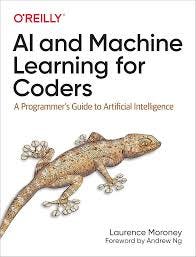
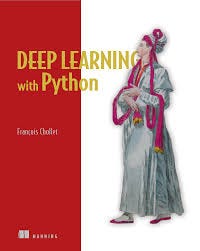
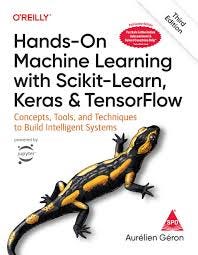
Books are the fastest way to gain deep concepts and real understanding. Here are some of my favorite books and you can find free PDF versions in the repo
B) Explore Code from Professional Programmers
A great way to improve is to study how experts write and structure code. Check their work, tools, and techniques on platforms like:
- Kaggle → Notebooks, feature engineering tricks, ML/DL pipelines
- GitHub → Open-source projects, real-world repositories
- Competitions → Advanced optimization, model stacking, deployment strategies
Bonus for readers (THE GITHUB REPO )
here is the source of all machine learning pdfs that i am talking about
for ml check : "ML-DL-BROAD" folder
for maths : check "stats" and "maths" folder
I hope u enjoyed the roadmap and if i added any value do me a favour
THANKS A LOT FOR VISITING … .