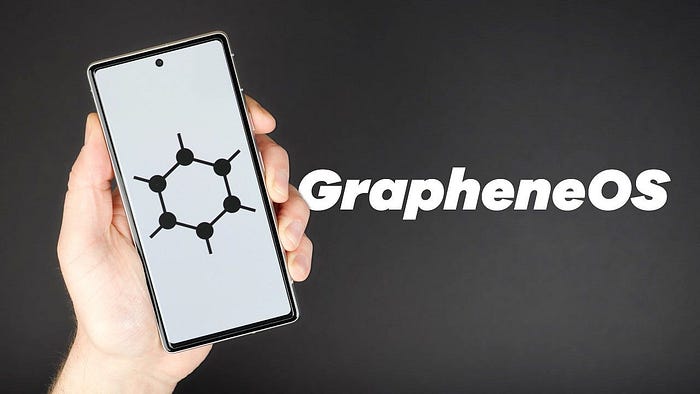

Picture this: You're walking down the street in Catalonia, minding your own business, when you pull out your Google Pixel to check a text message. Suddenly, police officers are eyeing you like you just announced you're Pablo Escobar's long-lost cousin.
Sound crazy? It's happening right now.
But here's the twist — these aren't criminals they're profiling. They're ordinary people who made one "suspicious" choice: they prioritized their digital privacy.
The Digital Arms Race You Didn't Know Existed
While most of us argue about iPhone versus Android like it's a sports rivalry, a quiet revolution has been brewing in the world of smartphone security. On one side: law enforcement agencies with military-grade hacking tools. On the other: privacy-conscious individuals using an operating system so secure it makes government agencies nervous.
The battlefield? Your pocket.
The weapon of choice? Something called GrapheneOS — and it's turning the surveillance state on its head.
What Happens When Your Phone Becomes a Fortress
Traditional Android phones are like houses with really good locks on the front door — but the windows are wide open. Apple likes to brag about iOS security, and they're not wrong. For the average user, an iPhone provides solid protection.
But GrapheneOS? That's like replacing your house with Fort Knox.
Here's what makes law enforcement break into a cold sweat:
The 18-Hour Nuclear Option: Every 18 hours, GrapheneOS automatically reboots your phone. This might sound annoying, but it's brilliant. When your phone reboots, it enters "Before First Unlock" (BFU) mode — essentially becoming an encrypted brick that even FBI-grade hacking tools struggle to crack.
Most law enforcement agencies rely on catching phones in "After First Unlock" (AFU) mode, where encryption keys live in your phone's memory like sitting ducks. GrapheneOS slams that window shut every 18 hours.
The Duress PIN That Could Save Your Life: Imagine you're forced to unlock your phone under duress. With GrapheneOS, you can enter a special "duress PIN" that appears to comply — but actually wipes your device clean. It's like having a self-destruct button disguised as cooperation.
Multiple Personalities for Your Phone: GrapheneOS lets you create dozens of user profiles. You could have a "decoy" profile with family photos and work emails, while keeping sensitive information in a completely separate, encrypted partition. To outside observers, you're just another person scrolling through cat videos.
The Catalonia Effect: When Privacy Becomes Probable Cause
In Catalonia, the war on drugs has gone digital. Police aren't just looking for physical evidence anymore — they're conducting mass digital surveillance, using everything from Google Maps location data to Chrome browsing history to build cases.
Smart criminals adapted. They started using encrypted messaging apps like Signal and installing GrapheneOS on their phones. But here's where things get dystopian: now police are profiling anyone who makes these privacy-conscious choices.
Own a Google Pixel? Suspicious. Use Signal? Red flag. Care about your digital privacy? You must be hiding something.
This is the logical endpoint of the "nothing to hide" argument. When privacy becomes evidence of guilt, we've crossed a line that's hard to uncross.

Why This Matters More Than You Think
You might be thinking, "I'm not a criminal, so why should I care?"
Here's why: we're living through the largest surveillance experiment in human history. Every app on your phone is tracking you. Every search you make is logged. Every location you visit is recorded.
Law enforcement agencies around the world have access to this data. Not just for major crimes — for everything. They're tracking where everyone goes, then filtering for suspects later. You're guilty until the algorithm proves you innocent.
GrapheneOS doesn't just protect criminals. It protects journalists, activists, domestic abuse survivors, whistleblowers, and anyone who believes privacy is a fundamental right, not a luxury.
The Technical Knockout Punch
Let me get specific about why GrapheneOS makes law enforcement tools like Cellebrite (the FBI's favorite phone-cracking device) about as useful as a chocolate teapot:
USB Lockdown: GrapheneOS disables USB data connections until you unlock the phone and explicitly allow the connection. No more "oops, we accidentally extracted all your data while charging your phone."
Fingerprint Limits: Standard Android gives you 20 fingerprint attempts before lockout. GrapheneOS gives you five. If police try to force your finger onto the scanner while you're handcuffed, you've got a much better chance of triggering the lockout.
Anti-Forensics by Design: GrapheneOS is completely "de-Googled." All those tracking mechanisms that law enforcement relies on — Google Maps location history, Chrome browsing data, Google Search records — simply don't exist.
Profile Isolation: Even if one profile gets compromised, others remain encrypted and inaccessible. It's like having multiple phones in one device, each with its own security perimeter.

The $400 Investment in Digital Freedom
Here's the beautiful irony: the most secure smartphone a civilian can own costs less than the latest iPhone. You need:
- A Google Pixel phone ($300-$600)
- GrapheneOS (free)
- About an hour to install it
- Basic understanding of digital security practices
That's it. For less than most people spend on a vacation, you can own a device that makes government hackers lose sleep.
The Troll Move That Could Change Everything
Want to really mess with surveillance-happy law enforcement? Buy a second Pixel phone, install GrapheneOS, and use it as an expensive MP3 player. Add Signal with a username like "El_Jefe_2024" and occasionally text yourself mysterious messages.
I'm joking (mostly), but there's a serious point here: when enough people use privacy tools, they become normal instead of suspicious. Mass adoption is the only way to prevent privacy from becoming probable cause.
The Choice That Defines the Next Decade
We're at a crossroads. We can accept that digital privacy is dead and surveillance is inevitable. Or we can fight back with the tools we have.
GrapheneOS isn't just about protecting your data — it's about preserving the possibility of private thought in a connected world. It's about ensuring that caring about your privacy doesn't automatically make you a suspect.
The choice is yours. You can keep using a phone that treats you like a product to be monitored and monetized. Or you can spend a weekend learning about GrapheneOS and join the digital resistance.
Three Action Steps to Reclaim Your Digital Privacy
- Research GrapheneOS installation for your specific Pixel model — the process has gotten much easier than it used to be
- Start using Signal for messaging, even for mundane conversations — help normalize encrypted communication
- Educate others about digital privacy rights — mass adoption is the only path to normalcy
The surveillance state wins when privacy becomes suspicious. Make privacy normal again.
Q1: What other everyday technologies are being used to profile law-abiding citizens as potential criminals?
Q2: How might widespread adoption of privacy tools change the balance of power between individuals and authorities?
Q3: What would society look like if digital privacy became as expected and normal as physical privacy in our homes?
Tags: #DigitalPrivacy #GrapheneOS #Smartphone #Security #Surveillance #Android #Privacy #Technology
Max Petrusenko works remotely in the software development industry and travels the world to stay in touch with the latest trends. His Cryptobase newsletter provides insightful actions that thoughtful people need to take in this fast and chaotic environment. He is also researching topics of spirituality and mysticism and brings them to the mainstream. Join people who follow him on Medium, Twitter, and Substack.
Read next → Claude Code: The AI Developer's Secret Weapon