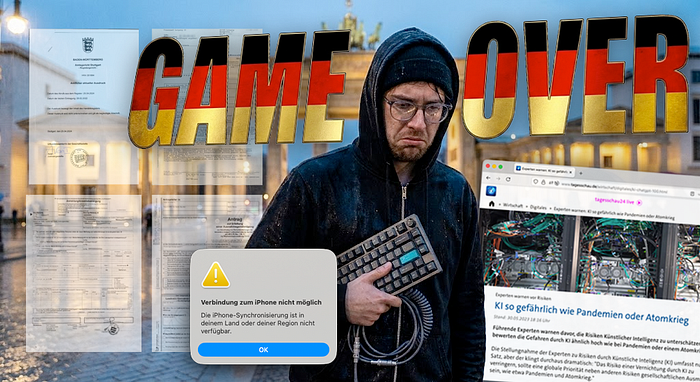

I was born in Germany's capital Berlin in 1985. At the age of 12, I started my programming journey. When I turned 17, I started an institutional education in software engineering which marked the beginning of my professional career. Fast forward 25 years, I still do software engineering, manage software projects and write deep dive articles around various software topics. Although I lived abroad for some time, I always lived in Germany and currently live in Bonn, Germany. I witnessed Germany's technological downfall first hand and it frightens me to this date. Follow me into the factors that caused the demise.
Is there really a downfall or am I just rage baiting here? The fact that there's even a Wikipedia article on the current German economic crisis (2022-present) probably means that I am not too wrong. Volkswagen's multi billion dollar software debacled named CARIAD gives a glimpse into what's wrong with Germany, software and technology. Germany's sky high taxation that can reach up to 70% in federal, state and municipal taxes and fees have led many highly skilled workers to flee the country (see Why Germany is experiencing a growing exodus). What happens to a country with sky high taxes and an exodus of skilled software engineers?
Germany's long lasting technophobia
Although Germany was long renowned for its engineers, the society itself was always a late when it came to adopting new technology. Books like the 1979 publication "Computers, power, and human dignity" contain lengthy debates on the social downsides of computers and software. The German society has always been strong in finding even the smallest critique in everything, or as a fellow Finnish coworker of mine once phrased it: "Germans are afraid of everything".

This is also not a novelty to German society, and did not just erupt in recent years. When Bertha Benz, wife of Mercedes-Benz founder Carl Benz, undertook the first long distance drive in history on August 5th, 1888, she did so illegally. She didn't have a permit for the trip from Mannheim to Pforzheim and authorities mandated that the vehicle shall not leave the borders of Mannheim. Bertha Benz was lucky not to be sued as she exploited a historical loophole. She did something that was not permitted, but also not explicitly forbidden, because nobody had expected anyone to do it at all — least of all a woman over a distance of 106 kilometers.
When the Imperial Law on Motor Vehicle Traffic (Reichsgesetz über den Verkehr mit Kraftfahrzeugen) was debated in 1909, claims to protect horse carriages were made by many conservative politicians. However, the rational and innovative spirit prevailed. A spirit that protected engineers and innovators in Germany for decades. Unfortunately, that spirit was entirely absent when the German software industry came into existence.
"The internet is uncharted territory for all of us." Quote from former chancellor Angela Merkel (during a meeting with Obama in 2013; Source: Spiegel)
While mechanical engineering enjoyed high prestige, software development was only met with weary smiles. It's fair to say that many electrical and mechincal engineers in Germany still seem to look down on software engineering. All while the government wasn't and still isn't too interested in software innovations, even when software ate the world. This is the environment and climate that programmers always faced and are still facing in Germany today.
Engineers posing as software developers
When developers land in German companies, it is not unusual for them to be met with Software Engineering Managers, CTOs and self-proclaimed "Tech People" that have absolutely zero background in software engineering, let alone programming. The board of Volkswagen's CARIAD software division is made up of graduates from business administration, mechanical engineering and philosophy without a single person bringing a software background, in a software company. Ouch.
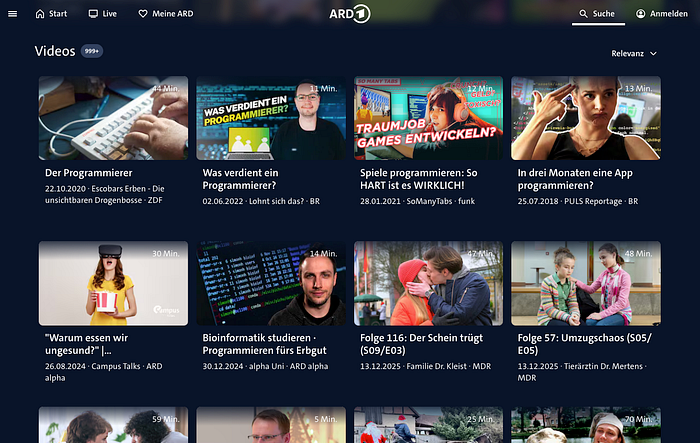
It gets more challenging in organisations who's primary area of business is not software. ARD, Germany's largest public TV network, runs its streaming portal ARD Mediathek, paid for with the mandatory German TV license fee of €18,36 per month and household. Unsurprisingly, the technical management organisation around the platform has fairly limited software engineering experience and hence the platform's various apps on Android, tvOS and iOS are riddled with hangs, hitches and network glitches.
Even in those few software companies that exist in Germany, you will very often find them being run by people who hardly possess any credible experience in software development. Meanwhile, successful German software entrepreneurs and engineers like Frankfurt-born Peter Thiel (PayPal, Palantir), Koblenz-born Tobias Lütke (Shopify), Berlin-born Thomas Dohmke (previously GitHub), as well as Franziska Hinkelmann (Google) all found their fortune and success elsewhere, outside of Germany. These names are just the tip of the iceberg, thousands of highly skilled German software engineers left for good long ago.
Programmers are systematically kept down
When organisations are run by technology novices, the real experts have a really hard time to shine. Firstly, experienced developers often pose a threat to their managers as these become reliant on them. Software illiterate managers have to accept that they don't really know any of the basics in their field, and their experienced direct reports will prove that all the time. It's a root for a conflict that cannot last very long.
"It felt like I had to explain the basics of computer science to my managers every day. I couldn't take it anymore and that's why I moved to the U.S." — Software engineer with 5 years in Germany; wishes to stay anonymous
There are several effects that can be observed in such organisations where non-software managers take over the software engineering units.
- Inverted pyramid: the amount of managers is 2–8 times that of the amount of software developers actually programming software
- Tech debt and broken architecture: the focus is often 100% on features with disregard of maintenance, immediately creating technical debt
- Cost and time overruns: a disregard of the non-deterministic nature of software development leads to permanent cost and time overruns
- High employee churn: quiet quitting and a high staff turnover in addition to the inability to recruit software developers
- Unsustainable light houses: software products are made to please management, not to provide sustainable solutions to customers
Experienced software engineers will have a very hard time to build a career in such organisations. While those organisations exist in all economies across the world, many organisations in Germany seem to be made up of such pseudo-technical software divisions. Besides SAP, not a single German DAX (comparable to the U.S. S&P 500) corporation has a board member with a software engineering background. Software engineers in Germany have a very hard time finding likeminded people to build alliances and networks.
Developers pack their bags
In my article "Why Tech Workers Are Fleeing Germany" from July 2024, I already highlighted the dramatic exodus of software engineers. Since then, the problem has only gotten worse: more than 300,000 highly skilled German nationals leave Germany every year, and there are now more people leaving than coming. Companies like Google and Amazon directly recruit German graduates off universities like RWTH or KIT to immediately send them across the pond, to the United States. Many graduates don't even consider working for German companies anymore, knowing how little these companies value software developers and their skills.
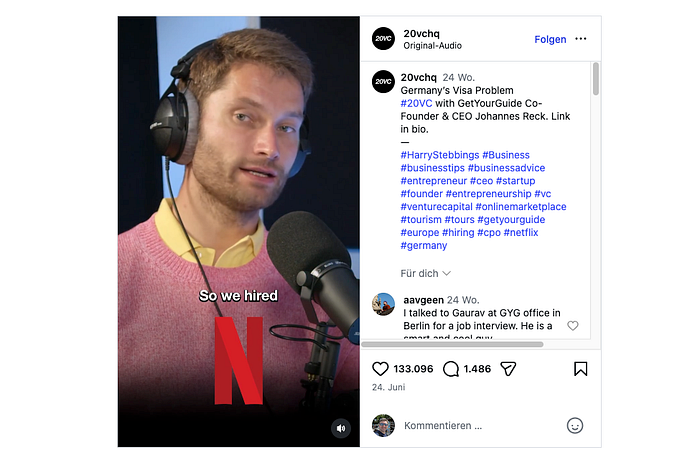
The highly skilled workers that leave Germany aren't replaced. Most software engineers from abroad seek their fortune in other countries. Those software engineers that are willing to come to Germany often face a bureaucracy that is rotten beyond insanity. When Berlin-based GetYourGuide hired Gaurav Agarwal, a former Director of Engineering at Netflix, it took German authorities a whopping 6 months to process his work visa. Yet, Johannes Reck's GetYourGuide is not a small fish, with over 700 employees. Now imagine how hard it is for other small and medium business to hire. What Johannes and Gaurav experienced is not an individual or exceptional case, it's the norm. I personally experienced that bureaucratic nightmare when hiring software engineers from abroad.
For many software professionals, Germany is simply not worth the hassle anymore. The disadvantages significantly outweigh any benefits now. It has never been too easy for Germany-based software developers, but it seems that for more and more people the red line is now crossed.
Germany is a late adoption market
Whether you program in a corporate environment, in a startup or as an indie developer, you need to have a network and ecosystem of developers around you to exchange ideas and seek inspiration. You will also need a user base of early adopters to test new products. Germany has almost none of it as its society is generally considered to be mainly made up of "Late Majority" adopters of new technology. Whether it's EV adoption, the Internet or AI adoption, Germans are always late to new technology.
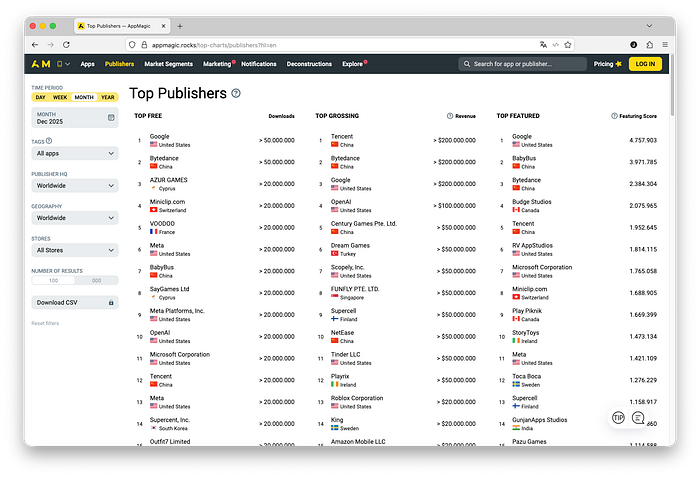
While Americans and Chinese embrace new technology and welcome new software enthusiastically, Germans confront new technology in a more pessimistic and critical way. Software developers often find theirselves having to justify the existence of their products towards German users. The desire and thirst for new software is spread thinly in Germany, to put it politely. This isn't a healthy market to launch innovative applications in. Hence, developers in Germany, like me, often need to launch their products into other markets like the U.S., UK, Canada and Australia first.
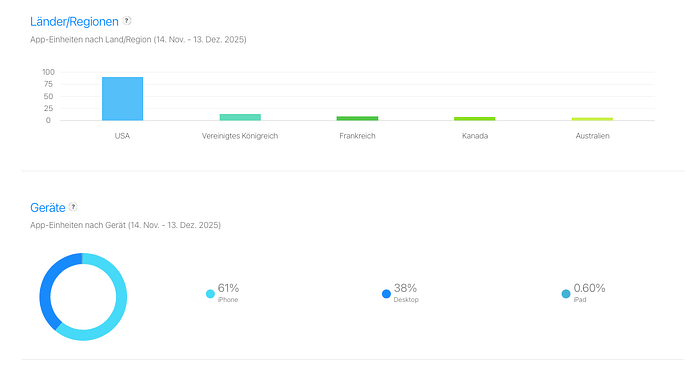
The sales figures of my iOS and macOS apps provide an anectodal evidence to the market research data and the claims. When I closely worked with consumers and businesses from the U.S., UK, Canada and Australia, I experienced their interest, open minded approach to and enthusiasm for new technology first hand. Something that I don't experience on this scale in Germany, even to this date. German developers that want to launch software, need to do so outside Germany, at least virtually. Tailor made software for Germany hardly every grows beyond it, if it grows at all.
Damage done
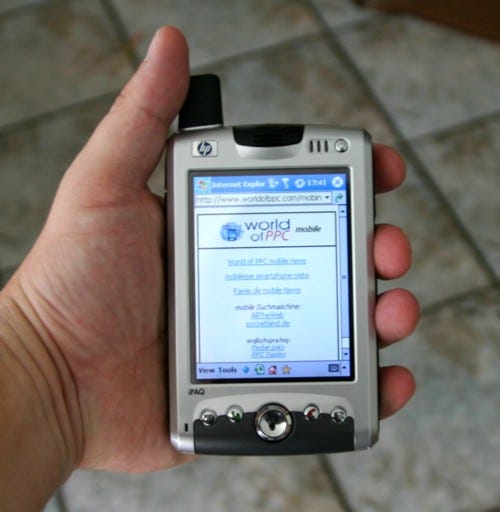
When I decided to go into software engineering in the year 2000, my teachers would tell me that "the Internet is just a short lived phenomenon". Back then, they urged me to rather seek out a "real job". We all know how that turned out. The same was true with friends I went out to dinner with, carrying my HP iPAQ H6340. Even as late as 2005, they would make fun of how ridiculous it is to carry a phone with such a large screen, that no one needed Internet on the go, and claimed that devices with such large screens would never be successful in the market. The arrival of the iPhone just two years later proved them wrong, but even then it would take several more years to convince them and adopt an Android or iPhone.
Technophobia is so deeply entrenched among the Germans that many disregard established market facts. For instance, when I developed PalmOS software years ago, it was viewed domestically as an exotic niche, despite over 35 million units having been sold globally by 2005. While maintaining a critical perspective on emerging technology is undoubtedly valid, the skepticism in Germany has become excessive. It has evolved from a constructive debate into a genuine threat to both our economy and society.
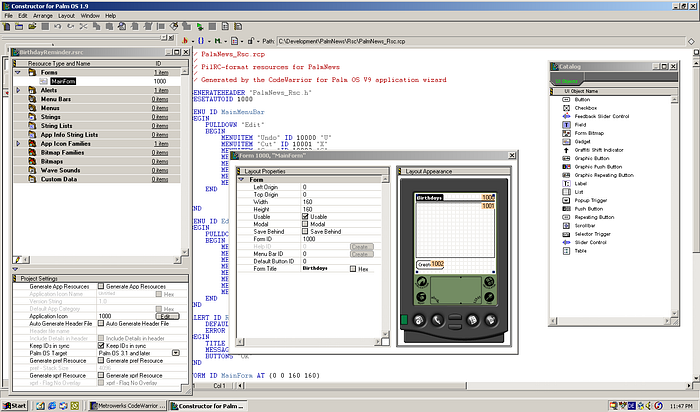
I personally have found my path in software development by writing apps and software that is mainly adopted by English speakers. Unfortunately, many other developers have simply given up on it and left. The damage done is so vast that the recovery of Germany's economy is not just down to cutting taxes and regulation. It also has to convince its citizens to have a more open minded approach to software, and technology in general. This will take time, probably years or decades, and that is time that many software developers today are no longer willing to endure.
Programming in Germany? It's just dead now
The EU's technophobic battle against U.S. companies led to various AI models not being released in Germany, and even iPhone Screen Mirroring not being available to this date. This battle marked one of the final nails in the coffin of software development in Germany. It added to the mix of high taxation, crippling bureaucracy, a technophobic society and a largely non-existent national software market. As a result, programmers dropped their keyboards, packed their bags and left. You can't blame them for it.
Germany moved from being a society of innovative builders to one of unhealthly critical consumers. The once famous Chaos Communication Congression in Hamburg, that I once looked forward to every year, has turned from a technology conference to one where politics dominates the agenda. This change is symbolic to me of how Germany's approach to software, computers and technology changed over the years.
In a software-dominated world, a nation reliant on industrial innovation can hardly sustain its economic growth and, consequently, its prosperity. Certainly, the government can be blamed, but the German people should also soberly reflect on their own complicity.
It breaks my heart 💔, but programming in Germany 🇩🇪 is kaputt.
Thank you for reading. Jan
All my articles are handicraft, handwritten by me. By reading and sharing my articles, you support my work and you support real human authorship.
I'm a software business owner from Germany, worked in various CTO roles, an active programmer in C++, Go, Swift and passionate technology enthusiast. My programming career started at a young age and I later acquired a professional institutional education in software engineering. My journey on Medium started out as note taking and documenting my projects. Over time, it became more and more popular with you, my beloved readers. Not because I am someone special, but because people crave for thoroughly researched technical articles. Following me, clapping and subscribing is one step forward in keeping technical writing and its community alive.