November 14, 2025
Getting Better Answers: A Practical Guide to Using Multiple AI Platforms
Why Use Multiple AI Platforms?

Basil C. Puglisi
8 min read
Why Use Multiple AI Platforms?
You already know AI can help with writing, research, problem-solving, and creative work. But here's what most people miss: using multiple AI platforms together produces better results than using just one.
The Problem with Single AI Dependency:
When you rely on one AI platform, you get one perspective, one reasoning approach, and one set of blind spots. Sometimes it's confident but wrong. Sometimes it misses obvious alternatives. Sometimes it just gives you the answer it thinks you want rather than the answer you need.
The Multi-AI Solution:
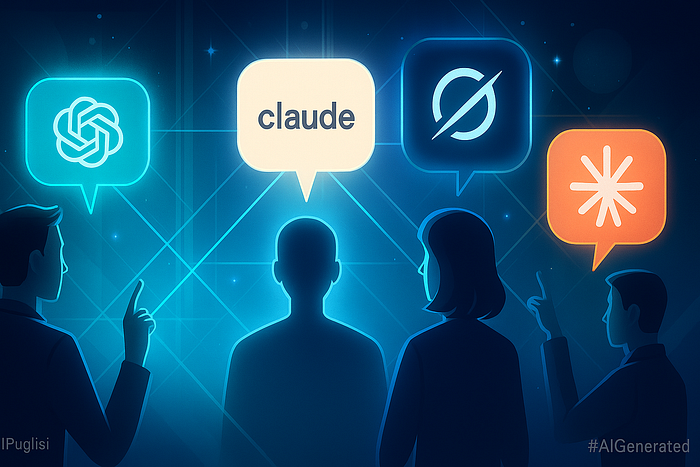
Different AI platforms approach problems differently. ChatGPT excels at structured reasoning. Claude handles ethical nuance well. Gemini grounds research in current data. Perplexity retrieves live evidence. When you consult multiple platforms on the same question, you discover where they agree (probably reliable) and where they disagree (requires your judgment).
Independent testing shows meaningful accuracy differences across platforms. According to Google DeepMind's FACTS Grounding benchmark released in December 2024, factual accuracy rates vary from under 80% to over 83% across leading AI models, with hallucination rates ranging from under 2% to over 25% depending on the platform and task complexity. When you consult multiple AI systems, you're not just getting different perspectives. You're reducing the probability that all platforms make the same error simultaneously.
This isn't about replacing your thinking. It's about amplifying your judgment with systematic consultation across different AI perspectives.
The Core Principle: You Decide, AI Advises
HAIA-RECCLIN operates on one fundamental rule: humans maintain final decision authority while AI platforms provide analysis, options, and recommendations.
This means:
- You authorize what questions to ask
- AI platforms provide answers and evidence
- You review their responses looking for agreement and disagreement
- You make the final call on what to believe and what to do
Think of it like consulting multiple experts before making an important decision. You wouldn't just pick the first doctor's diagnosis, the first contractor's bid, or the first financial advisor's recommendation. You'd get multiple professional opinions, compare them, and then decide.
Multi-AI consultation works the same way. This approach aligns with emerging enterprise practice. Microsoft's September 2025 integration of multiple AI providers into Copilot, including models from Anthropic alongside their OpenAI partnership, demonstrates institutional recognition that multi-model approaches improve output quality. When major technology companies invest billions proving multi-AI coordination works at scale, individual users gain access to the same systematic advantages without equivalent infrastructure costs.
HAIA as Decision Framework, Not Prompting Tricks
Most AI guides focus on how to write better prompts for a single platform. HAIA takes a different approach. This isn't about learning magic phrases that make one AI perform better. It's about learning how to structure decisions across multiple AI systems.
Prompt engineering teaches you: "Ask the AI this specific way to get better results." HAIA teaches you: "Consult these AI systems in this sequence to make better decisions."
The difference matters. Prompting improves what you get from one conversation with one platform. HAIA improves how you think by systematically exposing yourself to multiple reasoning approaches before you decide. You're not optimizing AI performance. You're optimizing your judgment using AI as distributed consultation infrastructure.
The Seven Roles: What Each AI Does Best
Different AI platforms have different strengths. Rather than using them randomly, assign them specific responsibilities based on what they do well:
Researcher: Finds information, gathers evidence, locates sources Best for: ChatGPT, Gemini, Perplexity when you need facts grounded in current data
Editor: Ensures clarity, fixes errors, maintains consistent voice Best for: ChatGPT, Claude when you need polished, professional output
Coder: Handles technical work, creates scripts, formats complex documents Best for: ChatGPT, Claude when you need functional code or structured technical content
Calculator: Verifies numbers, checks math, validates quantitative claims Best for: Perplexity, ChatGPT when accuracy on statistics and calculations matters
Liaison: Translates complex ideas into plain language for specific audiences Best for: Claude, ChatGPT when you need to communicate technical content to non-experts
Ideator: Generates creative alternatives, offers fresh perspectives, challenges assumptions Best for: Claude, Grok when you need innovative approaches or creative solutions
Navigator: Questions your assumptions, points out what you're missing, flags potential problems Best for: Claude, ChatGPT when you need someone to challenge your thinking constructively
You don't need seven different platforms to use these seven roles. Two or three platforms can cover all roles if you assign them strategically based on your task.
Simple Three-Step Workflow
STEP 1: BEFORE (What are you trying to accomplish?)
Define your goal clearly before consulting any AI. What decision are you making? What problem needs solving? What output do you need?
Example: "I need to write a professional email declining a job offer while keeping the relationship positive for future opportunities."
STEP 2: DURING (Consult multiple platforms)
Ask the same question to 2–3 different AI platforms. Don't just use the first answer. Compare what they suggest.
Example:
- ChatGPT: Provides structured email with formal business tone
- Claude: Offers warmer language emphasizing relationship maintenance
- Gemini: Suggests specific phrases that preserve professional goodwill
STEP 3: AFTER (Make your decision)
Review all responses. Notice where they agree (probably good advice) and where they differ (requires your judgment about what fits your situation). Combine the best elements or choose the approach that matches your needs.
Example: Use ChatGPT's structure, Claude's warm tone, and Gemini's specific relationship-preserving phrases to create your final email.
Practical Implementation: Start Simple
Minimum Viable Multi-AI (2 platforms):
Pick two AI platforms you already use or can access free. Consult both on important questions. Compare their answers. Decide which guidance to follow based on where they agree and how well they understand your context.
Recommended Pair: ChatGPT + Claude
- ChatGPT handles structured tasks and factual research
- Claude provides ethical perspective and catches potential problems
- Together they cover most needs for writing, research, and decision support
Standard Multi-AI (3 platforms):
Add a third perspective for important decisions requiring higher confidence.
Recommended Set: ChatGPT + Claude + Perplexity
- ChatGPT: Structured reasoning and content creation
- Claude: Ethical alignment and assumption challenging
- Perplexity: Current information and source verification
Enhanced Multi-AI (5+ platforms):
For complex projects requiring sustained collaboration, specialized functions, or high-stakes decisions.
Full Set: ChatGPT + Claude + Gemini + Perplexity + Grok
- Provides coverage across all seven roles
- Enables true dissent preservation (when 3 agree and 2 disagree, you know where uncertainty exists)
- Suitable for research projects, major content creation, strategic planning
When to Use Multi-AI Consultation
Always consult multiple AIs for:
- Important decisions with significant consequences
- Research requiring source verification and accuracy
- Professional content representing you to employers, clients, or audiences
- Problem-solving where wrong answers create costs
- Learning new subjects where you need reliable explanations
Single AI is fine for:
- Quick questions where errors don't matter
- Brainstorming where you just need ideas flowing
- Casual conversation or entertainment
- Tasks where you'll verify the output yourself anyway
The more important the output, the more valuable multi-AI consultation becomes.
Preserving Dissent: The Secret to Better Decisions
Here's what makes multi-AI consultation powerful: when AI platforms disagree, that disagreement tells you something important.
Bad Approach (Forcing Consensus): Ask AI platforms until one gives you the answer you want. Ignore contrary advice. Move forward with false confidence.
Good Approach (Preserving Dissent): When platforms disagree, document both positions. Understand why they differ. Make your decision knowing where uncertainty exists.
Example:
Question: "Should I invest in cryptocurrency for retirement savings?"
- ChatGPT: Suggests diversified index funds for retirement, noting cryptocurrency volatility creates unsuitable risk for retirement accounts
- Claude: Questions the premise, warns about speculative asset classes for guaranteed income needs, recommends consulting financial advisor
- Perplexity: Provides current data showing crypto volatility patterns and retirement planning best practices favoring stable assets
The dissent here matters. All three AIs express concern about cryptocurrency for retirement despite approaching from different angles (risk analysis, ethical questioning, empirical data). That convergent dissent from conventional investment advice provides better decision support than any single AI claiming certainty.
When AI platforms agree across different reasoning approaches, confidence increases. When they disagree, slow down and examine why.
Common Patterns to Watch For
Pattern 1: Confident but Wrong
Single AI platforms sometimes state incorrect information with complete confidence. Multi-AI consultation catches this because other platforms flag the error.
Solution: Always verify factual claims across at least two platforms before accepting as truth.
Pattern 2: Overly Agreeable
AI platforms want to be helpful. Sometimes they agree with your assumptions even when those assumptions need challenging.
Solution: Assign Navigator role to one platform specifically to challenge your thinking. Ask it to find problems with your approach.
Pattern 3: Generic Advice
Single platforms sometimes provide general guidance lacking specific context about your situation.
Solution: Use multiple platforms to generate diverse approaches, then synthesize elements matching your specific needs.
Pattern 4: Hallucinated Sources
AI platforms occasionally cite sources that don't exist or misrepresent what sources actually say.
Solution: Use platforms like Perplexity that provide live links, or verify citations across multiple platforms before trusting references.
Real Example: Job Search Strategy
Question: "How should I approach my job search in my field?"
Single AI Approach: Ask ChatGPT. Get generic advice about updating resume, networking on LinkedIn, preparing for interviews. Follow the standard template.
Multi-AI Approach:
ChatGPT (Researcher + Editor): "Create structured job search timeline with networking strategy, application tracking system, interview preparation phases."
Claude (Navigator + Ideator): "Before following standard advice, consider: Are you targeting the right roles? Have you identified companies matching your values? What makes you stand out from other candidates with similar credentials?"
Perplexity (Researcher + Calculator): "Current hiring trends in your field show 40% of positions filled through referrals. Average application-to-interview ratio is 12:1. Companies report 65% preference for candidates demonstrating specific project experience."
Synthesis (Your Decision):
ChatGPT's structure provides organization. Claude's questions help you clarify what you actually want rather than just applying everywhere. Perplexity's data shows referrals matter more than cold applications, suggesting you should prioritize networking over mass resume submission.
Your final strategy: Focus on 10–15 target companies, get warm introductions through LinkedIn connections, prepare portfolio demonstrating specific project experience rather than relying on resume alone.
That synthesis emerges from consulting multiple perspectives. No single AI would have guided you there alone.
Getting Started Today
Immediate Action:
- Pick two AI platforms you can access right now
- Think of an important question or decision you face
- Ask both platforms the same question
- Compare their answers looking for agreement and disagreement
- Make your decision based on synthesis of their guidance
This Week:
- Use multi-AI consultation for three different tasks (research, writing, problem-solving)
- Notice which platform performs better for which types of work
- Start forming your own role assignments based on observed strengths
This Month:
- Expand to three platforms if you started with two
- Develop your personal workflow for consulting multiple AIs efficiently
- Document a major decision where multi-AI consultation changed your approach
Remember: You're in Charge
Multi-AI consultation amplifies your judgment, it doesn't replace it. You decide which questions matter, which advice to follow, and how to synthesize different perspectives into final decisions.
Think of AI platforms as research assistants, consultants, or advisors. They provide information, analysis, and recommendations. You provide wisdom, context, values, and final authority.
The goal isn't perfect AI answers. The goal is better human decisions informed by systematic consultation across diverse AI perspectives.
Start simple. Two platforms consulting on important questions beats one platform giving you the first answer that sounds good.
Your thinking stays central. AI makes it better.
Free Resources
Getting Started Guides: Visit BasilPuglisi.com for articles documenting practical multi-AI workflows, platform comparison guides, and real implementation examples.
Platform Access:
- ChatGPT: Free tier available at chat.openai.com
- Claude: Free tier available at claude.ai
- Gemini: Free access through Google account
- Perplexity: Free tier available at perplexity.ai
Community Discussion: Connect on LinkedIn at linkedin.com/in/basilpuglisi to share experiences, ask questions, and learn from others implementing multi-AI collaboration.
About This Guide
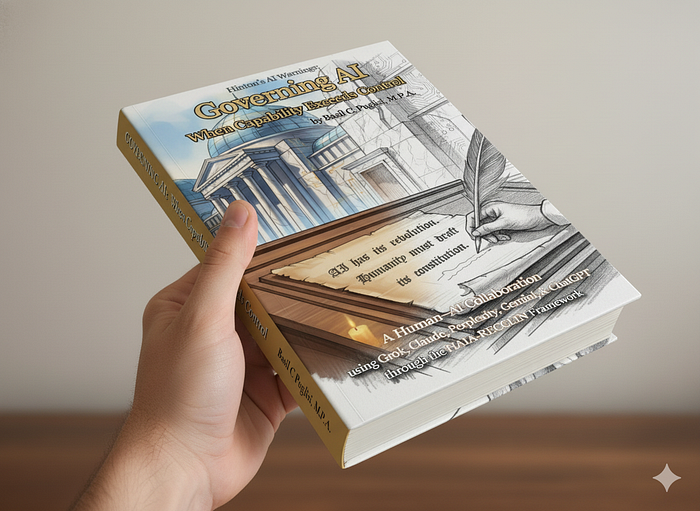
This simplified guide extracts core principles from HAIA-RECCLIN, a comprehensive framework for systematic multi-AI governance. The enterprise version addresses organizational adoption, regulatory compliance, and professional liability considerations. This public version focuses on individual productivity and decision quality.
For organizations requiring enterprise governance frameworks, visit BasilPuglisi.com.
License
This guide is published under Creative Commons Attribution 4.0 International License. You may share, adapt, and build upon this material for any purpose with appropriate attribution.
Suggested Citation: Puglisi, B. C. (2025). Getting Better Answers: A Practical Guide to Using Multiple AI Platforms. Retrieved from BasilPuglisi.com