

Hi, my name is Ria. And I'm a glazomaniac.
I've been a compulsive list-maker for as long as I can remember. As a hyperactive student intoxicated by productivity, I inundated my planner with checklists (which feels like another life considering how allergic I am now to doing Too Many Things). At work, I would tame my anxiety by listing the crap out of my projects. As a newbie writer, I quickly put in my reps writing listicle after listicle. I've made comparison lists: pros vs cons, what works vs what doesn't work, even my past self vs my present self. Through the sheer act of enumerating things, I've been able to systematically acclimatize to new jobs, be at peace knowing I'm traveling with everything I need, nail my grocery runs, and run my errands like a proper adult. (This last point is arguable, but let's just go with it.)
Sure, it's great to get stuff done, not to mention to trick myself into feeling a semblance of control. But here's what I realized: I've made far more exciting and rewarding lists in my life — none made with productivity with the end in mind.
As you'll see later, it was a list that helped me rise from the ashes of burnout. I've listed — and continue to list — my way to saner days, to a livelier creative practice, to better versions of myself. I wouldn't be surprised if I managed to list my way to the love of my life.
Kidding aside, I think a list, be it ever so humble, is so powerful because it's a concrete demonstration of intention. No, it's not the solution — but it is the catalyst. To sit down and compel yourself to make a list to tackle something is to say, with a gentle yet committal sensibility, I want to understand myself. I want to take stock of what's important. I want to make better decisions.
Or at least, those were the intent behind the lists I will be sharing with you over the next weeks.
These aren't so much lists as exercises. I suspect what makes them special and hardworking is how they force you to focus and consider yourself. But that's not to say they're taxing to make. They're actually the funnest things I've ever done! Looking back, I thank my past self for putting in the effort.
A list for personal alignment
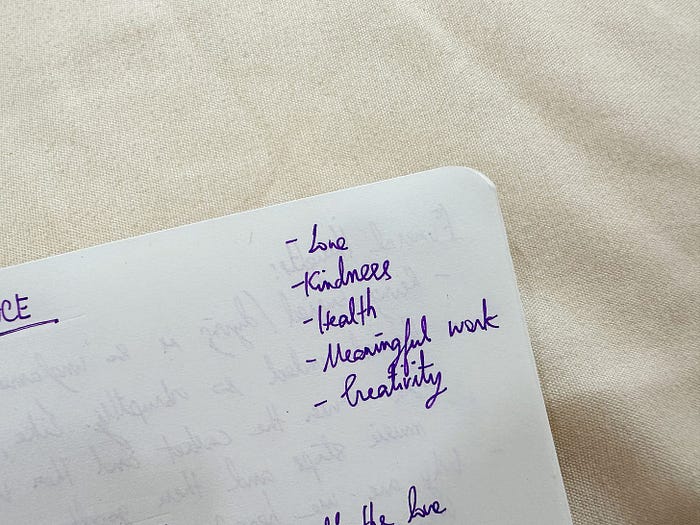
On the upper right corner of every page of my journal this year, you'll see these five bullet points:
- Love
- Kindness
- Meaningful work
- Creativity
- Health
This is a list of my top values (in no particular order, or so I tell myself). And I write them every time I journal.
I first thought about defining my core values when I read about values-based goals. In this goal-setting approach, you first identify your top values and then think about the goals that allow you to live out those values. This isn't usually how we set goals, where we think outcome-first like "I want to build a six-pack." That's a perfectly sensible, noble goal. One I've claimed myself perhaps half of my life and am nowhere close to reaching. But oftentimes, the story we tell ourselves ends there: I want a six-pack. Now say we extended the narrative to this: I know and believe to my core that my physical health and strength are of paramount importance to me. Achieving a six-pack is simply one way I can show that.
Doesn't that feel the slightest bit more visceral? More deliberate?
Will this kind of reframing make a difference? Wellbeing expert Tchiki Davis suggests it might help with one's commitment and endurance. Her plea: "I just want to encourage you to set goals starting from a desire for meaning rather than a desire for an outcome." I think that's fair — it's easier to stay the course when you know why it's worth running the race.
Anyway, I just thought that was a nice bit to share, but truthfully, this year, I've dropped the goals part (lol) and thought I'd simply lead with my top values.
So this is how the exercise goes: Google "list of personal values", then shortlist into five.
Sounds simple enough, right? But as you look through all those noble, important things worth living by, you'll begin to feel how impossible it is to narrow it down to just five. I mean, on top of the five I listed above, of course, I want to be charitable! Adventurous! Balanced! Wise!
Pinning down five doesn't mean you can't demonstrate other values. It just means these chosen ones are what you're compelled to mindfully practice, whether you've already ingrained them or wish you lived by them more. After all, values, as Nir Eyal put it, "are the attributes of the person you want to become."
Now whether or not you partake in this list-making, the truth is we all have our value hierarchies in our lives. It leaks out in our choices and behaviors. I could easily claim that I highly value financial security, but if I keep taking every chance I can to book a flight, then what value am I honestly championing more?
A Low-Effort, High-Reward List Idea
Now we go to the upper left corner of my journal!
In this space, I write "Thankful for" or "Grateful for" or "Blessed". Then I close my eyes, replay my day in my mind's eye, and, a la Dumbledore siphoning thoughts from his mind, draw out three things I'm thankful for that day and write them down in bullets.
This practice — scientifically proven to improve happiness & well-being — is called Three Good Things.
Also more boringly called a Gratitude List.
Some time ago, I came across a writer, someone who also writes his TGT daily, who shared how he sometimes felt the pressure to keep coming up with new things to be thankful for. I mean we all know life, for most of us, can often feel like a string of the same, tiresome days. Perhaps this is how one's TGT might play out: I'm thankful for my mac and cheese dinner. Which was leftover from yesterday's lunch, which is also what I wrote on my list.
The writer couldn't help but wonder: if he were truly grateful, shouldn't he be able to find better, more novel things?
Then he realized there was no need to succumb to that pressure. Because gratitude, he argued, "is not a creativity exercise. It's a gratitude exercise."
Hmm.
I get where he's coming from. I probably write my dog's name in my TGT 4 out of 7 days (a much-deserved spot, as we can all agree). But for the most part, what I love about this exercise is how it gives me the chance to comb through my day and think hard and really notice something new or specific I'm thankful for. Today, I'm not just thankful for "work", not even the "Strategy team". I'm particularly thankful for my colleague "Bea". Tomorrow I'll be grateful for "Ivan". The following day I'll feel blessed to have been able to enjoy yet again the "free cereals in the pantry" or that "cozy, well-lit corner of the office".
So, yeah, fine: Gratitude may not strictly be a game of creativity. But it is a game of mindfulness. It's about stretching your ability to pay attention, to look within and without, to see the same thing with new eyes, to draw out the details of your life and grasp how no moment, no step, no act nor insight is too small. It's about putting up the minutiae of life against the light and seeing it for what it is: beautiful, meaningful, important.
For a practice that costs me practically nothing besides two minutes of my time, I've found its return to myself to be tenfold. It's given me an abiding sense of positivity and abundance. Undeniable proof of the goodness of the world. A doorstop to taking things for granted. An incessant reminder that, indeed, as the poet W.B. Yeats put it, "The world is full of beautiful things, just waiting for our senses to grow sharper."
An Anti-burnout List
It's funny how you can become a shell of your former self without realizing it.
I suppose that's what happens when you have no concept of personal bandwidth. When you deny yourself rest, insisting it's just "mind over matter". When you reduce your life to a cycle of work and sleep, falsely believing a job well done at work will one day ultimately reward you. Until then, your daily Starbucks fix will have to sustain you.
In hindsight, it's no surprise my burnout only hit me when I was finally out of my job — and, coincidentally, in a pandemic. Feeling listless (see what I did there), I needed to fill my time and keep myself sane as the lockdowns dragged on indefinitely.
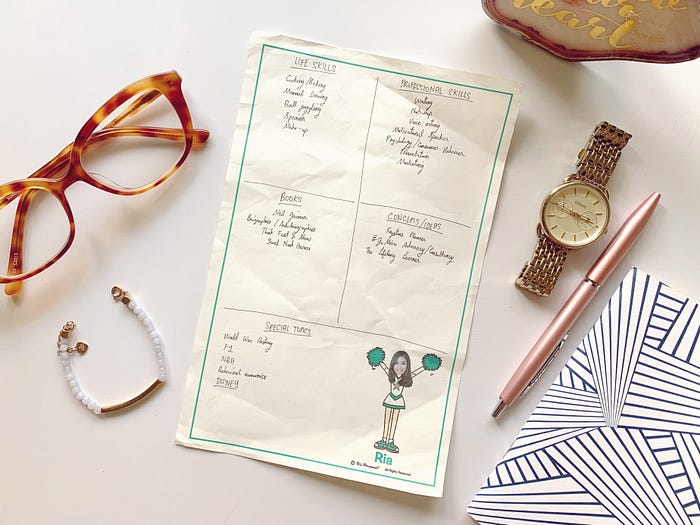
So I grabbed my personalized notepad. I divided the paper into five spaces and labeled them: Life Skills, Professional Skills, Books, Concepts/Ideas, and Special Topics.
Then I pulled out my mental file of "Things I'll Do/Try/Explore Someday When I Have the Time" and categorized the entries under the five spaces.
Voila. My Interest Bucket List.
Obviously, I couldn't do/try/explore every interest. My attempts varied in status and success: an unfinished Photoshop vector of Lewis Hamilton. A four-month Duolingo Spanish streak. (No recuerdo nada de espanol! Jaja!) A writing practice that will never end.
Now what did this have to do with my burnout? It would help first to ask: why do we even burn out in the first place?
Alexander de Heijen's answer was a splash of cold water on my face: "You often feel tired not because you've done too much, but because you've done too little of what sparks a light in you."
I didn't know it then, but my Interest Bucket List was the match that kindled that spark.
As I dabbled in this hodgepodge of interests for no reason other than to satiate my curiosity and indulge myself, I began to feel myself coming back. I realized how soulful it feels to create, to try, to have fun. How rejuvenating it is — life-saving, even — to make space for things I'm drawn to.
An Expanded Bucket List
This last list came from the article "How and Why to Do a Life Audit" by Ximena Vengoechea. So, yes, the whole thing is a lengthier process, one I would recommend, but I won't go through the whole thing. As you can surely count on, it starts with making a list.
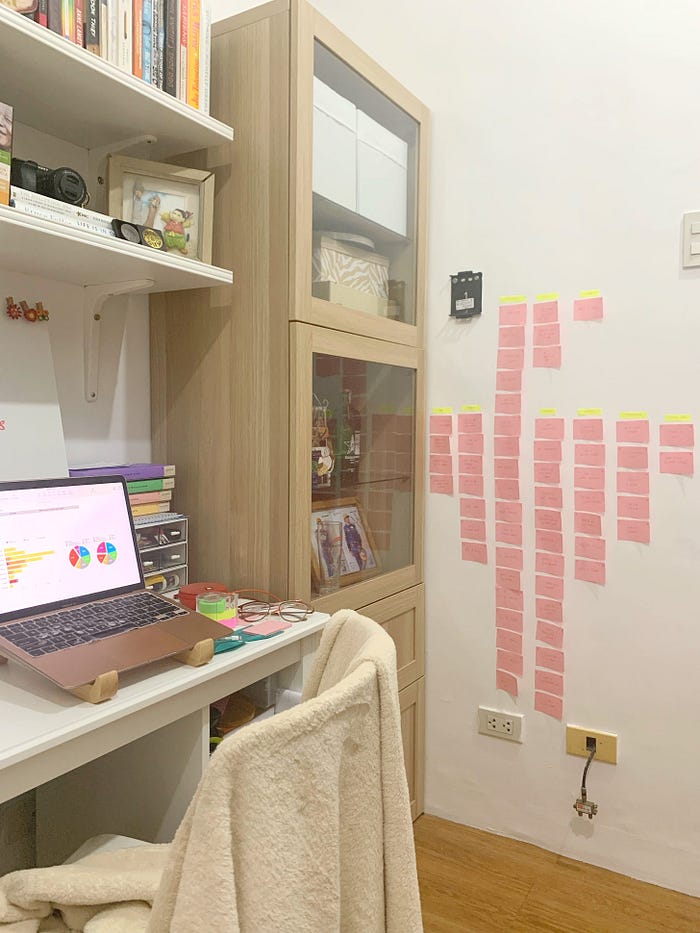
Vengoechea suggests using post-its. And all you have to do is write one wish per post-it.
Right, I know, it's basically a bucket list. But what struck me from Vengoechea's entries is they weren't just hard goals like "Visit Palawan because Philippines beaches are unrivaled in beauty" (Okay, she didn't actually write that, but I think it's a fair entry). She also wrote intentions. An actual example of hers: "Share what I've learned, in life and professionally."
I loved that. The way she expanded the concept of a bucket list. Echoing the spirit of the Top Values list, you realize that maybe our most worthwhile desires never really end. I call them "soft aspirations" — these things we'll always be working on.
So now, on top of "Watch a Grand Prix" and "Write a book", I also have these on my bucket list: "Cultivate a solid journaling habit", "Read all the best memoirs", and "Support my parents."
This was my first time making my own bucket list. To see all my dreams and aspirations, written in my own hand, laid out in front of me, was truly a clarifying and centering experience. I hope to come back to this list more regularly!
To end, a fair warning: Once you make these lists, they will constantly haunt you, nagging you with questions such as:
- Does this decision or opportunity in front of me align with any of my core values? (Top Values List)
- What particular detail of this moment struck me? (Three Good Things)
- Which of my dream interests/skills can I explore further? (Interest Bucket List)
- Which thing/s on my bucket list can I start working towards? (Life Audit List)
Happy listing!
This was originally published in my newsletter, Skinny Deep. Subscribe for more of my thoughts! :) And if you liked this post, please do give it fifty hearty claps!