
A system is an interconnected set of people/things/ideas that is organized in a way that achieves something. We are surrounded by systems: our digestive systems, our bodies overall, schools, our democracy, international trade, a forest ecosystem, global climate.
When systems stop working, there are a handful of predictable ways in which they breakdown. Fortunately, because these breakdowns are so common, there are well-known strategies for addressing them. Thus, if you can learn to spot the underlying systemic pattern, you'll immediately have a set of powerful tools at your disposal.
Tragedy of the Commons
At the beginning of the 1800s, England was still a rural, agricultural society. Most Britains depended on the land — either through farming or raising animals — for their livelihood.
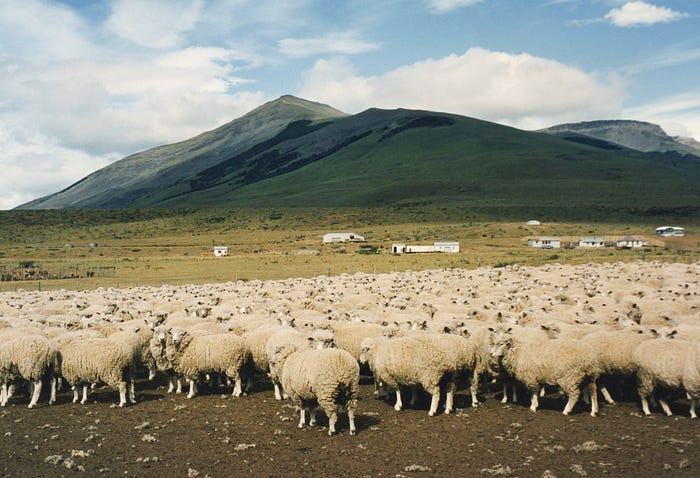
Over hundreds of years, English villages had gradually developed a custom whereby herders could graze their cows on shared parcels of land called "commons." The term "tragedy of the commons" originated in an essay written in 1833 by the British economist William Forster Lloyd, who was interested in how herders shared this common land.

As with any scarce and finite resource, Lloyd reasoned that a given amount of land could only support a certain level of animal grazing. As a group, if the herders allowed too much grazing, the land would eventually be overused. Thus, the herders needed to coordinate in a way to ensure that overgrazing did not occur. At the same time, however, each individual herder was incentivized to graze as many animals as possible. The more an individual herder's animals grazed, the more they would produce, and the more they produced, the more the herder would earn.
For Lloyd, this is where the fundamental systemic tension emerged. If all the herders acted in their individual best interest, the common resource — the land — would be significantly depleted or even destroyed, to the detriment of all (including the individual maximizing his or her best interest). To put it more bluntly, sometimes when everyone does what is best for themselves, everyone loses.
It's More Than Just Sheep and Cows
135 years after Lloyd's original essay, ecologist Garrett Hardin published an article entitled "The Tragedy of the Commons" in which he expanded the concept for the 20th Century. Moving beyond countryside commons, Hardin was concerned about human overpopulation and its threat to the Earth's finite resources (e.g. clean air, fresh water, arable land).

In expanding the application of "Tragedy of the Commons", we can begin to see how unchecked selfishness can manifest in many different contexts:
- Air Pollution — Imagine a bunch of people shopping for cars. They could either buy cheap cars that emit a lot of dirty exhaust, or they could buy more expensive cars that emit less exhaust. Individually, everyone would be better off financially by buying the cheaper, dirtier cars, but in the long-run everyone is hurt — physically and financially — by bad air quality.
- Overcrowding — People love national parks because of their beauty, wilderness, and solitude. Seeking beauty, wilderness, and solitude, more and more people try to visit the parks. This, in turn, creates more traffic, litter, and noise, and the parks lose some of their beauty, wilderness, and solitude because of the overcrowding.

- Homelessness — Society's response to homelessness has become a Tragedy of the Commons. It is in each community's individual best interest to NOT try to solve homelessness (i.e. build housing, invest in supportive services), but in the process, homelessness overall continues to get worse, to the detriment of all communities.
- Anti-biotic Resistant Bacteria — When people get sick with a bacterial infection, it is in their best interest to do everything they can to find a cure. However, as more and more people have used antibiotics to treat infections, bacteria has evolved to be more resistant to antibiotics, thus creating an even greater threat to human health.
- Trash — Plastic was one of the most important inventions of the 20th Century. Today it provides extraordinary convenience for our food and beverages. Unfortunately, by consuming what is easy and convenient, 40% of all plastic is now used only once and then discarded. Less than 10% is recycled. 18 billion pounds of plastic waste flow into the oceans every year.
It's Not All Gloom and Doom
Fortunately, it's not all gloom and doom. "Tragedy of the Commons" is not inevitable, and it can be reversed. Political scientist Elinor Ostrom was awarded the 2009 Nobel Memorial Prize in Economic Sciences for her research on the coordination of shared resources. Ostrom's insights have generated a variety of effective strategies for addressing this common systemic breakdown:
1. Educate people about the damage that is being done. For example, companies can use labels, branding, or other information to inform customers about their business practices (e.g. whether or not they use sustainable fishing practices).
2. Use moral pressure to encourage self-policing. For example, a recent study found that a lecture about the ethics of meat consumption resulted in students eating less meat.
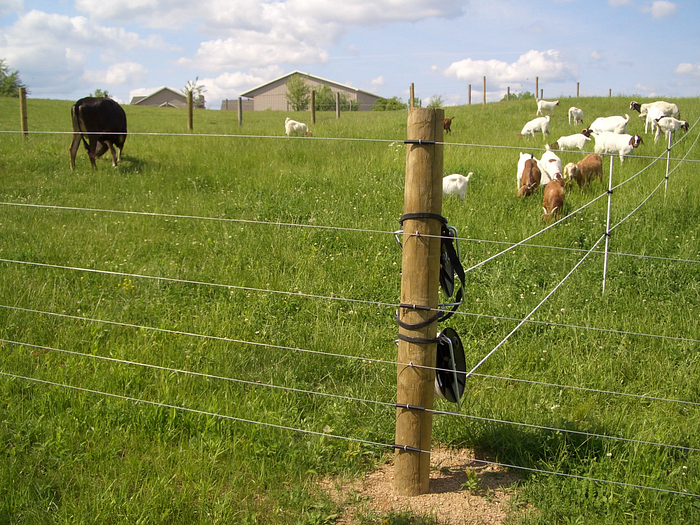
3. Privatize the common resource, so everyone becomes individually responsible for a small piece of the whole. For those common grazing areas in England, that's where the idea of fencing came into play.
4. Internalize externalities by finding ways to make people feel or be responsible for the negative consequences of their behavior. For example, a gas tax factors in the societal cost of building roads and addressing air pollution. The more gas a person uses, the more they pay.
5. Create government regulation that stipulates how much of the resource can be used. For example, people and companies might have to compete for a limited number of permits. When I hiked the John Muir Trail in 2017, the National Park Service only issued 60 wilderness permits per day

6. Put a price on the common resource. Even in water-scarce areas like the American West, water is largely free for the end-user. If there was a price on water after a certain guaranteed free amount, wasting water on big yards or other activities might not make economic sense.
More Resources
If you want to learn more about systems thinking, please check out the articles below.