
It was INEXORABLE: The scent of lemon grass first confused me in its familiarity, like a long-lost friend I had forgotten I had, when I first reluctantly traveled to Saigon in 2017 for a conference to explore how far the tendrils of Korean style actually reached out from the Korean Peninsula. I wanted to know if they had seriously or significantly made their mark on the notoriously long and lanky Vietnamese peninsula, as my then-student Thu Ha had been claiming. Back then, I was teaching "Hallyu Marketing" at Yonsei University and been arduously trying to define the Korean style I had been seeing coalesce into recognizable shape since around 2007. As I did so, my student Thu Ha — who had been a star student in general and especially when the class and I went to Seoul Fashion Week to conduct interviews and take pictures — she began insisting that I had to get to Vietnam and see what was happening there because no one was more enthralled and in touch with the "Korean wave" (hallyu) than the Vietnamese. No. One, she emphasized. And when an opportunity came up to go to Vietnam, I took it (though I'm not much of a traveler and even as a 20-years resident of Korea, and a migrant worker academic, I still have not been to Thailand or the Phillipines, and still had not been to Vietnam).
When my good friend and Harvard-trained ethnomusicologist and actually talented, non-Korean gayageum performer colleague Dr. Jocelyn Clark told me that there was an upcoming ethnomusicology conference going on in Saigon and that my perspective on cultural appropriation in K-Hip Hop would be appreciated and paid for by plane ticket and accommodations to attend, I was intrigued. But yet I was nevertheless actually not too keen on going because I am, at base, a homebody. When my student and quiet Viet nationalist pupil Thu Ha got wind of this she shot me a look that said "You must go or I will never forgive you, professor. Ne-ver." So I confirmed my intent to go, wrote the paper feverishly and furiously fast, and soon found myself in Saigon. I first found out that 1) Thu Ha was absolutely right and I had been a fool to even entertain any doubt of her exhortations for even an instant, and 2) Korean style certainly occupied a high place of esteem for the Vietnamese and it wasn't that everybody is dressed like a cosmopolitan Korean, but still, most Vietnamese young people look at Korea as cosmopolitan, on top of the fact that cosmopolitanism itself was often seen as Korean, and vice-versa. I've written about that all-important trip before, which you might want to peruse at your leisure later.
I continue to do research on the influence of a Korean style as felt in other parts of Asia, using my camera to make contacts, forge partners for projects, and use images to make friends and find informants. In short, the best way to study a social media-based cultural production phenomenon such as the "Korean wave" (hallyu) is by being a media practitioner engaged in social media-based cultural production. As a social scientist, the old, fuddy-duddy methods such as surveys, questionnaires, and from-a-distance methods aren't very revealing when it comes to figuring out what's going on, both online and off. I'm not going to find out what *I* want to know by going to K-POP concerts with a clipboard. But I don't have the means, chops, or healthy enough knees it takes to become a K-POP performer, producer, or someone else in that field. Nor would I take seriously any data gleaned from an attempt to become a "fly on a wall" as a "participant-observer" with fashionable youth as a 48-year-old, fat, American man. In my research, I always give my informants a reason to talk to me, something that makes sense to both them and others.
Fashion as Necessity, Korean Fashion as Social Marker
I started this series well before COVID-19 was considered a pandemic, before it even had the name COVID-19. You can read more about it and other wonkish things in Part I of this series.
The desire to style, be stylish, and be recognized in the deeply satisfying, all-legitimizing, Hegelian sense of the word as measured by follower counts— does not evaporate even in the panic of an apparent pandemic. I quote former fellow colleague and compatriot from grad school Minh‐Ha T. Pham in her incisive and insightful article written just after 9/11 "The Right to Fashion in the Age of Terrorism", in which she quotes Anna Wintour, to set the stage:
Anna Wintour, editor-in-chief of American Vogue and doyenne of American fashion, wrote in the November 2001 issue of Vogue, "Fashion is essential in these difficult times, paradoxically, to keep us in touch with our dreamy, fanciful, self- pleasing natures" (2001, 86).
Pham, Minh-Ha. T. (2011). The Right to Fashion in the Age of Terrorism. Signs, 36 (Winter), 385–410.
Therein, Pham takes a critical look at the narratives of consume, consume, consume! against the looming dying of our freedoms, lest "they" win. It was a time in which going on to do normal things — especially in the market — was posed as a sign of resistance to terror and a furiously flagrant gesture of irrepressible 'Murica! in the face of Al Qaeda, Bin Laden, and all of 'em. Despite fashion and fashionable endeavors suddenly seeming too me against the new need for a consolidated we, the pursuit of fashion became a nigh-patriotic act of resistance in a somber time in America. Even in difficult times, the idea was that fashion keeps us human. Fashion keeps us free. I took this period to heart as I traveled to Hanoi from Seoul on February 18th to give a talk on Korean fashion and also do participant-practitioner-based research fashion shoots and interviews) on Korean fashion right as the "Coronavirus" (the official name of "Covid-19" was coined while I was in Hanoi) was beginning to hop around Asia and the Middle East (and by the end of my trip, Europe).
But pursuing Korean style in the time of "corona" was one of the most liberating things I could have done. Doing this in Asia between two countries ardently struggling to not become the new Wuhan — "IT" — was emblematic of how it should be done. Work doesn't disappear in a time of social panic, nor do social actions such as commerce, worship, or fashion. And neither does my research, which stands, somewhat strangely, at the overlap of fashion and work. Because for all involved, who pursue various kinds of work within the field of fashion, the spectre of CoVid-19 placed into sharp relief the value of what we do — whether modeling, styling, fixing, or photographing — and why it had to happen, virus be damned, and why we would simply wash our hands and carry on.
It was a bit scary going in, because the question hung still in the air — Was I simply crazy for going to a place where 99% of people had canceled their plans to go, or was I enterprising and intrepid, sticking to my research and presentation plans, going where all but angels feared to tread?
Yet, no matter how many times you run the logic and fatality rates and epidemiological history through your mind, you always wonder — just a little bit — whether I was too biased to see it was the former that was true. By that point, the plans to give an academic talk at a local fashion and design college had fallen through, but the intent was still there to give it as what the Vietnamese call a "talk show" and what South Koreans call a "talk concert" (what others would call a "TED Talk-style" lecture) at a private venue and network with all the fashion students and other fashion-forward folks in the city. Also on the docket was shooting my way through Hanoi with my fashion contact and separate, hired fixer together recruiting models to shoot in either Korean hanbok or "Korean style" as interpreted either by the model or a Vietnamese designer known for his Korean-style looks, so I could get a sense of what the Korean style meant to a self-selecting group of Korean style-philes, using their pictures and poses as ethnographic data, along with formal interviews after the fact. In any case, this was the goal and there were many ways of eliciting, sartorially, responses to what the Korean style is, on an elemental level.
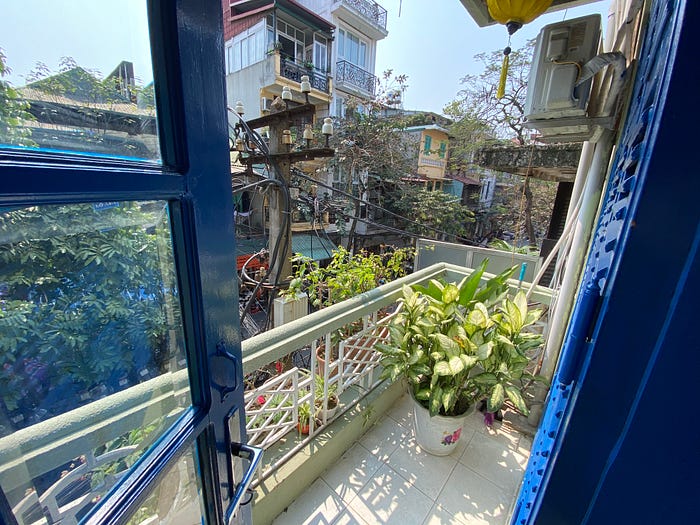
After arriving, acclimating, and settling into our $18 dollar per night Air-BNB, and touching base with my fashion contact and fixer, I was ready to go.

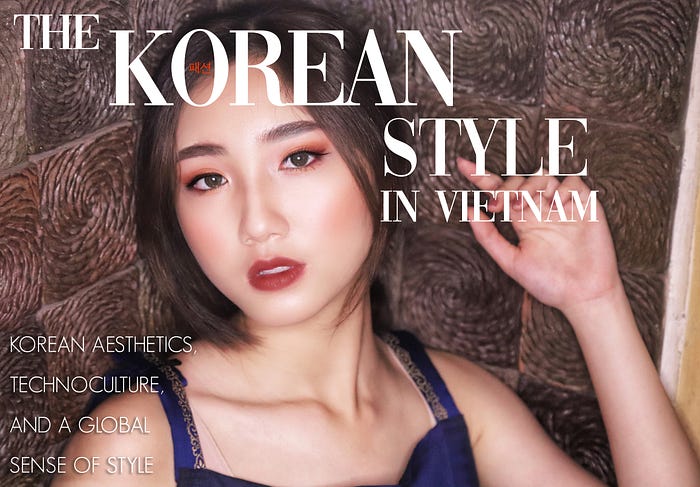
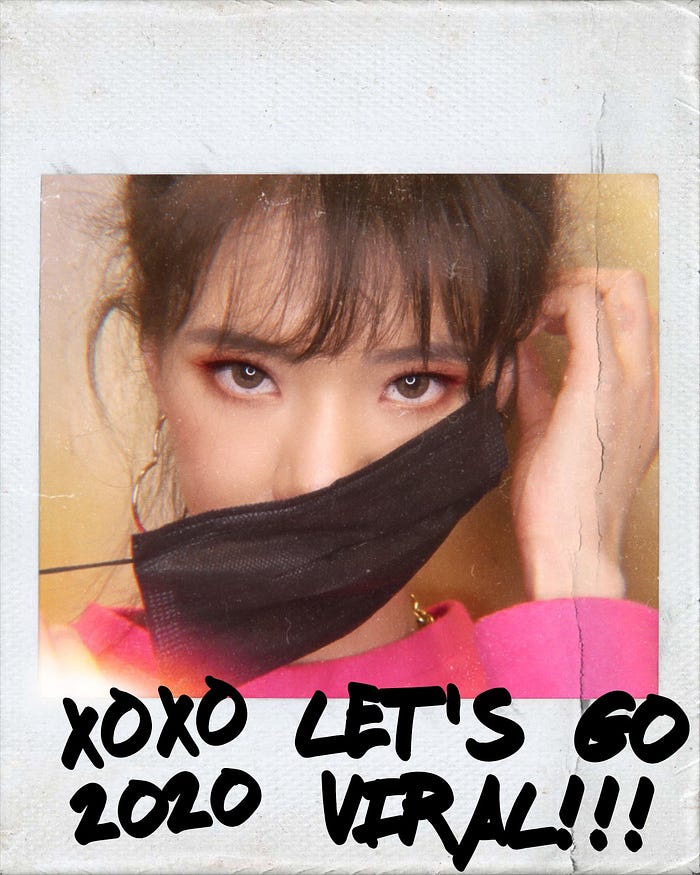
On Day 3, we were ready to shoot Model #1, Lê Vân (Instagram @_vivian145_), whose image is featured at the top of this post. We had intended to shoot at the Hanoi House Cafe at the suggestion of my Hanoi-based fashion industry insider connection Hoang Minh Chau, but the place was closed. But the walk up seemed as apropos a place to shoot a Korean hanbok as any other, full as it was of the feel, history, and grit of the city.
After a few shots in the interior hallways, we traveled to the iconic St. Joseph's Cathedral just across the street to make an indubitably iconic, Hanoi-ish shot.
Back to Technoculture
One of the things I have observed about the Korean Style of Things — whether in K-POP (both as music and video art), K-Beauty, or so-called K-Fashion, is the way it refuses to apologize or cover up its extreme level of artifice. It simply embraces the Digital and the Artificial it enables and makes inevitable and bakes in as part of its aesthetic.
I talked about this before in Part I of this series — as part of the Technoculture that allows K-Things. Here, I'll paraphrase myself as I define here what "Technoculture" is:
It's basically "human society's understanding of science and technology" and also "the way societies think about technologies, linked to the ways those technologies enter society (or certain societies), [and] inform the way those technologies actually get used, how they affect our daily lives."
So, as I mentioned in Part I, humans tend to think about AI in terms of killer robots poised to destroy humanity the instant they become "self-aware." (Thanks, James Cameron!) But this isn't all The Terminator's fault — there's long been a suspicion of machine production and automation, around since the beginning of machines and industrial production. It gets articulated in a new, cool, and titillating way and it becomes the dominant way to think about that thing. Indeed, as science and technology allows (forces) us to imagine alien life, we tend to think (in very human terms) only in terms of invasion and war, because this is what our history tells us. We cannot technologically imagine the non-human, alien Other without thoughts of death and destruction, because this is exactly how we've come to understand these or analogous technologies in the real world, throughout human history. It's also the understandings these technologies have caused by existing and us continuing to have strong feels about them. So we have a technoculture with a baked-in understanding of the technologies of expansion and exploration and first contact itself, which completely determines the way we extend those feels about aliens into the imagined future.
OK — aliens aside, we are in the middle of a big technoculture moment with all kinds of new technologies, from new camera tech to the social media they power, and the new makeup products like the HD finishing powder from Makeup Forever, before even getting to the fancy digital features and powerful effects offered by programs such as PhotoShop™, MakeupPlus™, Snapseed™, and Prequel™ — all of which are basic items in my own, individual reportoire, and the expectations from models I shoot that I have a certain level of skill in utilizing these tools to create a realistic-looking-yet fundamentally-unreal-picture.
We haven't even truly realized just how accustomed our eyes have become to the immense and densely-packed yet hidden amount of work that is a part of making even basic pictures that look good today. And while we all know about "Photoshop" as a tool, the word and concept itself has come to simply mean "digital retouching" and marks how little understanding people have of how digital manipulation of reality actually works. Which is why I like to talk about the technical aspects of the Photographic technoculture through as specific examples as I can offer.

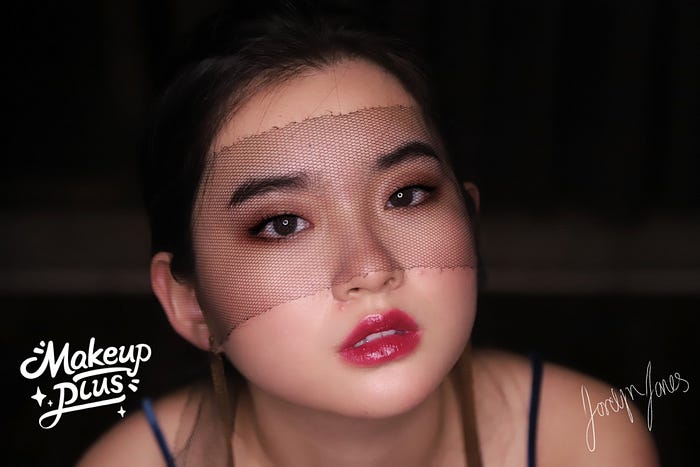
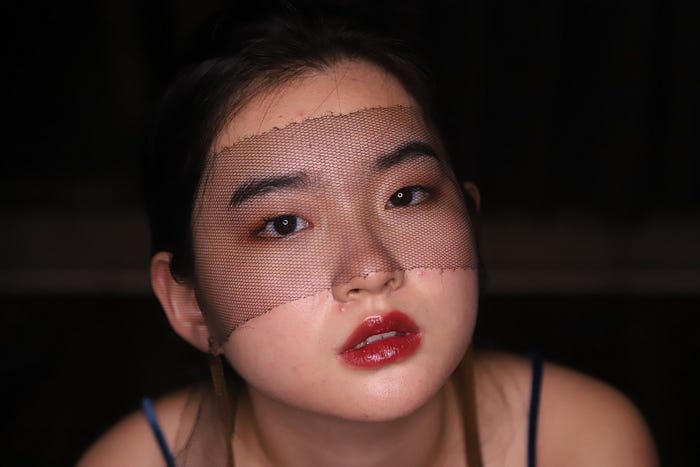
The Kelly Image above is merely one of many similar examples of Skills Depth and Range Compression that gets folded into a specific new technology or new technocultural skill. For example, the practice of making a headshot portrait gets easy as the meme of how to do it is passed around the Internet and its practice is made easy by the ubiquitousness of DSLR cameras that come standard with the 17–55mm lenses that are the equivalent of 28–90mm lenses used in 35mm film (now called "full-frame" digital) cameras today. In the old days, a portrait photographer might be armed with an 85mm f1.8 lens (nicknamed a "portrait lens") on an SLR camera, but now, it comes standard and with the instantaneous feedback loop of digital, is easy to implement and learn, i.e. one doesn't have to wait days (or at least hours) for the results of playing around with lens effects.
Even in the seemingly un-technological practice of modeling, the technology creeps in to change things. As model Kelly put it:
I love natural pictures, but photographers usually retouch them too much. We don't even have to do the makeup carefully, the retoucher will…People usually think that Korean use light makeup products. But they're not. It's the filters that help them to have clear skin…
So, models can do their best, but to produce magazine-quality work, you can have pimples, a breakout, or all sorts of "skin trouble" and still do your job — the confidence in doing it is simply in knowing that all fashion/beauty work is a team effort and even the model or makeup artist is simply setting the ball for another to spike. That's part of what makes 17-year-old, high school model Kelly Tran Dao an eminent professional who gets steady work in 2020 because she's on that 2020 level of knowing how to get things done.
What does SDRC mean in terms of photography? It means that portraiture knowledge that was once generally only possessed by photographers is now either possessed by avid hobbyists or even able tinkerers; but also, it is accessible as the Portrait function on the iPhone camera. Behold:
And all this is a long way to explain why I have fashion magazine-quality portraits of a Vietnamese chicken — because it takes little effort but all the tech is there. I don't need to go grab my 85mm f1.8 or 50mm f1.8 on a cut-frame DSLR, adjust my ISO down (minimum on most DSLRs is ISO100, by the by) as low as it can go, then focus in, and POOF — the chicken's gone. The SDRC that allowed me to one-palm the camera such that the chicken did not run off allowed this kind of image to become easy and common. That all may seem pretty insignificant but is exactly why we have selfies today and those are easy and common. Understood in terms of technoculture, selfies are not a sign of society's sudden narcissism, but rather the fact that before several specific technologies got folded into a single, blinking box, a "selfie" was technically hard to pull off, not to mention expensive in the days of film, leading to them being very uncommon.
Now, this is where SDRC gets obvious and hence, fun. What happens when you apply highly specialized skills to create quite "unnatural" effects? By "unnatural", I mean effects that don't seem to be part of the common technocultural products of the time, or just seem like old technoculture? These purposefully incongruent technocultural artifacts often become aesthetics unto themselves —such as visible film grain in a digital image, or the cross-processing (developing negative film in slide chemicals and vice-versa) we're used to from analog-era fashion magazines that have now become Instagram filters X-Pro II and Lo-Fi. We also call this purposeful aesthetic incongruity "retro."
Some of the technocultural aesthetic incongruities make sense, like in simulating an old shot from a film camera with film grain and even scans of the negative or slide itself, making the picture's content look like it was actually a shot taken at that time, or it can be more playful.
But this is how we get specific "retro" effects and overall feels. And this is what the digital native seems to find so much fun — the playing with the incongruities and remnants of an older moment in the photographic technoculture. It's the obvious optical lens flares of J.J. Abrams' 2009 Star Trek that gave it a stylized, arty feel vs. the equally-stylized ones from older, 1979–1991 Star Trek. Artifacts of the medium of production (e.g. lens flares, background outfocusing) have long been considered arty or simply stylized choices. "Retro" trends in cross-processing Instagram filters or"frames" in Prequel or similar apps, are just having fun by taking artifacts from prior technocultural moments or media and putting where they don't technically belong.
Here, I used completely irrelevant "retro" effects to stylize the picture below.
As a way to help me make a fashion picture taken in Vietnam with Vietnamese models convey a message about Vietnam but using "Korean style" as a heuristic device — something that become a means of learning something or a thing one can use to gather knowledge — and remember, I was in Hanoi doing all this fashion shooting as a way of learning how Vietnamese people tink about Korean style and make sense of it by having them do it, act it out. I used Prequel to help me make a concept that didn't quite work actually work.
And let's not forget the many levels of SDRC at play here. In order to do such effects in Photoshop would require hours upon hours of work, not to mention the enormously advances Photoshop skills required to make them at all believable. I was only able to create the picture above by laying over various kinds of Skills Depth and Range Compression as found in simple sliders controlling myriad filters found in apps on my smartphone. We're used to them. They're second nature. My only skill here is keeping them subtle, no obvious, and mutually reinforcing into new effects. But these images are very much a part of our present (and past) technocultural moment.

In the end, the first model's image is much more stylized and feels playful in how it blurs the image in a vignette pattern that gets increasingly blurrier outside the central area of the image, as the filter's algorithm seems to choose the highlight points (where the image blows out to white) and place white starbursts atop them. I reduced the strength and number of the threshold with a slider I took down to near zero to make the starbursts as small as possible but noticeable enough that they caused a "bling" effect into the visual mix. It's unnatural but not really noticeable. So I was able to place the child model into a fantasy, play space visually along with the toys, to make for a mise en scene that steers the image away from an adult, sexualizing, Jodie Foster-in-Taxi Driver kind of creepiness that is not what I want in shooting a child model. Retro to the Rescue!
Finding "Korea" in Vietnam
Hoang Minh Chau (@minhchau8290) — the Hanoi fashion connector, shot caller, and stylist, had already found the new, cool place to shoot, kind of just before it gets big, but already possessed of a bit of buzz by those in the know, a place called the Viet Gangz Brotherhood. It is a brand mall complex with coffee shop, brand stores, barbershop, and even jail cell (!?) that all combine into a highly Instagrammable place that nothing in Seoul could even dream of touching.
Now, we move(d) from the idea of Korean style in terms of national dress argued in a Vietnamese idea of a "Korean style" to using the traditional Korean dress the hanbok to be the point of photo-sartorial riffing, with the Vietnamese model taking the social norms and cues as contained in the hanbok and the idea of Koreanness it conveys and allowing them to embody a preset, iron cage of Koreanness, which they would interpret by fitting it into their notions of what a Korean girl is supposed to do as influenced by the hanbok dress. They would also interact with me, though I would try to adjust to their cues and ideas; also, the hanbok dresses we had in tow would be a bit easier to digest and interpret because they were modern takes on the hanbok as opposed the stiff, bulky ones from 100 years ago and often found at ceremonies and state dinners — those would be a bit much for young, Vietnamese models to interpret into meaning on the modern streets of Hanoi. Yet, the modernized hanboks from Designer Heo Hye-yeong of Heo Sarang Hanboks in Seoul are still unmistakably hanboks, with the high, peculiar, Korean cut of the jeogeori blouse, along with the telltale style of the modernized skirt bottom, the chima, which is quite updated and hip in the modernized versions we had in tow this time around. The Vietnamese models had no problem making modern, Vietnamese sense of them. I, as photographer and researcher, simply made sure the settings and mise en scéne were as clear as possible to work within for the models as possible. Now, the posings and setting of the Korean element in the picture was more directly imposed from above, leaving the Vietnamese side less burden of planning and more on the individual model to simply and bodily interpret.
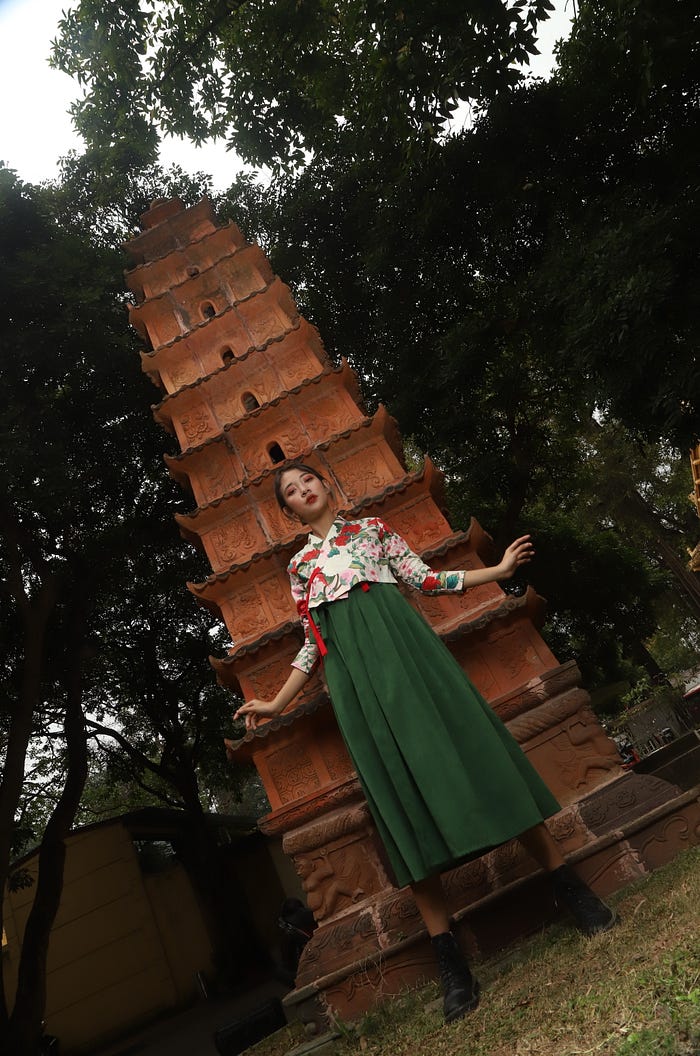

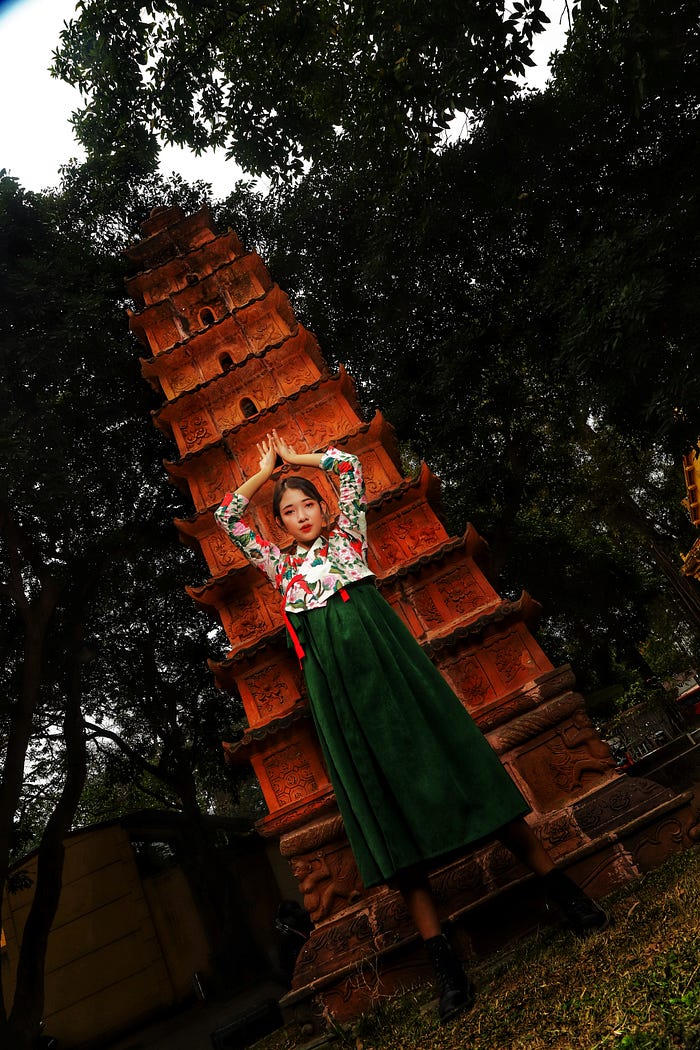
Next up came Hoa Đan's friend Rachel from around the modeling way in Hanoi. I wanted to start with one of absolute favorite pieces of Designer Heo's, a bright, avant garde jeogeori top just that kind of goes with any chima skirt bottom. When the model tried it on, it just went with her jeans and the look she walked in with. It was a perfect crop-top on her and veritably screamed to be left styled and photographed as such.
As the shooting in Hanoi settled into more serious shoots, we tightened up on the Korean style as a heuristic, a lens through which to track Koreanness. as found in Vietnam. High schooler Trang was a ringer, a Vietnamese Instagram model who was young and fresh to the game, but entrepreneurial and professional in her pursuit of climbing higher up the ladder of the modeling and fashion worlds. Trang (@gtrngx)is no noob; she is already self-consciously a wrangler of Koreanness, as she reported noticing that she received more attention in her Instagram feed and actually getting more work the more she channeled a Korean look and image.
By this many models in, it was getting to be time for the big model event, which was planned around a Vietnamese designer who kind of operates within the general idea of "Korean street fashion" and the concept for a mega-shoot with his clothes and styling by HOANG Minh Chau was "Korean style." It would be a nice capstone on the trip.
But then again, the Corona thing had already exploded in Korea.
As I think is common knowledge now, the Shincheonji Church of Jesus death cult had done its thing and Patient 31 had infected like half of Korea. Now, Korea had become the new "Wuhan." Flights from Korea were being stopped, though it wasn't policy yet. My return flight to Incheon had been moved twice already by KAL, so I kept a CLOSE eye on my emails. What I thought would happen was happening, as running empty flights back and forth for a week was not something I thought could continue for long, os they were consolidating flights. And the announcement had been made that KAL would cease flights from March 4th. My flight was now on March 3rd. It would be the last airlift out. The last shoot had taken on new meaning.
And it was about to fall apart. the stylist and arranger Minh Chou sent me a message saying the models were getting cold feet. So I stepped up.
Once the shoot was over, we returned to the wonderful Chu Min La8 Lounge/cafe for a breather and to change clothes, exchange information, have a drink. After Hanh had changed, I noticed her wearing loose, black slacks, so I thought of the black hanbok blouse top/jeogeori I had in tow as I made a fashion culture connection in my head. I also had a traditional Vietnamese nhon la farmer's hat at hand for another shoot, so a flash of realization made me ask her to put on the hanbok top and the hat, which with her dark, heavy makeup look, should add up to something pretty serious.
We didn't even need to go all the way with the pants, but I knew this had been a successful test drive for a concept that I knew could cause a bit of consternation to certain people with strong feelings about the (in)famous Viet Cong whom I simply considered the insurgents/freedom fighters/rebels who had helped Vietnam win its war for independence from the imperialist rule of the Americans what the Vietnamese actually call 'Cuộc chiến tranh Mỹ' (The "American War").

Now that the concept I had been toying with had had a test run in reality, and the other models and my Vietnamese fixers seemed to like it it was time for the final, powerful pièce de résistance shoot, for which we would have to call in our dark Raven. She was our final model, recruited from an open call by Hoang Minh Chou, and would be coming back from a long trip in the evening of the final night of the shoot. She was not put off by any coronas, Korean origins, or any of that. She was a determined beginning-stage model out to build her portfolio/ comp card with strong, professional, editorial looks and she was down for whatever was thrown her way.


We met the dark Raven in the Hanoi Botanical Garden and just got right into it next to a huge tree with dramatic lighting from my smaller strobe with a honeycomb on it to point the beam tighter.
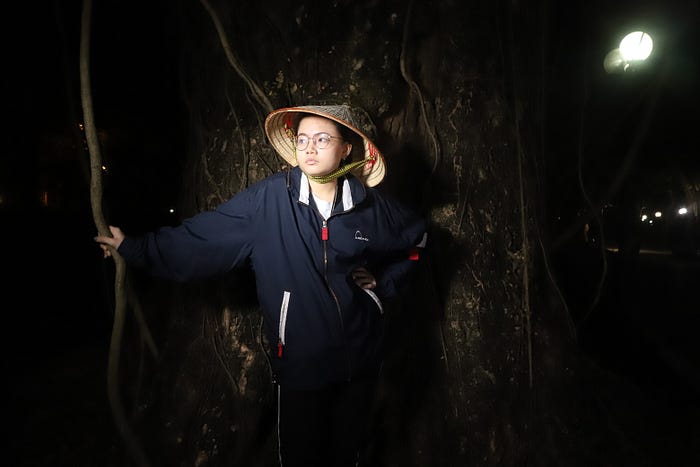

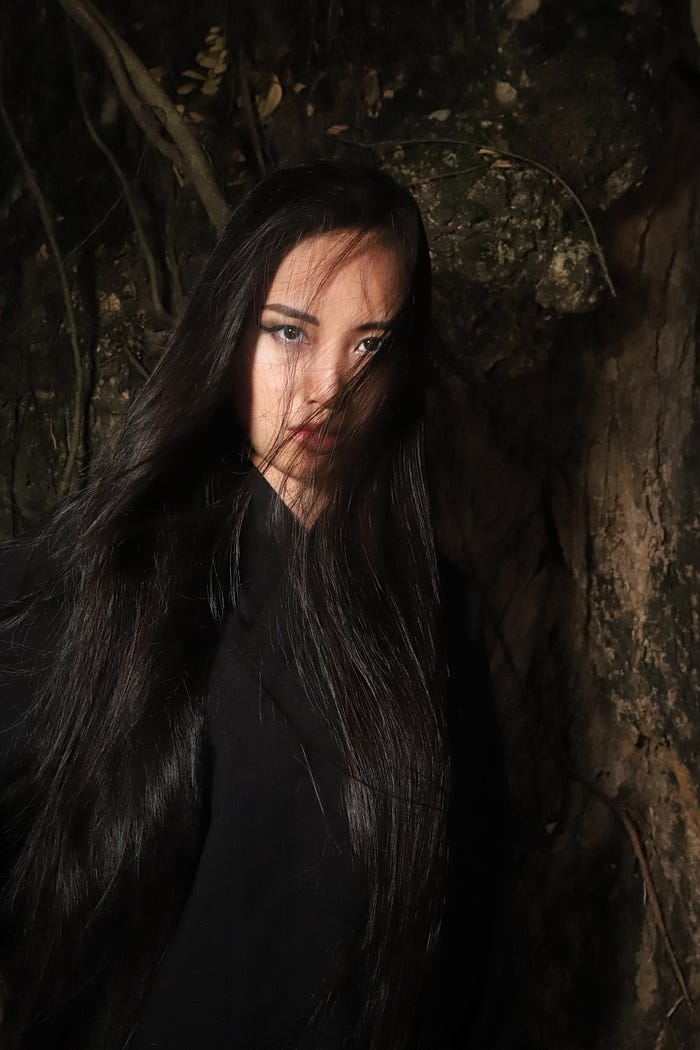
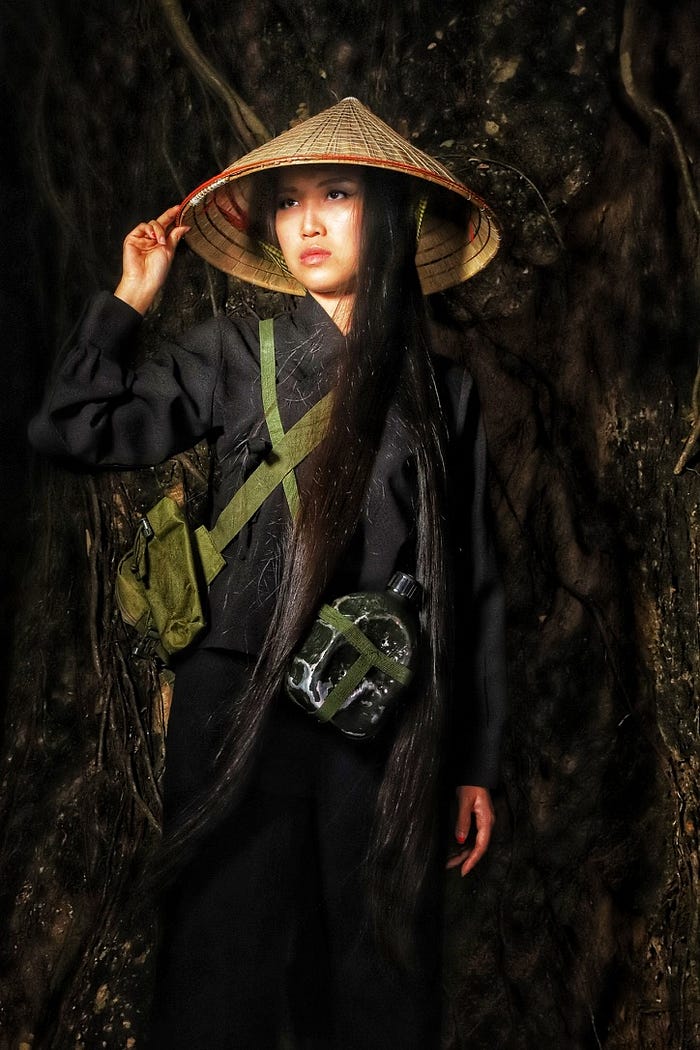

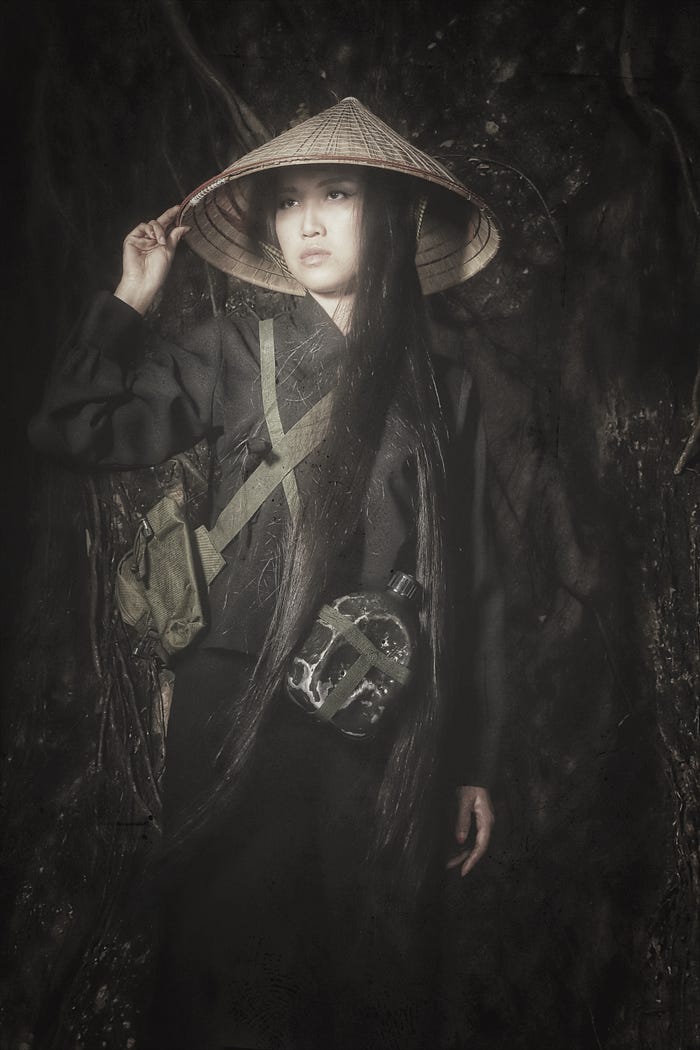
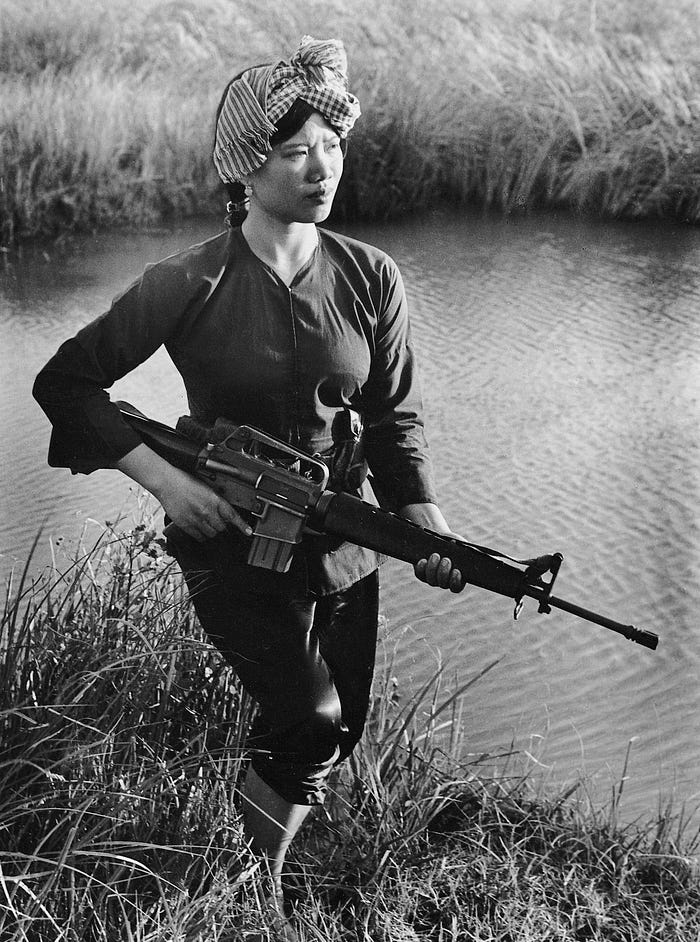
My hope and intent were to do that kind of work justice, inspired as I was by photographers such as Le Minh Truong, but it was the talented model Raven who got the concept as channeled by the clothing and accessories around a fairly unusual conceptual synthesis. The VC concept was a bit tricky and stressful to do, given the historical and ideological sensitivities surrounding the American War.
So, after the initial concept was done, it was only downhill from there, and I was seriously impressed with Raven's intensity and her ability to handle interpreting pretty open-ended concepts, so we kept the look, lost the gear, and just shot mini-concepts that she would riff within. It was the last shoot of Hanoi, so we just wanted to see where half a hanbok could and would go, in a freestyle, final session.
In the end, what allowed my ongoing fashion research into reactions and regard for a Korean style by tracking into Vietnam, one of its Korea's most apt pupils and avid admirers. The fact that so many models, makeup artists, and other fashion-affilated folks were able to stick with the project, even after Korea had been named the "IT" country for its epidemiological escapades, was a testament to just how influential South Korea is to Vietnamese youth, many of whom are quite interested in Korea as not just a style leader but as an example of the style in which to engage in leading the rest of the world as we all careen and career our ways in Societies of Spectacle in this new, hypermodern moment.
Korean youth strive to carve out new identities in a hypermodern world in which every option is a worthy choice. In Korea, the difference between reality and its alternatives is flattened, leaving a lot of pressure on individuals to figure out their own paths instead of having it assigned to them. This is why Korea is having an existential debate about queerness and LGBTQIA+ identity with big political stakes.
For Vietnamese young people, on the global stage, it seems like every Instagram post, every attempt to make it as an influencer, a model, or stylist, is a pointed attempt to transgress against the old ways of being Vietnamese, of being in the "Vietnam" metonym dor someone else's lost war, a signifier of some former colonizer's moment of existential angst. It is a chance to move foward as developing-to-developed, modern-to-hypermodern. It seems like the Korean mode of existence itself defines the luxurious possibility of leaving the sandbags of pre-modernity and modernity behind. The Korean style may be an indicator of a means to carve out a way of being maximally Vietnamese in new, unforeseen, and unimagined ways. This is that critical space in which one has both the freedom and the privilege to dare engage in style during the time of the Coronavirus.

And, that is how one does fashion in the time of the coronavirus. Actually, it's not too differently than during no coronavirus. I went to Vietnam just as things were calming down there, then South Korea went wayyyy south while I was away, even as Vietnam officially declared itself corona-free. But as I came back to Seoul, things had calmed down, then Vietnam re-exploded because of European traveleers re-introducing the thing. But along the way, it was interesting to focus inward and do beautiful things — those essential human things — even when circumstances seemed to dictate that non-essential things needed to stop. But they do not.
We were careful and conscientious. We did fashion, but with concern for one another. We maintained physical distance while closing distance with the lens. We were and are living proof that handwashing and ample sanitizer are good weapons against not just germs but a salve against social panic itself. Vietnam delivered corona a withering blow square on the jaw, but the virus miraculously got back on its feet, but another right cross is on its way. Korea has this thing on the ropes, and the virus seems to be teetering like a drunk looking for a place to sit and catch his breath for just a minute.
But the need for social contact does not suddenly stop, even in an epidemic. Young people in Seoul, especially, are going on dates and meeting friends, having chats over coffee, even watching movies while eating popcorn. But now, these things are done with care and proper preparation. Because places like Vietnam or Korea, which are well past their intial coronations more than two months ago, have learned how to fight back against the fear, have past the initial attacks of panic, and carry on with life using a combination of measures such as social distancing, masking to prevent outspread, and socially responsible self-monitoring and free testing that allows life to not only go on, but tfor that to happen while beating the virus.
As the ill-prepared United States enters its coronation phase, its only effective stratagem is extreme isolation and social distancing. The reason I have room to travel and continue on with my visual sociology research while models, stylists, and other aesthetic creators have the ability to continue on doing style, art, and other non-survival pursuits is because these places were prepared and free of hubris.
Vietnam won the American War by being plucky, prepared, and determined to win at any cost. America lost because it was overconfident, underprepared, and under-committed. I am elated and honored that I had the privilege to do fashion in the time of corona in one of the few places that made/makes this possible: Vietnam, an amazing country with an unparalleled and fascinating historical story, and South Korea, where I live and breathe (relatively) coronavirus free.
Credits
I want to give heartfelt thanks to the many models we had the privilege to shoot in Hanoi this trip around, especially with the ever-present fear and uncertainty created by the coronavirus. All of you are fashion(able) heroes!
Models (in order of appearance)
Model Lê Vân (Instagram @_vivian145_) Kelly Trang Dao (Instagram @kellytr__) Phương Ngân (@nhpn) Phương Linh (@phuonglinh281008) Yến (@janna.eliva) Nhung (@imma.lost.alien) Hoa Đan (@hoaddan) Rachel (@hvnglinh) Trang (@gtrngx) Nhung (@imma.lost.alien) Hanh (@trannunggochanh_99) Chinh (@NguyenChinh1996) Giang (@trainee_nim) Raven Nguyen (@ravennguyen.vn) Arina (@Justkim__)
None of the high -concept Korea pictures could've been made without your kind cooperation through the clothing (and style power) you lent our shoots.
Designer Brands (in order of appearance)
Heo Hye-yeong of Heo Sarang Hanbok (@heo_sarang) Huu Anh Zoner of brand ZONER (@zoner.official) Anna Kim of Asian Illumination (@asianillumination)
Without the kind cooperation of various locations for our shoots, none of them would've happened. Some places were homey and personal, others institutional, but all locations can use a little credit and media love.
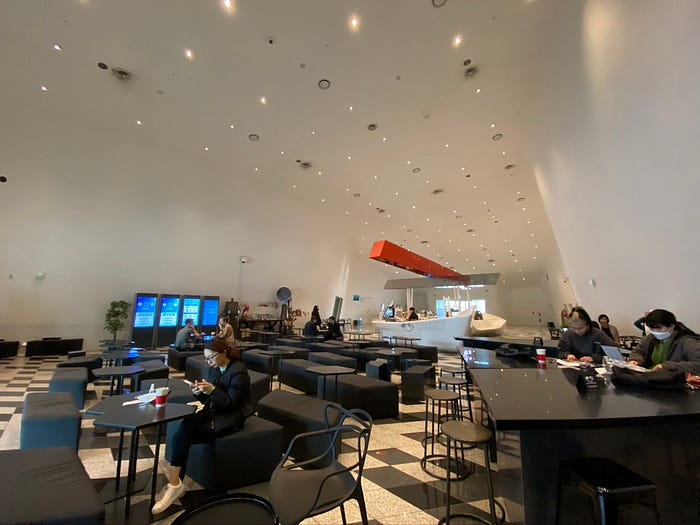
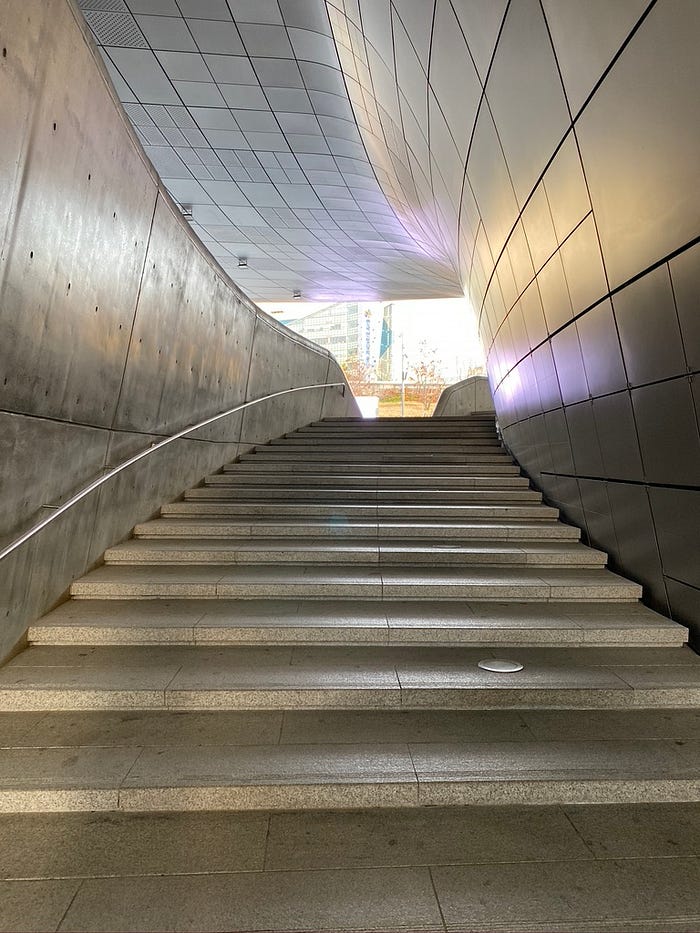
Locations(in order of appearance): Mochi Homestay (@mochihomestay_hanoi) Hanoi House Cafe (@hanoihousecafe) Hanoi Temple of Literature The Alchemist(@thealchemistcocktail) Viet Gangz Brotherhood (@vietgangz.brotherhood) National Museum of History Chu Min La8 Lounge/cafe (@chumingla8) The Hanoi Train Street Dongdaemun Design Plaza (ddp_seoul)
I have to give a special shout out to my Hanoi production team, without whom I'd have been merely a hapless tourist with a camera. Production
HOANG Minh Chau (@minhchau8290) is a local fashion industry maven, marketer, stylist, and fabulous fashion fixer who also happens to be completely bilingual in Vietnamese and English, which lets her just plain get shit DONE. Ms. Hoang is extremely well-connected and gets projects going, going, gone from A to Z. She's one of those people that when I plugged in a random model or contact into her network, MC's reputation made them stick.
NGUYEN Phuong Mai (@pmngx) Our production assistant is cool and affable, and is a bilingual, resourceful production fixer who can solve problems, keep workflows effective, and will make nearly everything within reason possible and knows when to tell you "yeah…that's not a good idea." She'll make the possible happen while preventing you from embarrassing yourself. And that's what you want when you don't know your way around the place.
HOANG Linh, AKA Lili (@millyhoang, Makeup Artist for Child Models) A very talented Makeup artist who is chill, flexible, and able to get the job done no matter what that condition or situation.
About the Author
Dr. Michael W. Hurt (@kuraeji on Instagram) is a photographer and professor living in Seoul. He received his doctorate from UC Berkeley's Department of Comparative Ethnic Studies and started Korea's first street fashion blog in 2006. He researches youth and digital subcultures along with street fashion culture and also teaches Cultural Theory and Art History at the Korea National University of the Arts. His PR/image curation company Iconology Korea also engages in an effort to positively shape images of Korea, construct a positive, outbound face for Korea-based clients, while conducting fine-grain, ethnomethodological research for Korea-interested, inbound clients. Dr. Hurt also teaches Ethnomethodology and Technomethodology-grounded market research techniques while continuing to use the camera as both field recorder and artistic tool of access to digital subcultures in Seoul.