
The integration of MongoDB, a leading NoSQL database, with Kubernetes, a powerful container orchestration system, represents a significant advancement in database deployment and management strategies. This combination leverages the strengths of both technologies, providing a scalable, resilient, and efficient solution for managing MongoDB instances. The synergy between MongoDB and Kubernetes facilitates benefits such as enhanced scalability, improved resilience, ease of management, DevOps compatibility, and cost-effectiveness, making it a compelling choice for organizations seeking to optimize their database operations in cloud-native environments. The successful deployment of MongoDB on Kubernetes has been demonstrated through a variety of case studies across different industries, including academic research, consumer technology, and IoT data analytics. These case studies highlight the capability of Kubernetes to manage MongoDB deployments efficiently, showcasing improvements in scalability, operational efficiency, and resilience. Notably, deployments at Clemson University, Zomato, and Bosch SI exemplify the practical benefits and innovative applications of MongoDB on Kubernetes, from managing extensive datasets to facilitating real- time analytics in IoT. The technical aspects of deploying MongoDB on Kubernetes involve the use of StatefulSets for managing stateful applications, Kubernetes Secrets and ConfigMaps for securing and configuring deployments, and the MongoDB Operator for Kubernetes to simplify and automate deployment tasks. These components are pivotal in achieving high availability, scalability, and a streamlined deployment process, thereby enhancing the overall deployment experience. As organizations continue to adopt cloud-native technologies, the integration of MongoDB with Kubernetes is poised to play a crucial role in the future of database management. This synergy not only addresses the current demands for scalable and resilient database solutions but also aligns with the broader trends towards DevOps and cloud-native architectures. Despite the challenges associated with containerizing and orchestrating database instances, the ongoing technological advancements and community support are expected to further simplify MongoDB deployments on Kubernetes, unlocking new possibilities for efficient, scalable, and reliable database management.
The Synergy Between MongoDB and Kubernetes
The integration of MongoDB with Kubernetes has emerged as a significant development in the world of database management and deployment. This synergy leverages the strengths of both technologies, offering a robust solution for managing MongoDB instances in a scalable, resilient, and efficient manner[1][2].
Introduction to MongoDB on Kubernetes
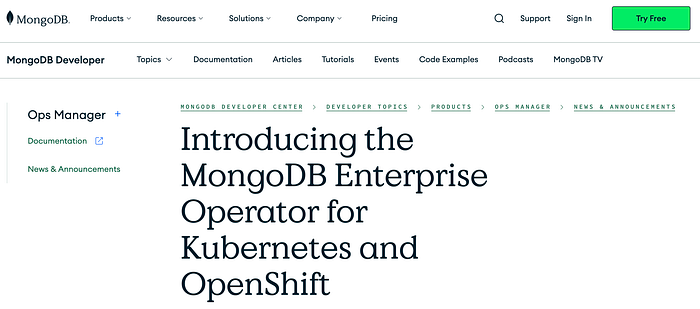
Kubernetes, with its container orchestration capabilities, provides an ideal environment for deploying MongoDB, a leading NoSQL database. The evolution of Kubernetes to include StatefulSets and the introduction of the MongoDB Enterprise Operator for Kubernetes have significantly simplified and enhanced the robustness of MongoDB deployments[1]. These advancements facilitate the management of MongoDB instances, making it easier to deploy, scale, and manage databases in Kubernetes environments[3].
Benefits of Running MongoDB on Kubernetes
The combination of MongoDB and Kubernetes offers numerous benefits, fundamentally transforming how organizations deploy and manage their databases:
Scalability
One of the most notable advantages is scalability. Kubernetes facilitates the horizontal scaling of MongoDB, allowing for the addition or removal of database replicas to accommodate varying workloads and traffic spikes. This dynamic scalability ensures that applications can grow seamlessly and remain responsive to user demands[2].
Resilience and Easier Management
Deploying MongoDB on Kubernetes enhances resilience and simplifies database management. By containerizing MongoDB instances, Kubernetes enables automated deployments, self-healing, and easy rollbacks, thereby increasing the overall reliability of the system[2].
Portability and Reduced Vendor Lock-in
The use of Kubernetes for deploying MongoDB instances also promotes portability and reduces vendor lock-in. Organizations can run their databases in public, private, or hybrid environments without being tied to a specific cloud provider. This flexibility is crucial for businesses seeking to optimize their operations and maintain control over their infrastructure[2].
DevOps Friendliness
Both MongoDB and Kubernetes are inherently DevOps-friendly, facilitating continuous integration and continuous delivery (CI/CD) practices. This compatibility streamlines the development and deployment processes, enabling faster time-to-market and more efficient resource utilization[2][4].
Cost-Effectiveness
Finally, the synergy between MongoDB and Kubernetes can lead to cost savings. By optimizing resource utilization and automating various operational tasks, organizations can reduce their operational expenses. Kubernetes' auto-scaling capabilities, in particular, ensure that resources are used efficiently, minimizing waste[2][5].
Real-World Success Stories
Several companies have successfully leveraged the combination of MongoDB and Kubernetes to achieve remarkable improvements in their deployment strategies. For instance, using Kubernetes, Pinterest implemented auto-scaling and new network policies, significantly simplifying their deployment and management of a complex infrastructure[5]. This synergy not only restored a substantial portion of their capacity but also reduced resource consumption, showcasing the potential of MongoDB and Kubernetes when used together.
Detailed Case Studies of Successful Deployments
The adoption of Kubernetes for managing and orchestrating MongoDB deployments has proven successful across various case studies, illustrating the benefits of this combination in achieving scalability, resilience, and operational efficiency. These detailed case studies showcase the innovative use of MongoDB on Kubernetes across different industries and applications, highlighting the technical strategies and outcomes of such deployments.
Clemson University Research Deployment
Clemson University researchers utilized Kubernetes to create open environments for building and testing workflows, aiming for scalability in their scientific experiments. Before transitioning to the cloud, the university deployed a
Kubernetes cluster that allowed for efficient resource management and the ability to run workflows in multiple commercial clouds. This approach not only conserved resources but also enabled researchers to focus more on their scientific endeavors rather than on resource management, demonstrating Kubernetes' capability to support complex, resource-intensive operations in an academic setting[5].
Zomato: Enhancing Consumer Technology
Zomato, one of India's largest consumer technology companies, leveraged MongoDB in conjunction with Kubernetes to manage its vast data from over 1,000 cities and towns. The deployment facilitated Zomato's delivery of restaurant information, menus, user reviews, and food delivery options efficiently. With Kubernetes, Zomato achieved a scalable, robust, and secure platform that improved the developer experience and supported its extensive customer base, highlighting the effectiveness of containerization and orchestration in handling high-demand consumer technology applications[6].

Bosch SI and IoT Data Analytics
Bosch SI recognized the importance of real-time complex analytics in unlocking new insights and driving autonomous decisions within the Internet of Things (IoT). By deploying MongoDB on Kubernetes, Bosch SI could handle the massive influx of data from connected devices efficiently. This setup enabled the company to perform real-time analytics, crucial for the success of IoT applications. The case of Bosch SI illustrates the strategic role of Kubernetes in managing database workloads that require high availability and scalability to perform advanced analytics on IoT data[7]. These case studies exemplify the versatility and capability of Kubernetes as a container orchestration platform in managing MongoDB deployments across different scenarios. From academic research at Clemson University to consumer technology at Zomato and IoT analytics at Bosch SI, Kubernetes has facilitated scalable, efficient, and resilient operations, underlining its significance in contemporary technology deployments[6][5][7].
Technical Overview of MongoDB on Kubernetes Deployments
Deploying MongoDB on a Kubernetes (K8s) cluster presents a strategic approach to managing containerized database applications that require high availability, scalability, and a flexible operational environment. This technical overview sheds light on the methodologies, components, and considerations pivotal to successful MongoDB deployments within a Kubernetes ecosystem.
Deployment Strategies
The deployment of MongoDB on Kubernetes can be achieved through several strategies, with StatefulSets being a core component due to their ability to manage stateful applications and provide stable, dedicated storage solutions[3][8].
Unlike ephemeral containers, StatefulSets ensure data persistence across pod restarts and rescheduling, offering unique identities to each pod for consistent internal communication[8][9].
Secrets and Configuration
Kubernetes Secrets play a vital role in safeguarding MongoDB deployments by encoding and storing sensitive information, such as database passwords, which are essential for restricting access to the database instance[10]. This approach aligns with the best practices for securing database credentials in a cloud-native environment. Furthermore, ConfigMaps and PersistentVolumeClaims are utilized for configuration data and storage allocation, respectively, promoting a seamless and secure deployment process[10][8].
Service Discovery and Load Balancing
Kubernetes facilitates service discovery and load balancing for MongoDB deployments, providing stable DNS names or IP addresses for container access[11]. This functionality is crucial for distributing network traffic and ensuring deployment stability under varying load conditions. In conjunction with headless services, StatefulSets enable direct pod access, which is particularly beneficial for configuring MongoDB replica sets[9].
Deployment Tools and Operators
The MongoDB Operator for Kubernetes abstracts and simplifies the deployment process, integrating best practices and automating tasks such as the configuration of replica sets and sharded clusters[3][12]. Operators enhance the deployment experience by leveraging Kubernetes APIs to manage MongoDB instances as native Kubernetes objects.
Helm Charts and Charmed MongoDB
For users seeking streamlined deployment processes, Helm charts offer pre-configured templates for deploying MongoDB on Kubernetes[13]. Similarly, Charmed MongoDB introduces a K8s operator that simplifies running database clusters in various environments, highlighting the benefits of portability and reduced vendor lock-in[2].
Scalability and High Availability
Scalability and high availability are fundamental to successful MongoDB deployments on Kubernetes. Replica sets are recommended for production environments to ensure data redundancy and service continuity[8][14]. These setups are optimized for performance and resilience, catering to dynamic workload demands and facilitating seamless scaling operations.
Observability and Management
MongoDB deployments on Kubernetes benefit from integrated observability tools that provide insights into query performance and system metrics[15]. These tools enable operators to monitor and optimize database performance, ensuring efficient resource utilization and responsive applications[6][16].
Operational and Deployment Strategies
The integration of MongoDB within Kubernetes environments represents a significant shift towards more dynamic, scalable, and responsive deployment methodologies. Companies and teams have increasingly adopted these strategies to meet the growing demands for digital experiences that cater to millions of clients. This section outlines the operational and deployment strategies that have proven successful in the deployment of MongoDB on Kubernetes, highlighting key components such as configuration, scalability, and management practices.
Deployment and Configuration
The deployment process in a Kubernetes environment begins with the definition of the desired state through a configuration that describes how the deployment should be executed[17]. This includes setting up containers, like those that would host a MongoDB instance, and instructing Kubernetes to manage replicas of the application across different host machines to ensure high availability and resilience[17]. The process simplifies the deployment and management of applications and their dependencies, aligning with the common goal among operations and development teams for improved agility[4].
Persistent Volume Management
A critical aspect of deploying stateful applications like MongoDB on Kubernetes involves managing data persistence. This is achieved through the use of Persistent Volumes (PV) and Persistent Volume Claims (PVC), which connect the storage provided by the platform (e.g., block storage) to Kubernetes, allowing applications to claim storage[18][10]. Properly configuring these components ensures that MongoDB instances have stable and persistent storage, which is essential for maintaining data integrity and availability.
Scalability and Responsiveness
For MongoDB deployments to be successful, especially in environments experiencing rapid growth, scalability and responsiveness are paramount. Kubernetes aids in achieving these objectives by enabling the orchestration of containerized MongoDB instances across a cluster[16]. This orchestration allows for seamless scaling operations, adjusting resources as demand fluctuates, and ensuring that the deployment can handle large-scale data efficiently[19]. MongoDB Atlas further complements this by providing a managed platform that reduces the operational overhead associated with self-hosted clusters, as seen in the case of Zomato's transition to MongoDB Atlas for its expanding needs[1].
Best Practices for Management
Managing MongoDB deployments on Kubernetes effectively requires adherence to certain best practices. — Deploying with Replica Sets: For production environments, deploying MongoDB as replica sets is recommended to ensure data replication and high availability. Replica sets consist of multiple MongoDB servers that store identical data, enhancing the database's resilience to failures[14]. — Data Storage and Serialization: MongoDB's use of BSON (Binary JSON) for data storage allows for efficient serialization of JSON-like documents, making it an effective choice for handling large- scale data in Kubernetes deployments[20]. — Designing for Large-Scale Applications: For deployments intended to support large-scale applications, considering a sharded MongoDB architecture can provide the necessary scalability by distributing data across multiple servers[20]. The successful deployment of MongoDB on Kubernetes hinges on a strategic approach that encompasses proper configuration, scalable architecture, and efficient management practices.
Lessons Learned from Real-world Deployments
Deploying MongoDB on Kubernetes has provided numerous insights and lessons from real-world applications. Companies and developers embarking on this journey can learn from these experiences to optimize their deployment strategies, ensuring scalability, security, and efficient management of their database instances.
Configuration and Management
One of the fundamental lessons learned is the importance of defining the desired state of deployment through a well- thought-out configuration. Kubernetes simplifies the management of MongoDB instances by automatically handling the replication and distribution of the application across different host machines[17]. This automated orchestration
underscores the necessity of a detailed and precise configuration to avoid common pitfalls in deployment scenarios.
Security Considerations
Security is paramount when deploying MongoDB on Kubernetes. Secrets, a Kubernetes object used for storing sensitive information in an encoded format, play a crucial role in safeguarding access to MongoDB instances. By employing Secrets to mount necessary passwords to containers, developers can ensure that access to the database is tightly controlled and restricted, thereby enhancing the overall security of the deployment[10].
Scalability and Resilience
The scalability and resilience offered by Kubernetes are among the most significant benefits of deploying MongoDB in such an environment. Kubernetes facilitates easy horizontal scaling, allowing for the addition or removal of MongoDB replicas as needed. This flexibility is crucial for applications requiring high availability and the ability to handle variable loads efficiently[2].
Real-world Success Stories
A compelling illustration of MongoDB's capability to handle high-volume, high-velocity data comes from Zomato's Delivery Partner Location system. The system, essential for managing thousands of delivery riders and processing hundreds of thousands of location requests per minute, demonstrates MongoDB's robustness and performance.
MongoDB's ability to manage such a demanding workload without latency issues, even during peak periods like New Year's Eve, highlights its suitability for critical, high-traffic applications[6][1].
Production Deployment Strategies
For production environments, the complexity of managing MongoDB statefulsets on Kubernetes necessitates the use of custom resources and operators. These tools are indispensable for deploying and managing MongoDB clusters, ensuring data is managed efficiently and reliably in a production setting. Exploring performance metrics, replica sets, and failover mechanisms further contributes to a robust deployment strategy, tailored to meet the demands of a production environment[10].
Future Outlook and Trends
The integration of MongoDB with Kubernetes (K8s) represents a significant trend in the deployment and management of scalable, responsive applications and services. The widespread adoption of Kubernetes among organizations worldwide in 2022[21] indicates a strong future trajectory for container orchestration platforms. This adoption is primarily driven by the need for organizations to reduce deployment times and achieve faster operations across various environments, thereby satisfying the escalating demands of modern digital consumers[16].
Scalability and Responsiveness
A paramount concern for both operations and development teams is the ease and agility with which applications and their configurations can be deployed[4]. Kubernetes facilitates this by enabling the scheduling of containers on a cluster, significantly simplifying the process of deploying and managing applications along with their underlying dependencies, including databases such as MongoDB[4][1]. The future of deploying MongoDB on Kubernetes looks promising, as it aligns with the organizational goals of building and running scalable database applications across diverse environments[2].
Technological Enhancements
The introduction of StatefulSets in Kubernetes and the MongoDB Enterprise Operator has simplified working with MongoDB in Kubernetes environments[1]. These technological advancements make the management of MongoDB instances more straightforward and robust, addressing previous concerns regarding the deployment of databases in containers[9]. As Kubernetes continues to evolve, it is expected that further enhancements and tools will emerge, simplifying the deployment and management of complex, stateful applications like MongoDB in containerized environments.
DevOps and Cloud-Native Trends
The movement towards DevOps and cloud-native architectures is another trend that underscores the future of MongoDB deployments on Kubernetes. The portability offered by containerized MongoDB running on Kubernetes facilitates DevOps practices, minimizing vendor lock-in and promoting scalability and cost-effectiveness[2]. As organizations strive to become more agile and responsive to market demands, the integration of MongoDB with Kubernetes is poised to become a cornerstone in the development of scalable, cloud-native applications.
Challenges and Opportunities
Despite the optimistic outlook, running MongoDB on Kubernetes comes with its set of challenges, including the complexity of containerizing and orchestrating database instances[2]. As the technology matures, addressing these challenges will provide opportunities for enhancing the efficiency and reliability of MongoDB deployments on Kubernetes. Continued innovation and community support are crucial for simplifying the deployment process and unlocking the full potential of MongoDB in Kubernetes environments.