While watching the gripping documentary, The Alpinist, I couldn't help but wonder if the young rock climber and alpinist Marc-André Leclerc was onto something. He clearly had a different perspective on life than most people his age by ditching modern technology to be unreachable in the mountains. Countless times, directors Peter Mortimer and Nick Rosen were planning on shooting his bold ascents when he would drop off the face of the earth without any form of reaching him.
He didn't own a phone or car to his name, getting rid of all distractions to pursue his passion of solo climbing. He rarely posted on social media and only had one main sponsor, and he wasn't motivated by popularity or making money. He kept his life simple and many times throughout the documentary, multiple friends and acquaintances remarked how Marc was from a different era.
In a time where social media influencers dominate social media, where everyone is documenting their victories, beautiful vacations and fashion trends, it was refreshing to see someone reject this notion entirely and purely live in the moment. There's something so pure about someone seeking solace in their own solitude free from any of the distractions of the 24/7 news cycle and the endless feedback loop posting on social media entails.
I may be a part of the last generation, Millennials, to have known what it's like to not be engulfed in technology. Sure we had floppy discs and instant messenger (IM) at a young age, but that was back when using away messages and the acronym "BRB" (be right back) actually meant hopping off the internet and doing something else divorced from processing constant information and stimulation. We weren't expected to be plugged in 24/7 and to be available to friends, family and work no matter where you were.
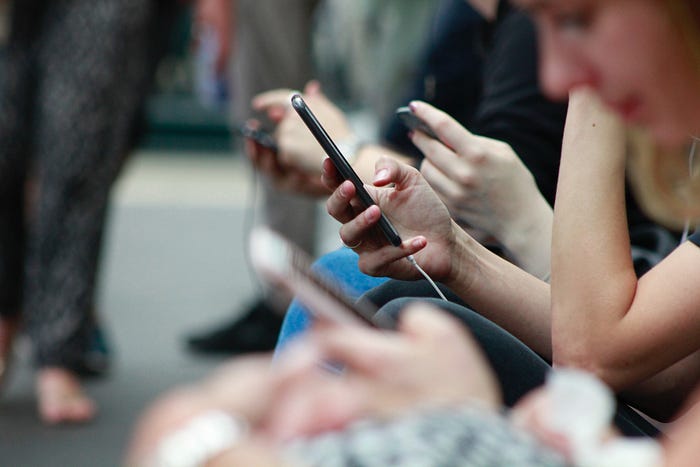
Now it's all consuming. No matter where you go, you're likely to see the people around you with phones out snapping photos or boomerangs of themselves and of their surrounding area. Long gone are the days at concerts where audience members would wave their lighters in appreciation for the artist. The lighters have been replaced by phones documenting the whole concert that, at most, viewers will watch on their Instagram story for a couple seconds and move on with their lives.
Even the photos we take to participate in the affirmation process that social media unlocks, are mainly for ourselves. We're posting to impress others not to deepen connections that a private phone call or spending our free-time with loved ones would do. It's all performative and there's a psychology behind the like button's relation in the activation in brain circuitry implicated in reward. It releases the chemical dopamine, a brain chemical that makes individuals feel happy, and when it is released, it encourages people to repeat the activity that caused the positive sensation.That's what makes social media so addictive. We're constantly chasing that dopamine rush we feel from garnering likes from others.
Heck, even while I write this, I've taken a couple minutes to scroll through some social media platforms as my mind wanders. It's no wonder why we're struggling to plug out and enjoy the present moment entirely that previous generations took for granted. We're the guinea pigs in this unforeseen world-wide experiment and we're not sure what the implications will be. It's as if our ability to concentrate has been robbed from us.
According to Prof. Earl Miller, a neuroscientist at Massachusetts Institute of Technology, you can only process one or two thoughts at a time. Our capacity for thought is really restricted. So, if you're on the phone while simultaneously checking emails or taking pictures of every waking moment of your vacation, your brain is multi-tasking and switching between tasks, but not particularly mentally acute on either task you're doing. Your brain has to reconfigure when it switches from one task to another and this is called the "switch-cost affect".
It wasn't always like this. Sure before the internet, people still were glued to their tv screens, but there were moments of reprieve — of enjoying the present moment. If you left the house, there was no form of communication for reaching each other. Rebellious teenages could worry their parents by staying out late without having their location tracked on their cell phones. People would make plans beforehand and hope that the people on the other end would follow through. You could be an embarrassing mess and it wouldn't end up on YouTube with thousands of views.
Of course, technology has also unlocked a plethora of information that's within reach of our fingertips. We now harness a comprehensive tool where the world is our oyster. In fact, smartphones are actually supplementing our cognitive abilities according to research by social/behavioral expert Anthony Chmero from the University of Cincinnati. Smart phones provide supportive tools that help free up our minds for other things. Such as using GPS to get to an event — instead of spending time figuring the best route — you can simply choose one on your maps app and head over and enjoy it.
It's not all black and white. There have been drastic improvements to our lives as well as psychological setbacks. We now can communicate with each other instantly and stay connected to combat loneliness, but this has also led to overstimulation and burnout. Since it's not possible to go back to the olden days with limited technology and social media, we have to figure out how to find a balance for the sake of our sanity.
Some people are opting for so-called "dumb phones" or entirely phoneless and choosing to spend more time reading, sleeping and spending time with loved-ones. It's a small, but growing movement of people demanding their time and focus back instead of being absorbed in the digital world and its trends. They're able to set boundaries with work, save money on phone bills and pick up new non-digital hobbies. There are also many drawbacks such as not having a digital map or not being able to access things that require you to scan a QR code. This lifestyle is not for everyone and that's ok. Smartphones are not going anywhere and will most likely advance in the future. This is why it's imperative we find a balance.
If you're feeling overwhelmed from all the doom scrolling you're doing or insecure from comparing yourself to other people's perfectly curated social media accounts that boast only their positive attributes and experiences, then it's time to take a break. This can be in the form of taking a walk, hanging out with people that care about you, learning something new like painting, journaling, etc. Everyone has different forms of self-care. If you want to try more drastic measures, but aren't willing to delete your apps completely, try temporarily deleting them for weeks or months at a time to see if it's a plausible endeavor to delete completely one day. Either way, you're taking a much needed break to boost your mood.
However, these are only temporary measures of appeasing our burnout as this is much more of a societal issue rather than an individual one. Social media companies know exactly what they're doing with crafting platforms that keep you hooked for hours. If we want to substantially rewire our way of living and interacting with the world, then we need to pass policies that put our sanity at the forefront and demand these companies restructure their platforms to not be so addictive and to allow us to regain our ability to focus. Until then, our individual actions of defiance can only go so far.