
In The Omnivore's Dilemma, Michael Pollan writes that we "dream of liberating food from nature" and this line still irks me. What an unnatural thing to do. Why would we want to separate food from the very system that created it?
But I kept reading and eventually, I got it.
At first, we invented vacuum packing, canning, and refrigeration- technologies that felt like small conveniences, perhaps increasing accessibility. The came something bigger: the ambition not just to preserve food but to reinvent it. Modify it. Optimise it. Not just to work with nature but to outsmart it. Somewhere along the line, we stopped asking, "How can we eat well within nature's limits?" and started asking, "How can we bend nature to our needs?"
Pollan brilliantly lays out how our hunger isn't just a thought- it has a biological and historical function. Human appetite is elastic because, in earlier days, our ancestors didn't know when the next meal would come. So when food was available, the best strategy was to eat as much of it as possible in preparation for days on end without food. Evolutionary conditions have made us predisposed to consuming fat and sugar- energy-dense foods that would (earlier) be crucial in helping them survive longer stretches without eating. That system made perfect sense when food was scarce. But in an environment like ours, where food is constantly available and specifically engineered to trigger those ancient instincts, it's a recipe for disaster.
Why?
Processing food and stripping it of nutrients, loading it with salt, sugar, and fat, packaging it so it's easy to snack on mindlessly isn't just a quirk of the modern diet. It's a strategy. Capitalism figured out that if you make food hyper-palatable and convenient, people will keep eating it long after they're full. Add in advertising, cheap ingredients, and labor exploitation, and you've got a food system designed not for nourishment, but for infinite growth.
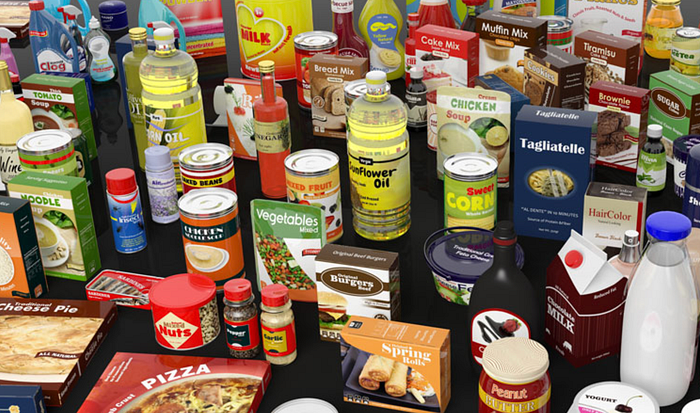
We've shifted from real food which was seasonal, nutrient-dense, grounded in place and tradition, to products that are engineered, commodified, and disposable. And maybe worst of all, we've learned to prefer them. That's how good capitalism is at reshaping our desires.
As Patel and Moore boldly declare in A History of the World in Seven Cheap Things, "The story of capitalism is a global one, from the belly out." And once you see it, you can't unsee it. They trace how the global food system has been used to control, restructure, and extract value from entire societies. Let's consider the Irish Potato Famine as an example which was not just a natural disaster, but a systemic one caused by Britain's economic policies and monoculture farming. Or in India, where British colonialism stripped away the deeply rooted cultural obligation of feeding the poor. The infrastructure that held communities together was hollowed out in service of a new economic logic.
One example that really stuck with me is when Patel and Moore talk about the First World War. The Allies blockaded Chilean saltpeter mines to cut off Germany's access to nitrates, a brutal tactic of "botanical imperialism." In response, German scientists Haber and Bosch developed synthetic nitrogen fixation, a technological leap that allowed industrial agriculture to scale massively. It also led to a fivefold increase in atmospheric ammonia and nitrogen oxides. That's not just a farming innovation, it's a planetary transformation. One invention, driven by war and scarcity, ended up reshaping the chemistry of the Earth itself.
Circling back, we come to what Pollan calls the "fixed stomach problem." The human body can only consume so much. If people can't eat more, then how can the food industry keep growing? The uncomfortable truth is that it shouldn't. Realistically, growth in the food industry should cap out at around 1% enough to keep up with population but this 1% Pollan argues "will never satisfy Wall Street." So we invent ways to trick our bodies. We make portions bigger. We snack more. We eat alone. We eat faster. And we do it all without questioning how we got here.
So what do we do with all of this?
We should start by asking why we've normalised a food system that treats nature as a problem to be solved, and appetite as a weakness to exploit. Maybe it's time to question the assumption that everything, including food, must scale infinitely. Food isn't something we need to liberate from nature- the real liberation lies in returning it.
