

There is an abundance of data provided to us by the Earth, but there is a gap - a billion-year gap that scientists are trying to figure out the truth of.
The "Great Unconformity," first observed by the renowned geologist John Wesley Powell in the Grand Canyon in 1869, presents a profound geological mystery.
In this phenomenon, there seems to be a missing billion years in the geological record. Normally, rock layers are deposited gradually over time, marking the passage of eons. However, in the case of the Great Unconformity, there's an abrupt jump from three billion-year-old sediment to a much younger layer that's only 550 million years old, sitting directly above it.
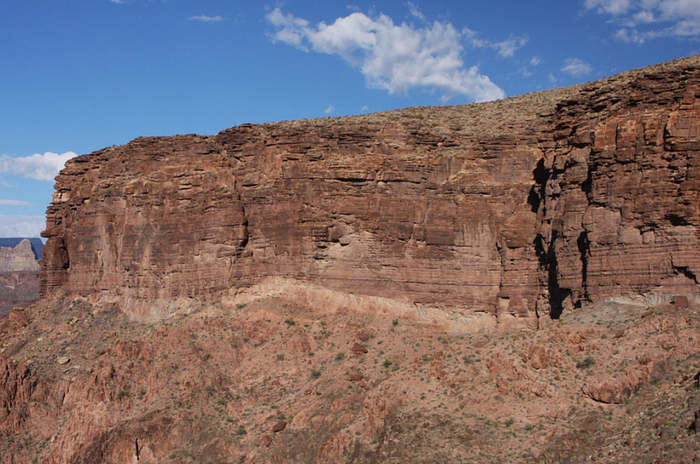
This peculiar gap in time is especially intriguing because it precedes the Cambrian explosion — a period about 550 million years ago when complex life forms dramatically burgeoned on Earth. While the Grand Canyon offers the most visible example of the Great Unconformity, similar geological patterns are found worldwide, suggesting that a global event might have been the cause.
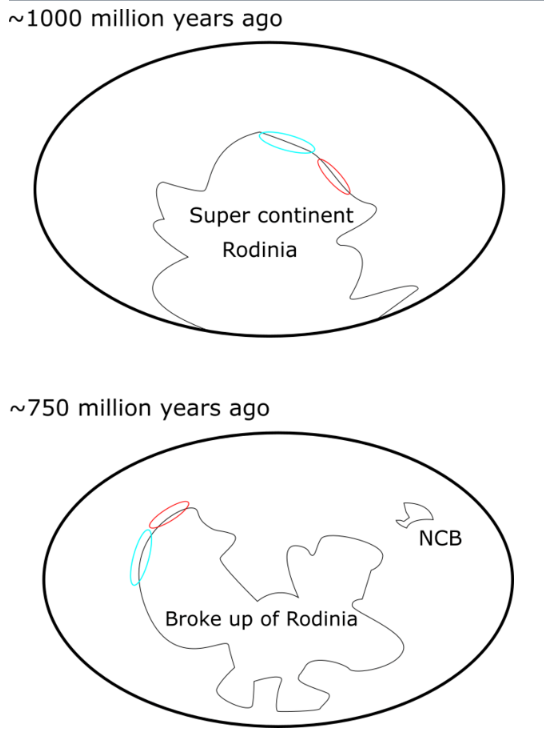
Recent studies propose a new understanding of this phenomenon. Rather than a single event, there may have been multiple unconformities occurring around the world at roughly the same time. These events are thought to be related to the ancient supercontinent Rodinia, which formed about a billion years ago.
The foundation of this research is a dating method known as thermochronology. This technique involves a detailed analysis of atomic structures within rock samples, which allows geologists to piece together the thermal history of the rock. By understanding the temperature changes the rocks have undergone over time, researchers can infer their geological history.
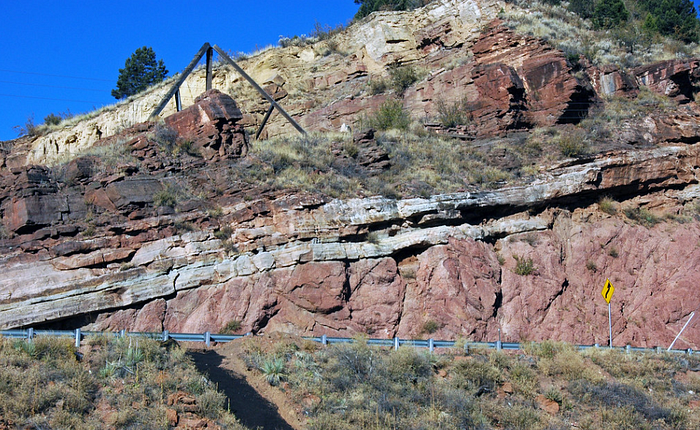
At Pikes Peak in Colorado, a site exhibiting the Great Unconformity, rock layers show a stark contrast: the bottom layer dates back about a billion years, while the top layer is not older than 510 million years. Thermochronology studies at this site revealed that the ancient layer was pushed to the surface around 700 million years ago. Once exposed, it would have been subjected to significant erosion, leading to the removal of its upper layers.
Erosion is indeed a potent natural process. As study co-author Rebecca Flowers explains in CU Boulder Today, "Earth is an active place. There used to be a lot more rocks sitting on top of Mount Everest, for example. But they've been eroded away and transported elsewhere by streams." This statement underscores the dynamic nature of our planet, where even the mightiest mountains are reshaped and worn down over time.
About 500 million years ago, something remarkable happened to the rocks under what is now the Grand Canyon, and similar events occurred around the globe. This phenomenon, known as the Great Unconformity, saw massive layers of rock, representing up to 1.2 billion years, mysteriously disappear.
This period was critical as it coincided with the most significant transition in the evolution of life on Earth. But when exactly did this erosion occur? Was it 700 million years ago, or did it happen earlier in the Grand Canyon compared to places like Canada?
Geologists, through radio-decay geochronology, have been adept at dating rocks' ages. However, pinpointing the exact timing of this erosion is a tougher nut to crack. At the GSA Connects 2022, Dr. Rebecca Flowers from the University of Colorado Boulder shared intriguing research.
She used thermal history models and field geology relationships to shed light on the timing surrounding The Great Unconformity. Her findings suggest that perhaps we should be talking about "the Great Unconformities" in the plural.
In the Grand Canyon, we see a striking example of this phenomenon. Here, layers of sedimentary rocks lie directly atop granite that's over a billion years older. The most accepted theory for this widespread erosion is linked to the global glaciations of the Cryogenian period, between 710 and 640 million years ago, also known as the "Snowball Earth" phase.

This era led into the Ediacaran and Cambrian periods, marked by a burst of life diversification that left a significant fossil record. This extensive erosion could have played a pivotal role, possibly releasing key nutrients into the sea and fueling this evolutionary explosion. But the question remains: did this erosion occur simultaneously worldwide?
Uncovering the Mystery
Thermochronology, a method tracing the temperature history of rocks, offers promising insights into dating these erosional events. It's based on the principle that rocks get hotter the deeper they're buried and cool upon being uplifted and exposed. By tracking these thermal changes, geologists can reconstruct a rock's journey over time.
This method relies on the decay chain of uranium, producing helium-4 at a known rate. These isotopes are trapped in crystals at a certain temperature, the closure temperature. By understanding the helium production rate and closure temperature, we can determine when a mineral was last at a depth hot enough to release helium.
However, it's important to consider how much the crystal lattice has been damaged by radioactive decay. This damage can lead to more helium escaping than expected, skewing our perception of when the rock actually cooled. With these factors in mind, thermal models become a valuable tool in geology. They aren't foolproof, though. There are multiple paths to the same data point, and interpreting these paths to understand the rock's real history requires skill and judgment.
So, while the Great Unconformity (or should we say Unconformities?) remains a geological puzzle, tools like thermochronology are helping us piece together this vast and ancient story. Understanding this story is not just about rocks and erosion; it's about uncovering chapters in the history of life on our planet.
Dr. Rebecca Flowers is a strong advocate for a comprehensive approach when it comes to understanding the timing of geological events. Working alongside a team of experts that includes Francis Macdonald, Christine Siddoway, Rachel Havranek, Barra Peak, Colin Sturrock, and Rich Ketcham, she has delved into the complex nature of the Great Unconformity.
This group combines geological evidence with advanced thermal modeling techniques, challenging the notion of a singular event causing the Unconformity.
Flowers emphasizes the importance of considering geological constraints in these analyses. She uses various observations, like physical relationships within the geological structure, to narrow down the potential models. A striking example of this approach is seen in the study of sandstone injectites, such as the Tavakaiv injectites within Colorado's Pike's Peak granite.
This granite was exposed and eroded during the formation of the Great Unconformity. Since the injectites formed when the granite was at the surface, it implies that the erosion of layers above the Pike's Peak granite predates the Sturtian Glaciation. This insight effectively rules out the glaciation as the sole cause of the erosion.
Similar deductive methods have been applied in the Grand Canyon. Here, sedimentary deposition on exposed basement rock during the Cambrian period indicates that the area was cool and at the surface at that time. Later, deeper burial of the underlying basement rock occurred in the Paleozoic era. These facts eliminate any thermal models suggesting significant heating 500 million years ago or cooling during the Paleozoic.
As a result, Flowers and her team contend that the Unconformities in the Grand Canyon occurred both before and after the Snowball Earth event. This methodology was also applied to other regions, such as south and central Canada, leading to the conclusion that erosion occurred after specific geological periods, namely 650 and 570 million years ago.
Given these disparate age gaps, it becomes increasingly evident that these unconformities are not a single, uniform event. An asynchronous interpretation is more fitting, suggesting that "the Great Unconformities" is a more accurate term.
This realization underscores the importance of recognizing that seemingly simple geological events can be quite complex, necessitating a blend of different investigative approaches to fully understand them. It opens up the possibility that regional factors, like tectonic uplift, could have played significant roles in causing massive erosion events.
This raises further questions about the role of these erosion events in the evolution of the Ediacaran ecosystem, particularly regarding the influx of nutrients hypothesis. Could these erosion events, varying regionally, have influenced evolutionary patterns in different ways? To explore these possibilities, the detailed thermochronological data and field observations provided by Flowers and her team are invaluable. Their ongoing work and evolving methodologies may be key to unraveling the mysteries posed by these geological phenomena
The key to solving the puzzle of the Great Unconformity lies in accurately dating the events that caused the erosion and the subsequent deposition of new layers. Traditional radiometric dating methods have provided some insights, but the breakthrough has come with the advent of thermochronology.
This technique, which examines the thermal history of rocks, allows scientists to estimate the timing of uplift, erosion, and sediment deposition more accurately. By measuring the decay of uranium and thorium to helium in mineral grains, researchers can deduce when the rocks were at different depths and temperatures, offering clues about their geological history.
Recent studies have suggested that the Great Unconformity may not be a singular event but rather a series of unconformities occurring at different times and places. This theory challenges the notion of a simultaneous global phenomenon and instead points to regional geological processes, such as tectonic movements or climatic changes, as potential drivers.
One hypothesis links the Great Unconformity to the break-up of Rodinia, an ancient supercontinent, and the subsequent Snowball Earth glaciations that occurred between 720 and 635 million years ago.
These glaciations could have caused significant erosion of the Earth's surface, contributing to the missing geological record. However, evidence from different locations suggests varied timelines, indicating that regional factors played a crucial role in shaping the Great Unconformity.
As research continues, integrating data from multiple disciplines is essential. The combination of advanced dating techniques, field studies, and geological modeling offers the best chance of piecing together this complex puzzle. While we are closer than ever to understanding the Great Unconformity, it remains one of the most intriguing challenges in Earth science, a testament to the dynamic and ever-changing nature of our planet. Each new discovery adds a piece to this intricate puzzle, gradually unveiling the story of our Earth's ancient past.