
Failed answer
I interviewed for this e-commerce company in India and when they asked me this question, I think i failed miserably. But the interviewer was nice enough to ask me the other questions and carry on with the rest of the interview.
Question:
Tell me the most ambiguous and complex problem i solved.
Answer:
Here, I will write a very brief answer — here was a time when at Wildtrails we were doing Fashion business. A customer ordered a t-shirt but we sent a wrong size t-shirt to him. So we raised a return for the t-shirt, the shipping vendor failed 2 times to pickup the t-shirt and it was during covid time. We were helpless, our customer was angry, but the third time it was successful — i did a trick and it worked.
I explained the whole situation.
This is a cakewalk to a failure interview.
Result:
I failed the interview.
Why its a failed answer
- When asked for this question — talk about an IT product, not an e-commerce return process :) especially something that's manual.
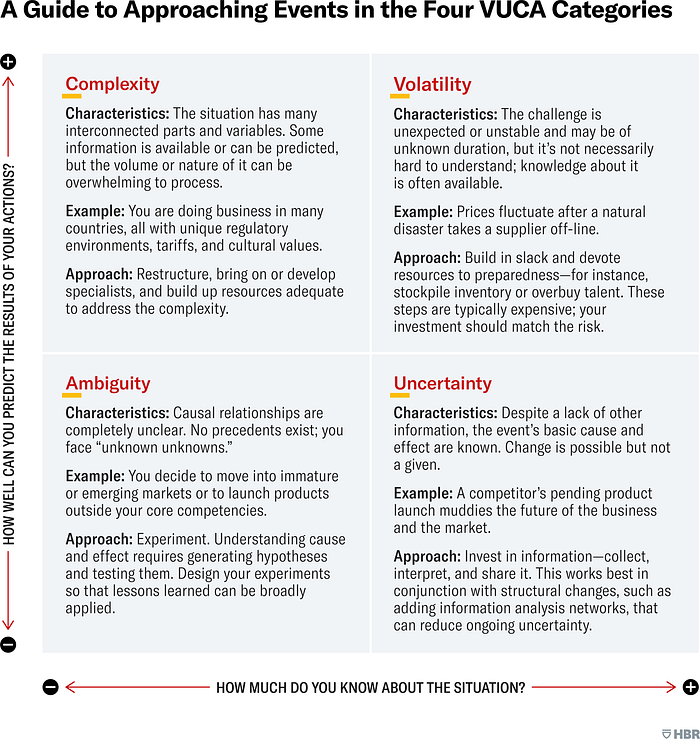
- Know what complexity means: complexity is something about layers. when a problem has so many layers to be solved, then that's a complex problem or situation
- Know what ambiguity is: ambiguity is something about uncertainty. when a problem's scope, success and timelines are uncertain until it is executed, then that's ambiguity. For example: a red button is most clicked or yellow button is most clicked? you have to do an A/B test and solve, then its an ambiguous situation. You launch and learn for ambiguous situations !
- my answer is supposed to have situations like this — that covers both complexity and ambiguity
Successful answer
Question:
Tell me the most ambiguous and complex problem i solved.
Answer:
In our company, i was given a situation to improve the installation process of our product.
This is an ambiguous situation and has a lot of complexity involved.
The complexity is — installation has lot of layers to it:
- each of our clients has a different VPC environment, and our product's ideal environment is standard but its different from our clients' setup,
- the clients send in install request tickets and they need to know what next steps are — our documentation is not clear,
- currently the time between the client ticket and the first installation call is x days and how to improve that?
- and what about self-install and why are we doing guided installs currently?
there are a lot of problems involved in the install process. As a PM digs through the user journey a lot of layers get unveiled. It is a complex situation.
The ambiguity is — we don't know which problem to solve first:
- should i reduce installation time?
- should i reduce time between ticket raised vs first call ?
- should i work on self-install ?
- should i work on improving documentation first?
or should i work on other problems?
We don't know of which problem to pick until its launched and it actually shows any result. So that is ambiguity.
So how did i solve this problem that involves so much complexity and ambiguity would form the rest of the answer. And the answer involves PM framework such as CIRCLES or Prioritization framework such as least-effort-most-impact etc.
Conclusion
Know the definition of complexity and ambiguity. Read HBR paper about complexity vs ambiguity.
Typically — talk about answers that involve IT products, requirement gathering, launch and result of the product. This covers the full product lifecycle and it's usually a great answer for PMs.