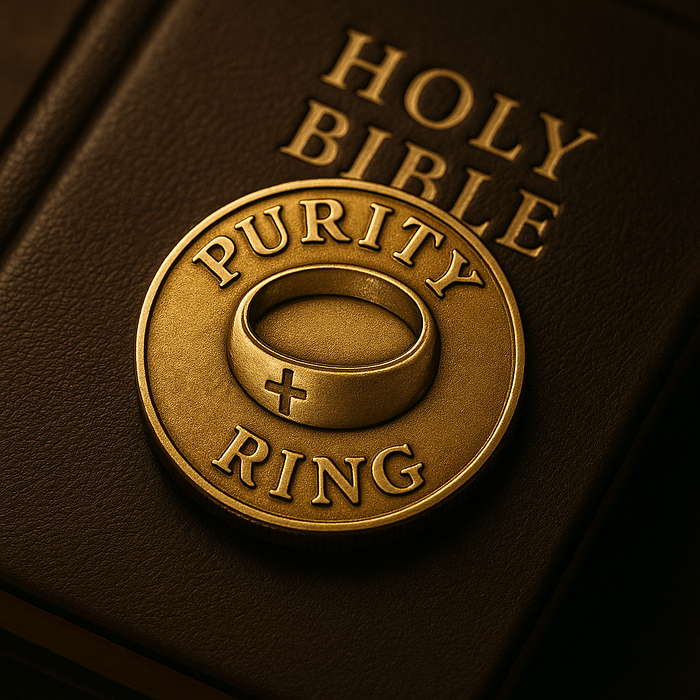

Purity culture didn't just reshape faith — it built an industry. An empire of conferences, books, merchandise, and marriage retreats that transformed morality into marketing.
"In the evangelical marketplace, guilt is renewable energy — and purity is the product they'll sell you forever."
Introduction: The Business of Being Good
Purity culture didn't just reshape faith — it built an industry. An empire of conferences, books, merchandise, and marriage retreats that transformed morality into marketing.
From purity rings to modesty fashion lines, the message was clear and profitable: Your worth isn't inherent — it's earned, and we can sell you the map to find it.
Evangelical capitalism discovered what every good salesman knows: If you make people feel broken, they'll pay you to feel whole.
The Rise of the Purity Brand
The "purity movement" wasn't born in a vacuum. It exploded in the 1990s, right alongside Christian pop culture's golden age — youth rallies, CCM music, "Jesus Freak" t-shirts, and suburban megachurches flush with cash.
But unlike the lighthearted slogans and rock bands for Christ, purity culture carried a darker promise: salvation through self-denial, marketed like a lifestyle upgrade.
National programs like True Love Waits and Silver Ring Thing sold sexual abstinence as both moral and patriotic. Teens signed vows of chastity like loyalty oaths, complete with branded jewelry and youth-pastor pep rallies.
"Purity wasn't just a belief — it was a badge. A commodity you could wear, post, and prove."
The Merchandising of Morality
Publishers and ministries quickly realized purity sells — especially to anxious parents. The result: an avalanche of products wrapped in holiness.
- Books: I Kissed Dating Goodbye, Lady in Waiting, Every Man's Battle — all bestsellers preaching restraint, fear, and female responsibility.
- Conferences: Weekend "purity balls" where fathers pledged to guard their daughters' virginity.
- Music & Media: Pop singers rebranded as "role models" for abstinence, complete with cross necklaces and promises of "waiting for God's timing."
- Merch: Jewelry, journals, devotionals, and even "modesty guides" marketed like fashion catalogs.
This was theology as a lifestyle brand. And behind the glittering scripture quotes was the same message: you are not enough — but we can sell you redemption.
Shame as a Business Model
The purity industry thrived because it understood one thing perfectly: shame is loyal. It doesn't fade when the conference ends or the ring tarnishes.
It lingers — and drives repeat customers.
Every "failure" created demand for more forgiveness, more books, more retreats. It's a cycle of control wrapped in the language of grace.
"The purity movement turned the female conscience into a subscription service."
The market didn't just monetize morality — it monetized self-loathing. Every tear-streaked testimony was free advertising for the next seminar. Every "rededication ceremony" was proof that the system worked — by keeping people in it.
The Profit of Patriarchy
Who benefited from all this?
Mostly men — pastors, publishers, and celebrity evangelicals who built careers on preaching abstinence while cashing royalty checks.
The movement's stars — from Josh Harris to Elizabeth Elliot to Focus on the Family's James Dobson — sold purity as empowerment while reinforcing submission as divine truth.
Even after many quietly abandoned or apologized for their teachings, the money had already been made, and the scars had already set in.
It was capitalism baptized in guilt.
The Feminine Ideal as a Marketing Hook
The purity industry didn't just sell abstinence; it sold identity.
The "godly woman" became a brand archetype — demure, beautiful, obedient, and devoted to her husband's leadership. Magazines, retreats, and women's ministries peddled "biblical femininity" like wellness influencers sell detox teas.
The promise? Follow the formula and you'll find love, happiness, and divine approval.
The reality? A generation of women learned to confuse control with care — and submission with worth.
When Faith Becomes a Franchise
The purity industry's real genius was how it franchised control.
It didn't need to enforce its values top-down; it trained entire communities to replicate them for free.
Mothers taught daughters. Youth pastors policed wardrobes. Women's groups reinforced guilt.
It's what sociologists call distributed enforcement: the system sustains itself because those trapped in it believe they're protecting others.
The business doesn't even need to sell anymore — it's already embedded in the culture.
"They taught women to become both the product and the police."
The Backlash and the Business That Survived
By the late 2010s, cracks began to form.
Josh Harris publicly renounced I Kissed Dating Goodbye.
Former purity influencers spoke out about trauma, therapy, and lost faith. But even as the rhetoric softened, the market evolved.
Today, "purity" has rebranded as "pro-family," "modesty," or "traditional values."
The message hasn't died — it's just changed packaging.
The shame economy is too profitable to vanish. It simply shifted from youth rallies to political pulpits, from purity rings to anti-abortion campaigns and modesty influencers on social media.
The Psychology of the Sell
Why does this work? Because purity promises a clean slate in a chaotic world. It sells moral certainty — a simple formula in exchange for existential peace. It tells you who you are, what you're worth, and what's expected.
But peace built on fear isn't peace. It's quite compliant. And the house always wins.
Closing Reflection
The purity movement was never just about saving sex for marriage — it was about selling submission as salvation.
It replaced spirituality with shame, and then made shame profitable.
The hardest truth? Many who bought in weren't victims of manipulation alone. They were investors — taught to measure their holiness by how well they could sell the illusion to others.
"The purity movement didn't just sell rings. It sold women a lifetime lease on their own guilt."
Next in the Series:
🏠R
Thanks for reading! If you would like to receive a notification whenever I release a new article, Click here. If you enjoyed this article, show your appreciation by giving it lots of claps.