
After watching the video titled "My SECRET to Never Running Out of Energy (Levels Health CGM)," I became interested in trying out CGM. Given my sweet tooth and previous experiences with low blood sugar, I thought it would be beneficial to monitor my glucose levels continuously. After some research, I discovered Vively, which offers access to this technology for non-diabetics at a reasonable price.
During the trial, I found there is more about this application.
- The vision and purpose
- A very brief review of the Vively mobile application
1. The vision and purpose
First, I love their vision, which is well-interviewed and documented here (in the article titled "How Vively founder Tim Veron's technology gave a surprise diagnosis and changed his life"). For the past three years, I have experienced a highly inefficient and careless diagnostic process for my acid reflux symptoms, which I complained about here(In the last section I compared my query using ChatGPT and the real-life torture diagnosis process). I've finally realized that the current medical system isn't designed for people with minor symptoms or those who want to prevent diseases. I believe that technologies like CGM should be utilized for the general public, not only for people who have diabetes. (Isn't that too late?) With more data available from wearable devices, there's much more we can analyze and improve.
2. A brief review of the Vively mobile application
Second, from a technical standpoint, the Vively application outperforms the FreeStyle Libre app, which is provided by Abbot, the producer of the CGM. Here is the breakdown:
- Incorporate other data from wearables, and monitor and analyze sleep, heart rate, and exercise.
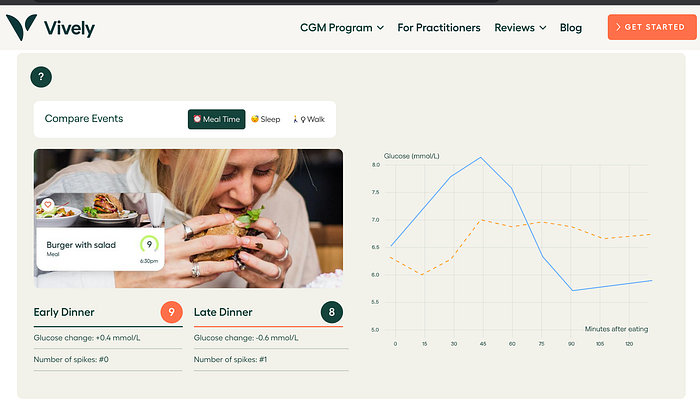
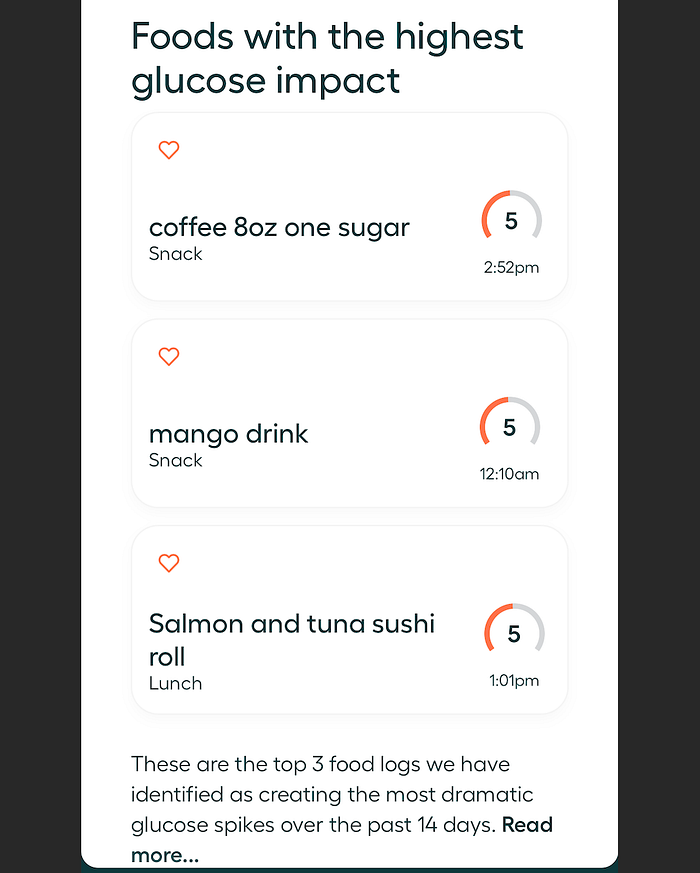
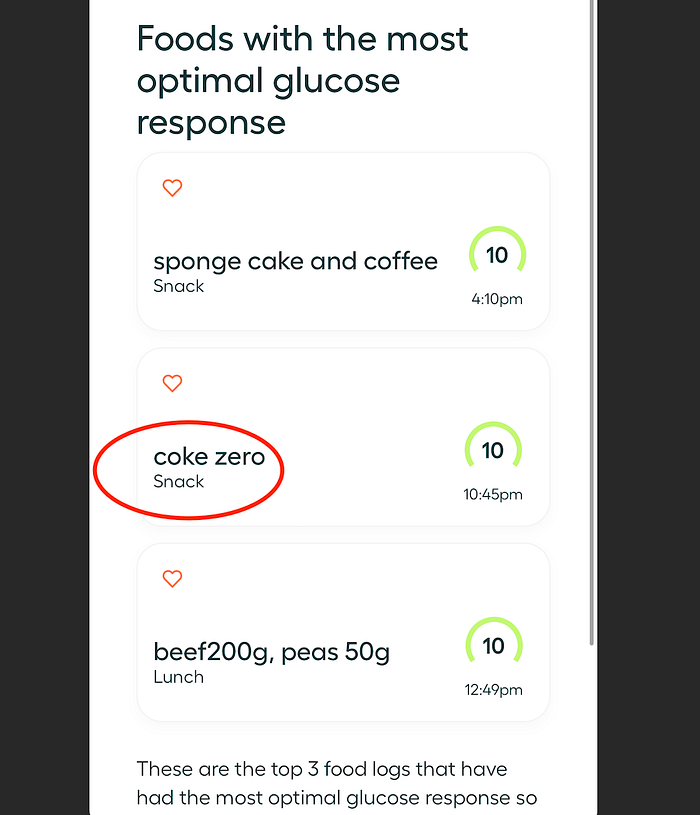
- Provide straightforward scores for various foods and events.
- Provide informative articles on diabetes, a healthy lifestyle, etc.
- Provide follow-up dietitian services.
- It looks good, whereas FreeStyle Libre seems to have been developed a long time ago.
Let's dive into the core add-ons, the data incorporation and the scoring system.
The Vively app actually reads from Abbott's application FreeStyleLibre; that's why you need to download FreeStyleLibre too. Incorporating my Apple Watch data is straightforward. I need to allow access, and I think connecting to the Health app, which goes with the watch, is easy.
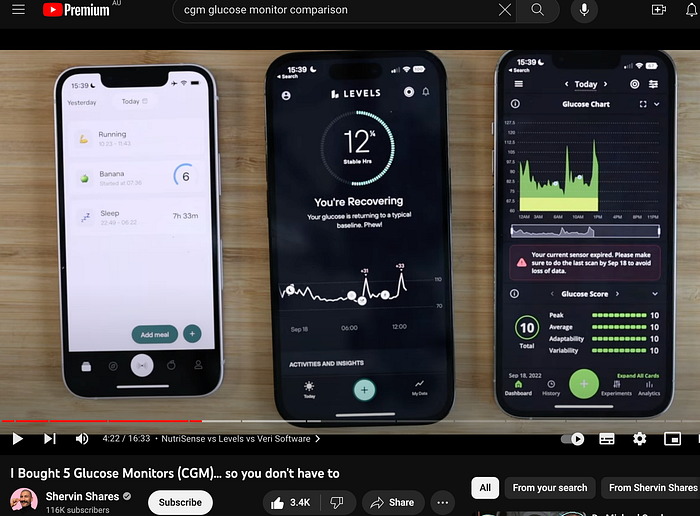
The scoring system is where the most effort is invested in terms of algorithm; the UI design and the coding for the app are quite standard. The wellness score is calculated based on the following factors. There are descriptions for them, but I am not sure how it is calculated in detail. This will require much more study and hacking, which I will start next month in November. However, I think the app is derived from another app called Veri, which I saw from this video: I Bought 5 Glucose Monitors (CGM)… so you don't have to
- Glucose
- Food
- Sleep
- Activity
- Longevity
- Stress
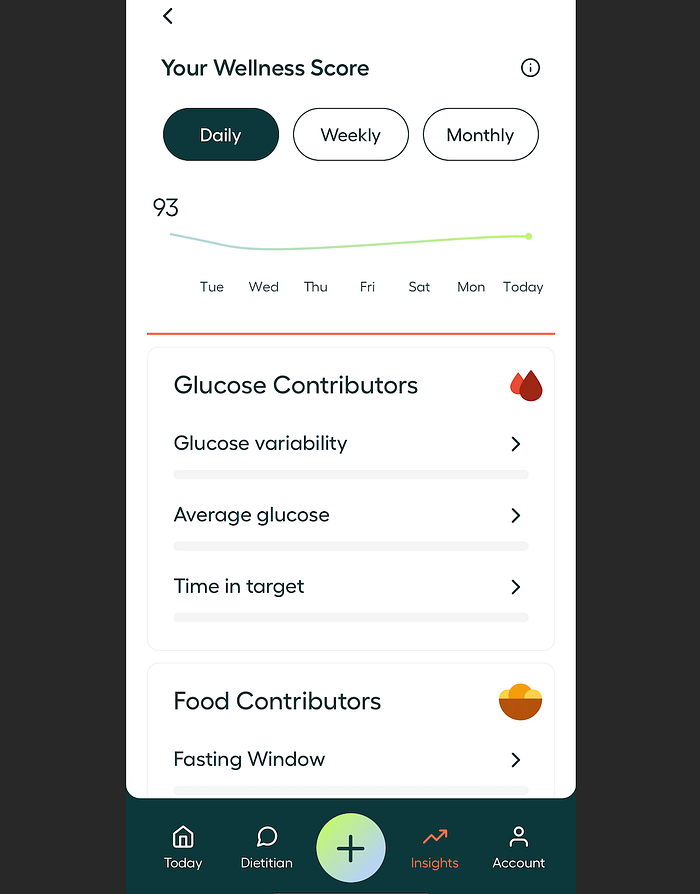
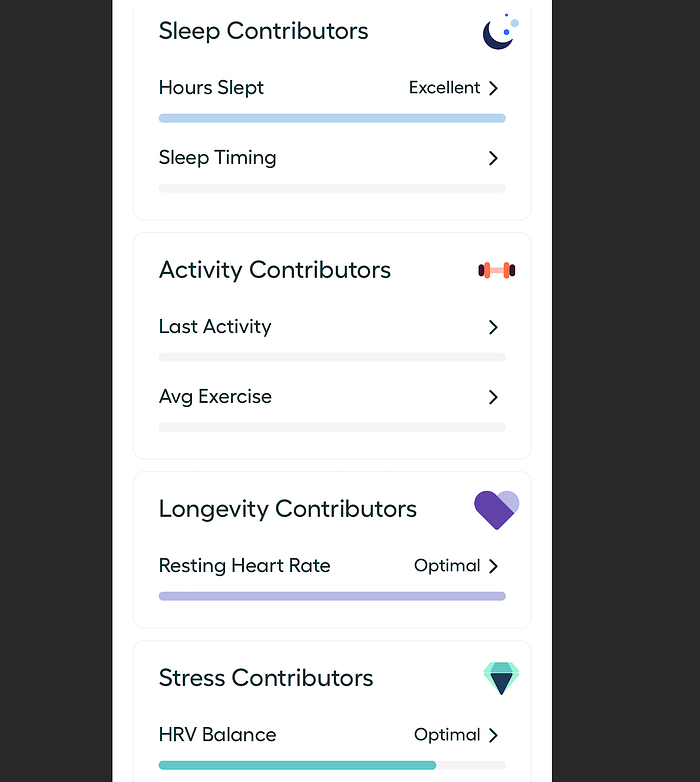
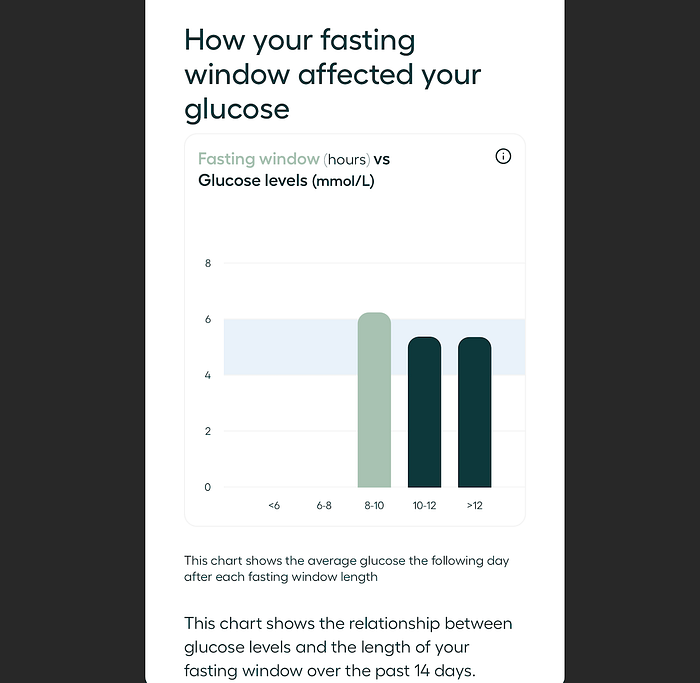
Since they provide scoring and also consider the other health data, the final report also includes that information.

3. The price
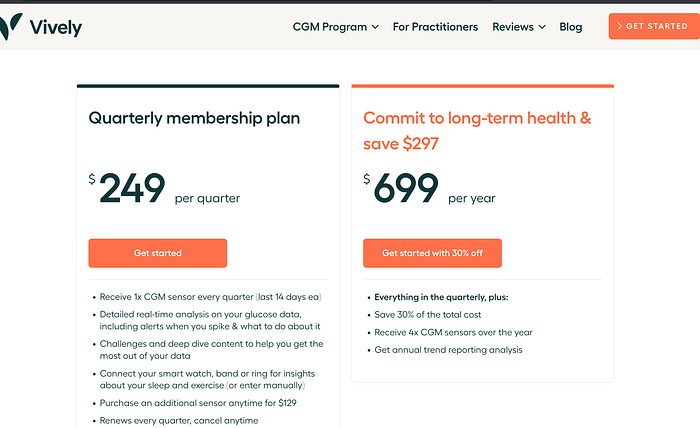
Third, Vively is currently more affordable than Dexcom. Vively offers a subscription at AUD 249 for three months, while another company, AMSL, provides Dexcom at AUD 1050, and AUD 330 monthly. However, it's important to note that AMSL includes three sensors, covering all 30 days of each month. In contrast, Vively, targeting healthier individuals, suggests using one sensor (which lasts 14 days) each quarter and using another sensor after making lifestyle adjustments. If you purchase extra sensors from Vively at AUD 129 each, the total cost for three months would be AUD 894 (249 + 129*5). This is still cheaper than the AUD 1050 offered by AMSL.
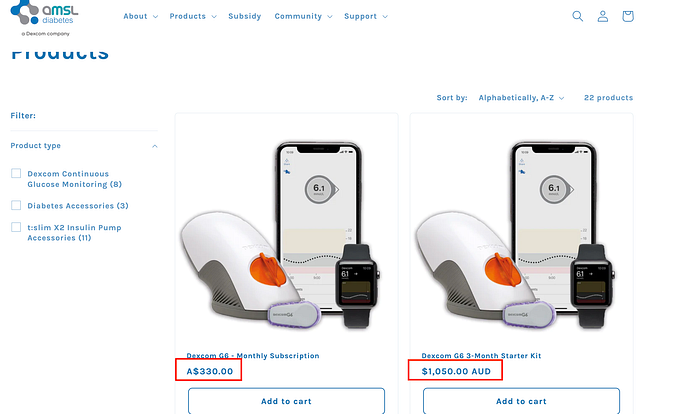
But I found they provided this trial recently. I applied and received it around 10 days ago but I plan to use it next month. This is because I wanted to study more and plan ahead before using them. I will compare their differences after I try DexcomG6.
https://shop.amsldiabetes.com.au/products/dexcom-g6-trial-offer
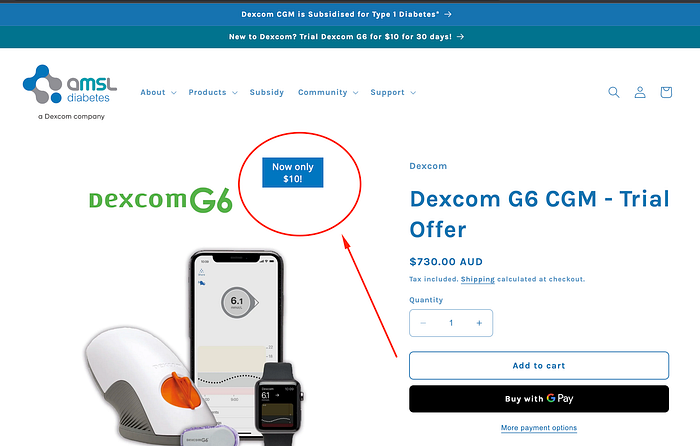
On the otherhand, Abbott seems just open to people who have diabetes, their trial is $10.

I would say paying around $120 quarterly (or $40 monthly) for access to the sensor (given that the sensor itself might cost between $100 to $130, so $249 minus $130 equals $119) is acceptable. However, if the device is available to the general public, it might be too expensive for those who are content with Abbott's app and raw data. They already offer a platform called LibreView where insightful reports can be accessed. While the Vively application is well-designed and seeks to incorporate more data, it's certainly not worth $40 monthly just for the integration and scoring system. At $9.9 ~14.9, I'd consider it if I could purchase the sensor on my own.
Related posts:
- CGM (Continuous Glucose Monitor) for Non-Diabetics: I Tried Vively/Abbott FreeStyle Libre
- What I Learned from the Freestyle Libre Glucose Monitor Report
- Diving into My Glucose Data: From Unboxing the CGM to Data Analysis
- My CGM Trial and the Science of Glucose Spikes: A Review of 'Glucose Revolution' by Jessie Inchauspé