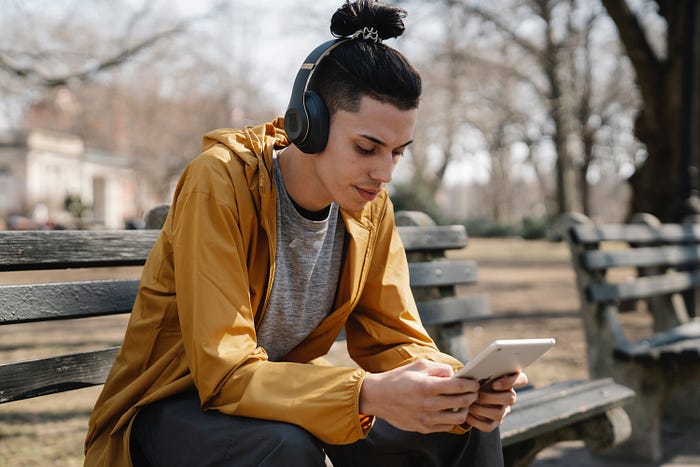


Until my first severe migraine, being glued to screens, be it gaming, binge-watching, texting, and social media scrolling, had been all fine and dandy.
Through some strict measures, I slashed my screen time, but as the headaches receded; I let it creep back up. And the migraine scampered back stronger.
This soon turned into a game of fetch — every time I threw my screen time control measures out the window, my migraine would come running back.
Having realized my screentime reduction would have to be a lifestyle change and not a temporary fix, I discarded stringent measures such as screen blockers and switched to building habits.
I'm happy to say it's been months since I last had a nasty headache — all thanks to 4 habits that slashed my daily screentime from 12–14 hours to around 7.
They can help you do the same as well.
Kill a Lion's Share of Your Watch Time
When this idea first struck me, I was baffled at how I didn't think of such an obvious thing earlier.
Over 50% of what I watch online is audio-dominated content — podcasts, discussions, speeches, interviews, etc. The rest, which is mostly standup-comedy doesn't require staying glued to the screen either.
This begs the question — why even watch when I can just listen?
So I started turning up the volume, reclining in my chair, and either closing my eyes or looking outside the window — and just like that, I got rid of a huge chunk of my screen time.
List the stuff you mostly watch and see where all you can cut out the watching part. You'd be surprised.
A Meal-Time Optimization
4 meals a day + a leisurely 15 to 30 minutes of watching per meal = 1 to 3 hours additional screen time.
By swapping out YouTube with my Kindle, not only did I shave my screen time, but also amped up my prolificity as a reader.
And well, we all know the insane benefits of reading — improved vocabulary, a better mood, reduced stress, increased empathy, better-structured thoughts, boosted cognition, etc.
Now, you might say a Kindle is still an electronic device — yes, but its e-ink screen is closer to an actual book than an electronic screen. And studies have found the eye strain to be significantly lower.
If you still have qualms about it, go with physical books — newer research has shown it to result in a deeper reading experience.
Or even better, do nothing else while eating—savoring and relishing every bite without distractions is an excellent mindfulness practice.
Steer Away from Texting
I've never been a big fan of texting. But during the first lockdown, I went double down with it — and some drew on so long my fingers were as fatigued as my eyes.
Now, if a conversation shows signs of drawing out with no qualms, I ask for a phone call. One of two things happens:
- The other person is down to it and it's a double win — no screens and a richer and more personal conversation.
- They're busy or don't prefer calls — you have a convenient excuse to escape.
Nowadays, I use texting for only two things — brief texts where I'm expecting single-word replies or scheduling phone calls/physical meetups.
For situations midway between calls and texts, consider voice notes — despite not being a fan, I have to admit they're quite nifty.
If you're an avid texter that avoids phone calls like the plague, at least switch to your laptop — computer screens aren't as taxing as smartphone ones.
Set up Time-Based Boundaries
Thanks to my latest godly morning routine, I barely use my phone during the day's first 4 hours—earlier, I used to check my phone for anywhere between 30 minutes to 2 hours first thing after waking up.
The icing on the cake is that the productive tone set by it has reduced my overall phone usage as well.
An hour before I go to bed, I tuck away all electronic devices, do my nightly ablutions, and settle to read. Thanks to the lack of blue light exposure and the calming nature of reading, this has improved my sleep as well.
So, dedicate no-screen hours — post waking up and pre-sleep would be the most optimal times. But other times — such as in the afternoon for a nap or an evening workout break would also work fine.
If you enjoyed this, consider joining A Better Life. It's free! You'll receive my best posts and a value-packed weekly Sunday Self-Scaler to kick your week off to a splendid start. You might also like,