


In the southern tip of India, lies a bridge of rocks connecting Tamil Nadu to Sri Lanka. Worshipped as a holy site, the myth of Ram Setu plays an important role in Hindu beliefs.
Despite the story being well-known in Hinduism, its history is rarely taught outside of Desi communities.
A Bridge of Many Names
While the bridge is commonly referred to by its name Ram Setu, there are several other names often attributed to it.
In the realm of Hinduism, other common names given to the bridge include Setu Banda and Nala Setu. The latter refers to the architect, Nala, of the bridge.
Jumping over to Islam, many Muslims claim that the bridge was created by the first man, Adam. Because of that, it is also given the name Adam's Bridge by Muslims.
Who was Lord Rama?
According to Hindu Mythology, Lord Rama (Shri Ram) is recognized as the seventh incarnation of Vishnu, the god of Preservation and part of the Trimurti.
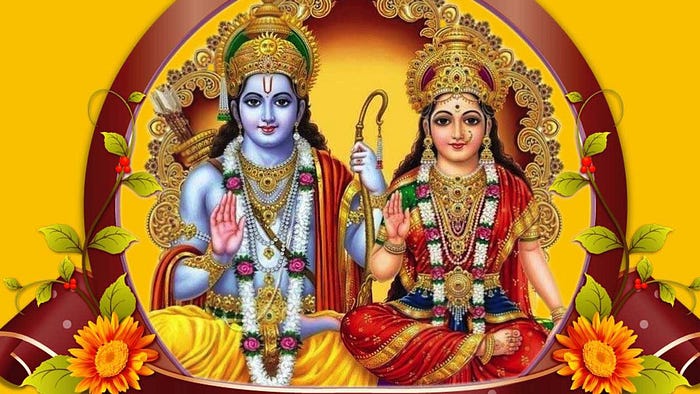
Often depicted with blue skin, and a bow and arrow, Lord Rama was the King of Ayodhya, the city of his birth. He is described by scholar Swami Vivekananda as:
the embodiment of truth, of morality, the ideal son, the ideal husband, and above all, the ideal king
He is central in the epic Ramayana, one of the Sanskrit stories of the Itihasas.
In the epic, the exiled lord needed to rescue his wife Sita from the multi-headed King of Lanka, Ravana.
To save his wife, Rama had to build a bridge across Palk Strait to Lanka to rescue his wife and slay the demon, Ravana.
The Bridge was Constructed by Monkeys
In order to cross the Strait, Rama enlisted the assistence of the Vanara Sena, an army of monkey-human people, who help him rescue his wife.
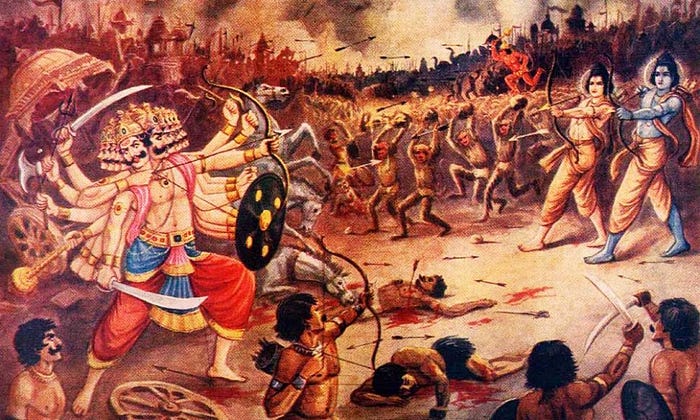
The monkey army would gather stones and write the Lord's name, Sri Rama, on the back, making the stones float.
On the topic of writing Sri Rama on the stones, Gurudev Sri Sri Ravi Shankar wrote:
When the name of the Lord is with you, you will float through the ocean of misery; you won't sink in the world of misery
Once Rama had crossed the strait, he waged a war against Ravana, using his monkey army. After killing Ravana and rescuing Sita, Rama returns home where he is welcomed by the people of Ayodhya with lit lamps.
This celebration of lamps is the origin of Diwali, India's festival of lights.
Archaeological Evidence
Between Tamil Nadu and Sir Lanka lies the remains of Ram Setu.
Many claim that the bridge was created by the Lord Rama around 5,000 BCE while others claim that the bridge is nothing but a natural occurrence of erosions and cyclones.
What is agreed upon is that a shoal (or sand bar) exists in the Palk Strait and that there are rocks on top of that sand bar.
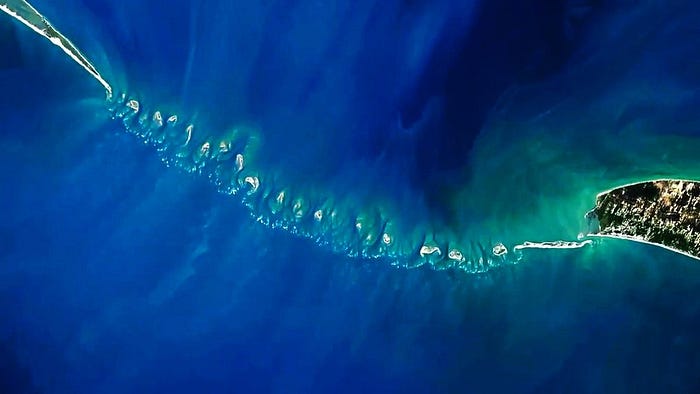
In 2007, NASA did a survey through photos taken by astronauts and claimed there in no conclusive evidence of the bridge being man made or existing.
In an interview with the Hindustan Times, NASA spokesmen Michael Braukus said
Some people have taken pictures by our astronauts to make their claim. No position can be taken on the basis of these photographs in any way
A documentary from the Science Channel, What On Earth makes a differing claim. The geology-centered series released a promo on Ram Setu in early 2018.
The promo video features several archaeologists and geologists who speak on the bridge and the possibility of it being man made. The video claims
that the rocks are 7,000 years old but the sand is only 4,000 years old
These claims have been heavily criticized in the archaeology and geology communities, calling this a misrepresentation of how science works.
As of December of 2022, the Archaeological Survey of India (ASI) will engage in an underwater survey of Ram Setu in an attempt to discover its true origins.
Continued Legacy
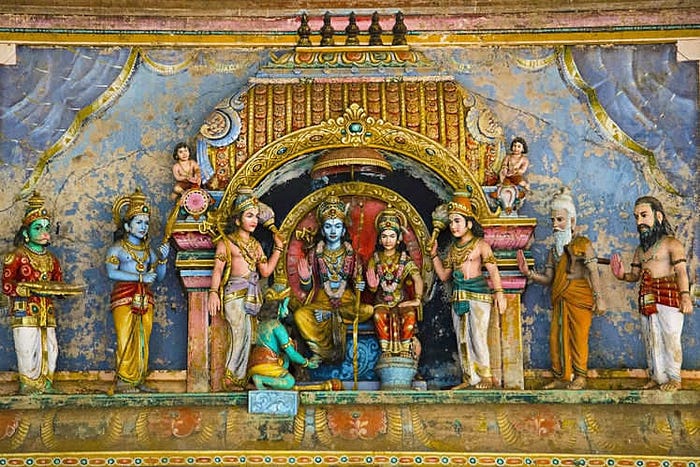
While the evidence of Ram Setu is still unclear, its significance today is anything but that.
Being one of Hinduism's most important epics, the Ramayana teaches millions of people across the world how they should live their lives.
Even if the archaeology of Ram Setu is never conclusive, its story will continue to spiritually guide endless generations.
Until next time…