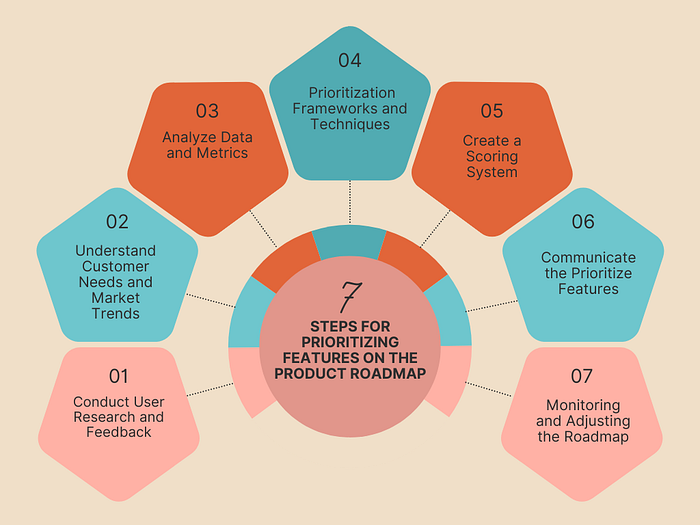

Creating a product roadmap is essential for ensuring that the right features are built at the right time, and prioritizing those features is crucial for success.
A product roadmap is a strategic document that outlines the direction and vision for a product over a specific time period. It serves as a guide for the development team, stakeholders, and other key players involved in the product's lifecycle.
Importance of prioritizing features
Prioritizing features on your product roadmap is essential for several reasons. First and foremost, it helps you align your product development efforts with your business goals. By identifying and focusing on the most important features, you ensure that you're delivering value to your customers and maximizing your return on investment.
Secondly, prioritization helps you manage limited resources effectively. As a product manager, you have to make tough decisions about which features to prioritize due to time, budget, or resource constraints. By prioritizing features, you can allocate your resources in a way that optimizes productivity and ensures that the most critical features are completed first.
Lastly, prioritization allows you to respond to market changes and evolving customer needs. The competitive landscape is constantly changing, and customer preferences can shift overnight. By regularly reviewing and updating your product roadmap based on customer feedback and market trends, you can stay ahead of the curve and deliver a product that meets the changing demands of your target audience.
Conducting user research and gathering feedback
To prioritize features effectively, it's important to have a deep understanding of your users and their needs. Conducting user research and gathering feedback is an essential step in this process.
Start by identifying your target audience and conducting user interviews, surveys, or focus groups. This will help you gain insights into their pain points, goals, and expectations. Additionally, gather feedback from your existing customers through feedback forms, support tickets, or social media channels. This will provide valuable information about their satisfaction levels and any feature requests they may have.
By combining user research and feedback gathering, you can gain a holistic understanding of your users' needs and align your product roadmap accordingly.
Understanding customer needs and market trends
Once you have gathered user research and feedback, it's time to analyze the data and identify patterns. Look for common themes and pain points that emerge from the user interviews and feedback. This will help you understand the core needs of your customers and prioritize features that address those needs.
In addition to customer needs, it's crucial to stay updated on market trends and industry best practices. Keep an eye on your competitors and the broader market to identify emerging trends and technologies. This will help you anticipate future needs and ensure that your product remains competitive.
By combining customer needs with market trends, you can create a product roadmap that not only meets current demands but also sets you up for future success.
Analyzing data and metrics
Data and metrics play a crucial role in the prioritization process. By analyzing quantitative data like user engagement, conversion rates, and customer satisfaction scores, you can identify areas of improvement and prioritize features that will have the greatest impact.
Start by setting clear goals and key performance indicators (KPIs) for your product. This will help you measure the success of different features and prioritize them accordingly. Use analytics tools and data visualization techniques to track and analyze the relevant metrics.
Remember to take a data-driven approach when making prioritization decisions. Let the numbers guide you and use them as evidence to support your choices.
Prioritization frameworks and techniques
There are several frameworks and techniques that can help you prioritize features effectively. Here are a few popular ones:
- MoSCoW method: This technique categorizes features into Must-haves, Should-haves, Could-haves, and Won't-haves. This helps you differentiate between critical features that must be included and those that can be deprioritized.
- Value vs. Effort matrix: This framework evaluates features based on their value to users and the effort required to implement them. Features with high value and low effort should be prioritized first.
- Kano model: This model categorizes features into basic, performance, and delight factors. It helps you identify features that are essential, expected, or could provide a pleasant surprise to your customers.
Choose a framework or technique that aligns with your product and organizational goals. Adapt and customize it as necessary to fit your specific needs.
Creating a scoring system
A scoring system can provide an objective way to prioritize features based on predefined criteria. Start by defining the criteria that are important for your product, such as customer impact, strategic alignment, technical feasibility, or revenue potential.
Assign weights to each criterion based on their relative importance. For example, customer impact might be assigned a higher weight than technical feasibility. Then, score each feature on each criterion and calculate a weighted score for each feature.
This scoring system will help you rank and prioritize features objectively, taking into account multiple factors.
Collaborating with stakeholders
Prioritizing features should not be done in isolation. It's essential to involve key stakeholders, such as product owners, developers, designers, and executives, in the process. Their input and perspectives can provide valuable insights and ensure that all relevant factors are considered.
Hold regular prioritization meetings or workshops where stakeholders can discuss and debate the merits of different features. Encourage open and transparent communication to foster collaboration and alignment.
Remember that prioritization is not a one-time event. It's an ongoing process that requires continuous collaboration and input from stakeholders.
Incorporating flexibility in the roadmap
While it's important to have a clear and structured roadmap, it's equally important to incorporate flexibility. Business needs and market conditions can change, and you need to be able to adapt quickly.
Build in buffers and contingencies in your roadmap to allow for unexpected changes or new opportunities. Consider using an agile or iterative approach that allows for frequent reassessment and reprioritization.
By incorporating flexibility, you can ensure that your roadmap remains relevant and adaptable to the evolving needs of your business and customers.
Communicating the prioritized features
Communication is key when it comes to prioritizing features on your product roadmap. Ensure that all stakeholders are aware of the prioritized features and understand the rationale behind the decisions.
Use clear and concise language to communicate the impact and value of each feature. Provide supporting data and insights to back up your decisions. This will help stakeholders understand and align with the prioritization choices.
Regularly update and share the product roadmap with relevant stakeholders. This will keep everyone informed and engaged, fostering a sense of ownership and shared responsibility.
Monitoring and adjusting the roadmap
Once you have prioritized features and communicated them to stakeholders, the journey doesn't end there. It's crucial to continuously monitor and evaluate the performance of the features on your roadmap.
Track the success metrics and gather feedback from users to validate the impact of the prioritized features. Analyze the data and make adjustments to the roadmap as needed. This iterative approach will help you learn from your decisions and make informed adjustments for future prioritization.
Regularly reassess and reprioritize features based on changing market conditions, customer feedback, and business goals. This will ensure that your product roadmap remains dynamic and aligned with your overall strategy.
Conclusion
Prioritizing features on your product roadmap is a critical task that requires a systematic and data-driven approach. By conducting user research, understanding customer needs, analyzing data, and using prioritization frameworks, you can ensure that your resources are allocated effectively and the most important features are built first.
Remember to involve key stakeholders, communicate the prioritized features, and regularly monitor and adjust the roadmap. Prioritization is an ongoing process that requires collaboration, flexibility, and continuous improvement.
By following this step-by-step guide, you can confidently prioritize features on your product roadmap and deliver a product that meets the needs of your customers and drives business success.