
On July 26, 1974, a twelve-year-old girl in Provincetown, Massachusetts was walking near the Race Point Dunes, when she heard a dog barking. Curious about what was going on, the young girl decided to follow the dog. She made a horrifying discovery — the body of a decomposing woman.
The woman had been found a few yards from the road. The police estimated that she had likely been dead for about two weeks before her remains had been discovered. This estimation was determined, because the woman had been partially decomposed, and there was insect activity on her remains.
Because the unidentified woman's body was discovered at the Race Point Dunes, she was dubbed 'The Lady of the Dunes'. She had also been given the nickname 'Provincetown Jane Doe'.
Jane Doe had been lying facedown on the beach blanket, and the police believed that she might have been asleep when she had been killed. And it was possible that she had known her murderer. The woman had been 5ƌ, with long red hair tied back in a gold-flecked elastic ponytail. She'd had pink nail polish on her toenails. The unidentified woman had a blue bandana, and a pair of Wrangler jeans bundled up underneath her head. She had weighed 145 pounds, and had been quite athletic. The police were unsure how old the woman was, theorizing that she could be anywhere between twenty to forty years old. She'd had a great deal of expensive dental work done, which was estimated to be about five to ten thousand dollars worth. She'd had multiple crowns.
The authorities investigated the woman's murder, and determined that the official cause of death was blunt force trauma. One side of Jane Doe's head had been crushed, with what was believed to be a military entrenching tool. She had nearly been decapitated, which was possibly from being strangled before her death. She had also possibly been sexually assaulted after her death.
Jane Doe's remains was incomplete. At the time of her death, the woman had had multiple teeth removed by her killer. She was also missing a forearm, and both hands. The police suspected that the missing body parts were because the murderer had tried to hide the woman's identity. That way, the authorities wouldn't be able to identify her through dental records, or fingerprints.
The police worked hard on trying to identify 'The Lady of the Dunes'. They scoured missing persons cases from the local area, in hopes that one of them might fit the description of the Jane Doe. But unfortunately, they couldn't find a match. A few cases had sparked their interest as potentially being their Jane Doe, but none of them matched.
When the police had studied the area, they'd found a set of tire tracks fifty yards from the woman's remains, and there had also been two sets of footprints leading to the woman's body. The police tried to find out what vehicles had been in the area at the time of the woman's murder. They knew that a vehicle had been there recently, as they believed that the tracks were likely from the killer. But though the police had hoped to learn either Jane Doe's identity, or find out who killed her, they were unsuccessful.
Though at first the police believed that Jane Doe had died on the scene — and had possibly been sleeping when she'd been murdered — they had begun to theorize that Jane Doe had been murdered elsewhere, and her body transported to the dunes afterwards. This idea came about because when the police had studied the crime scene, they noticed that the sand appeared to be undisturbed, as was the beach blanket that she had been lying on. This led them to believe she may have been moved to the site after her death.
There had only been a few articles of clothing found on the scene (such as her ponytail, jeans, and bandana), but no other evidence was found anywhere near her body. All of this led the police to believe that she was murdered elsewhere, and left on the scene. Maybe the killer had left her so close to the road, believing that she would be found much earlier — as she hadn't been discovered until about two weeks later.
The police had not been able to identify the deceased woman, and her case had gone cold. In October 1974, the Provincetown Jane Doe was buried. She had been buried in a metal casket, though it would eventually rust because the metal was extremely thin. In 2014, one of the investigators who were looking into Jane Doe's case decided to raise enough money to get Jane Doe a new casket — one that would be able to properly hold her remains better.
In 1979 (five years after the unidentified woman's remains were discovered), a clay model was made of the woman's features, as the first attempt at reconstructing her face to try and identify her. In 1980, her remains were exhumed. They were unable to learn her identity at the time, and Jane Doe was reburied (her skull was not buried at that time). This would be the first of three times that her remains would be exhumed. She would be exhumed in 2000, and then again in 2013. DNA samples were taken from her remains the second time she was exhumed.
In May 2010, NCMEC (National Center for Missing and Exploited Children) used a CT scan of Jane Doe's skull, and were able to make another reconstruction in hopes that someone might recognize the deceased woman. The exhumations occurred because the authorities wanted to positively identify the woman. She had been dead for decades, and the police still had no idea about the woman's identity. Someone out there would hopefully recognize the woman, and be able to finally solve the decades-long mystery.
Over the years, the police followed up a great deal of tips from the public, as people reported information that they thought might be pertinent in the case. One instance of this, was when a Canadian woman reached out to the police because she believed that she knew something about Jane Doe's case. In 1987, she told the authorities that she had witnessed her father strangle a woman back in 1972. The police were greatly interested in the woman's story, and they tried to contact her. Unfortunately, they were unable to locate her, and her story was not able to be properly looked into.
The police received information from another woman, who suspected that the Jane Doe might be her missing sister. Her sister had been missing from Boston, since 1974. The police looked into it, but then they continued looking at other possibilities.
The police believed that there was a potential connection between Jane Doe, and criminal Rory Gene Kesinger. Rory had been an inmate at a Plymouth, Massachusetts prison, who had escaped in 1973 with the help of one of the guards. Rory Kesinger went by a variety of different aliases, and has never been caught. The police suspected that maybe Rory was 'The Lady of the Dunes', because she physically resembled the Jane Doe. But ultimately, Rory Kesinger was ruled out, when her mother's DNA sample was compared against the DNA of the Provincetown Jane Doe.
The police had investigated two other missing women, as there was a possibility that either of them were the 'Lady of the Dunes'. The first woman, was Francis Ewalt, from Forsyth, Montana. Twenty-four-year-old Francis had disappeared in August 1973, after attending Agate Bar with one of her friends. She was a mother of three boys. Francis had left that night to go visit her brother, but she never arrived. Her family has never heard from her since that night, and the police believed she was a victim of foul play.
The second woman that the police had investigated, was Vicke Lamberton, from Massachusetts. In February 1974, Vicke had made plans to meet up with her husband, who she had separated from six weeks prior. She'd told him that they'd meet up after her weekend trip to Maine with some of her friends. But when Vicke never showed up for their dinner, her estranged husband became concerned, and started calling around. Vicke's friends told him that there had been no planned girls trip to Maine, and they had no idea where she was.
Vicke had liked changing her appearance, often alternating between brunette, blonde, redhead. She would sometimes wear glasses, and had allegedly told her husband that she wanted to darken her skin at one point, to try and 'look more black'. Vicke had also told her husband at one point that she 'wanted to go someplace where nobody knows who I am'. Though she was from Kansas, she would often lie and say she was from Colorado.
Though the police had investigated both Francis Ewalt, and Vicke Lamberton as potentially being the 'Lady of the Dunes', both women were eventually ruled out.
In August 2015, a rumour began that the unidentified 'Lady of the Dunes' had been an extra in the film 'Jaws'. The film had been filmed between May to October 1974 (on Martha's Vineyard, about 100 miles from Provincetown). Stephen King's son, Joe Hill, had contacted the police about the potential connection to the Jane Doe case. In the movie, one the scenes showed a woman wearing jeans and a blue bandana — the same outfit as the 'Lady of the Dunes'. Was it possible that the woman had been hired as an extra in the shark film before her death? Or was it just someone that looked similar? The authorities had mixed thoughts about this possible connection. Though there were some that thought it might be the same woman, others thought that it was 'wild speculation', and completely illogical.
In 2022, the authorities took a DNA sample from Jane Doe's remains, and had it sent to the Othram labs, so that she could potentially be identified. Over the years, DNA technology had improved. And with genetic geneaology, a person's identity could be obtained after years of being unidentified, as the lab would compare the DNA sample against all the people in their databases. And hopefully, they would be able to find a match, and be able to narrow down the relatives, until they find out the Jane or John Doe's identity.
The decision to send her DNA sample to Othram paid off, because on October 31st 2022, the Boston FBI office made an official announcement. They had finally identified 'The Lady of the Dunes'. She had been thirty-seven-year-old Ruth Marie Terry. And on August 28, 2023, the FBI announced that they also knew who had killed her. Ruth's murderer had been her husband, Guy Muldavin.
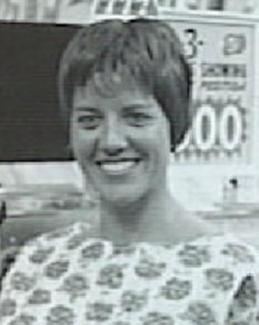
Ruth Marie Terry had been a Jane Doe for 48 years, 3 months, and 5 days. After so many decades of being unidentified, her identity was finally known to the world. Finally, her loved ones would know what had happened to her.
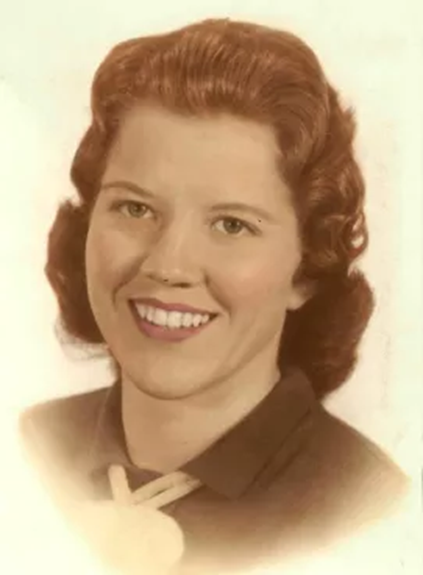
Ruth Marie Terry was born on September 8, 1936, in Whitwell, Tennessee. She was born at home, in a shack on the mountain. Ruth's parents had been Johnny and Eva Terry. Tragically, Ruth's mother died at age twenty-three.
Ruth had married young, to a man named Billy Ray Smith. The marriage didn't last long. In 1957, Ruth went to Livonia, Michigan to start working at the Fisher Body auto factory. In 1958, Ruth gave birth to her son, Richard. But she struggled to financially support herself and her infant son as a single mother, and she ended up adopting him out. Ruth's boss, Richard Hanchett Sr., adopted her baby, and in exchange, he paid for her living expenses. Once the adoption went through, she decided to leave Livonia, and relocated to California.
Ruth had stayed out of her son's life during that time, and he was raised by his new parents. In 1972, Ruth decided that she wanted to reach out to her teenaged son. But Richard was in a bad way. He was a drug user who had recently overdosed, leaving him in a coma for eighteen days. Richard told her that he wasn't ready to meet his biological mother, and she respected his wishes.
On February 16, 1974, Ruth got married for the second time. Her new husband was Guy Rockwell Muldavin. Their marriage didn't last long, and Ruth was unhappy. Shortly after their wedding, Ruth and Guy went to Whitwell, Tennessee, to visit her relatives. One of the people that they visited, was Ruth's grandniece, Brittanie Novonglosky. She noticed that when Ruth was alone, she seemed fine. But whenever she was with Guy, it was a very different matter. Guy was extremely controlling, and he acted extremely possessive towards her.
Once they had left Whitwell, Guy and Ruth travelled to Chattanooga to visit Ruth's half-brother, Kenneth. He and his wife, Carole, remembered that during their visit, Guy and Ruth had said they were going to travel around the states to buy some antiques. Guy had mentioned that they would be travelling to Massachusetts at some point.
A few months later, in summer 1974, Guy travelled to Tennessee. This time, Ruth was not with him. Her family began to ask questions about why Ruth wasn't with him, and Guy informed them that she had gone missing from their home in California. This was unexpected news, and Ruth's family didn't know what to think. Her family pressed him for more details, needing to know where Ruth had gone. But he was less than forthcoming. Guy told them that he didn't know where Ruth was. Ruth's sister-in-law, Jan Terry, remembered that Guy Muldavin only stayed for a short while.
Ruth's brother, James, decided to take the initiative, and hire a private investigator in California. He was determined to find his sister. The PI did some investigating, and told James that his sister had decided to leave California of her own free will after joining a religious cult. Ruth had apparently sold off all her stuff. It was disappointing to Ruth's family, because they had been hoping for better news. Carole had a theory that Ruth was in the witness protection program, which was why she couldn't reach out to her family members. Because her family was not able to locate Ruth, she was listed as dead in family obituaries.
Ruth's second husband, Guy Muldavin, was an antiques dealer from Reno, Nevada. He was born on October 27, 1923. Orphaned at a young age, he had been adopted by Abram Albert Zadworanski Muldavin, and Sylvia Silverblatt. He had a brother named Michael Semyon J. Muldavin.
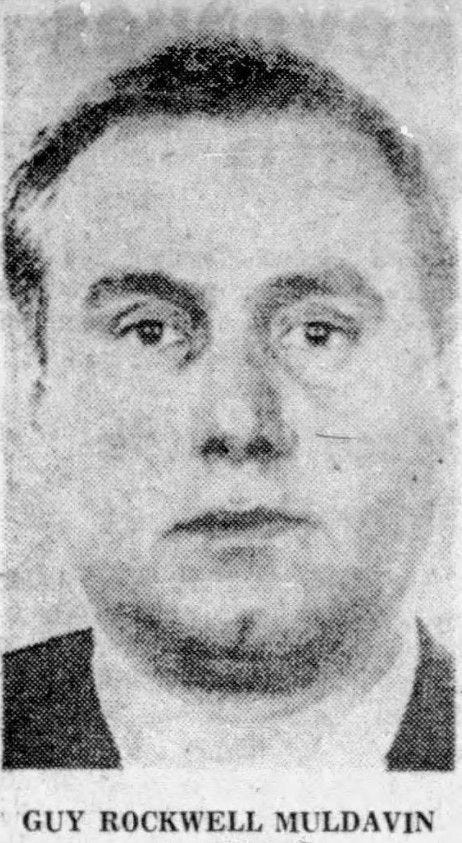
Guy had moved to New York City in 1942, and went to the 'American Academy of Dramatic Arts'. Though he had been in the military during WWII, he was pushed out because of a mastoid infection. Guy became a professor, and in 1946, he got married to Joellen Mae Loop in Bellevue, Pennsylvania. They moved around the states, living in California, New York, and Seattle. Guy worked as a DJ during this time. They divorced in July 1956.
Guy married two years later, to Manzanita 'Manzy' Aileen Ryan, in Kootenai, Idaho. She had a daughter from a previous marriage (eighteen-year-old Dolores Ann Mearns). Both Manzy and Dolores disappeared from Seattle, on April 1st, 1960. The police believed that Guy Muldavin was responsible for both women's disappearances. Muldavin was aware that the police were looking into him, and so he decided to leave Seattle. The FBI arrested him, and Guy was charged with unlawful flight — and was able to avoid testifying about Manzy and Dolores' whereabouts.
At one point, the police had searched Guy's house — and they made a horrifying discovery. His septic tank had contained body parts that the authorities suspected belonged to Manzy Ryan, and Dolores Mearns. Even though they had found these body parts, Guy Muldavin was not charged. The King County prosecutor said that the reason being, was because they didn't have a body.
Within a few months (on July 29, 1960), Guy Muldavin married Evelyn Marie Emerson. He ended up in legal trouble, for stealing ten thousand dollars from his wife's family. In 1961, Muldavin was charged with larceny, and given a fifteen-year prison sentence. However, he was given the option to stay out of jail — so long as he promised to repay the money at some point. He actually married Evelyn twice; the second time was in August 1963.
Guy Muldavin was also the prime suspect in a double homicide that took place on June 17, 1950 (in Humboldt County, California). Henry Lawrence 'Red' Baird, a twenty-eight-year-old bread truck driver, had gone out on a date with his girlfriend, seventeen-year-old waitress Barbara Joe Kelley. The day after their date, Red Baird's body was found facedown on the beach near Table Bluff. He was naked, except for his shoes and socks — and Baird had been shot in the back of the head. The police found that Red Baird's clothes, and Barbara's clothes had all been carefully folded in a neat pile. The only items that were missing, were Barbara's shoes, and stockings.
And as for Barbara Kelley? She went missing that night, and has never been seen or heard from again. The police had suspected that Baird's killer, had kidnapped Barbara that night, and took her with them.
A few years after Barbara's disappearance, a man named Gayle Patrick Irish confessed to killing the young couple. However, the police doubted Irish's story when he was unable to take them to the area where he claimed to have dumped Barbara's body. The logging road that he'd told them about was a real place, and it was extremely overgrown in the years since Barbara had gone missing. When he had been initially arrested, Irish had a hunting rifle in his possession. But the gun had gone missing at some point in the investigation, and couldn't be compared to the bullets from the crime scene in 1950. Ultimately, Irish was never charged with the murders, because the authorities didn't have enough evidence against him.
In 1976, Guy Muldavin moved to Chualar, California. He lived there for years, eventually retiring from his executive vice president position at a silver store, in Beverly Hills. He continued to work on a volunteer-basis, at Pacific Grove's 'KAZU' radio station. He did a three-hour weekly call-in show that talked about 'aging, growing, and making transitions' as the topic of choice. Guy had also worked at one point, at a tobacco store in Carmel.
Guy Muldavin was never arrested for Ruth Terry's murder, because he eventually became ill, and he died at home on March 14, 2002. He had been seventy-eight-years old. At the time of his death, Guy had been married to Phyllis Smirle Muldavin, an art professor.
SOURCES
https://en.wikipedia.org/wiki/Murder_of_Ruth_Marie_Terry
https://uncovered.com/cases/ruth-terry-provincetown-ma
https://int-missing.fandom.com/wiki/Rory_Kesinger
https://charleyproject.org/case/frances-collier-ewalt
https://theworcesterguardian.org/f/50-years-later-the-disappearance-vicke-lee-lamberton