


On June 22, The New Yorker published the execrable essay "Just How Racist Was Flannery O'Connor?" by Paul Elie. The essay is pure race-bait meant only to stoke trouble and earn its author progressive plaudits for claiming the scalp of a revered figure in American letters. The hatchet job even abuses its primary source, Angela Alaimo O'Donnell's recent study Radical Ambivalence: Race in Flannery O'Connor—so much so that O'Donnell felt compelled to savage Elie in an article for Commonweal:
Elie mines the book for what he refers to as "nasty" passages, removes them from the historical and personal context necessary for understanding them, and presents them to the New Yorker readership with little explanation, all as evidence of O'Connor's American sin of racism. The problems with his essay are many. It is confusing, it is irresponsible, and it is an attempt to make the erroneous claim that he is the only critic ever to deal frankly with O'Connor's complex attitude toward race. Critics have been wrestling with this since the early 1970s. Readers of Elie's essay are never informed of this. There is, in short, nothing new or notable in what he presents.
The essay had the desired effect: Twitter immediately lit up with rote denunciations of O'Connor. Certain professors of literature suggested her work no longer be taught. The spineless Jesuits of Loyola University Maryland even stripped her name from a dormitory. In short, a mob of woke white people mobilized to "cancel" a disabled Catholic woman famous for interrogating and denouncing through art the racism she observed in her culture and in herself.

If you want to cancel Flannery O'Connor, fine. But be consistent. Universalize your parochial presentism. Apply that same ludicrous standard to all of literature and scholarship. Burn the libraries and smear barbarian runes on your face with the ashes. Dance like bacchantes. Drink human blood from a ram's horn and howl at the system.
I'll even help you. Here's a list, in no particular order, of some of the less obvious monsters secreted away in our canon, together with brief descriptions of their sins. Root out these racists, anti-Semites, murderers, Nazis, pedophiles, and rapists, and do your worst.
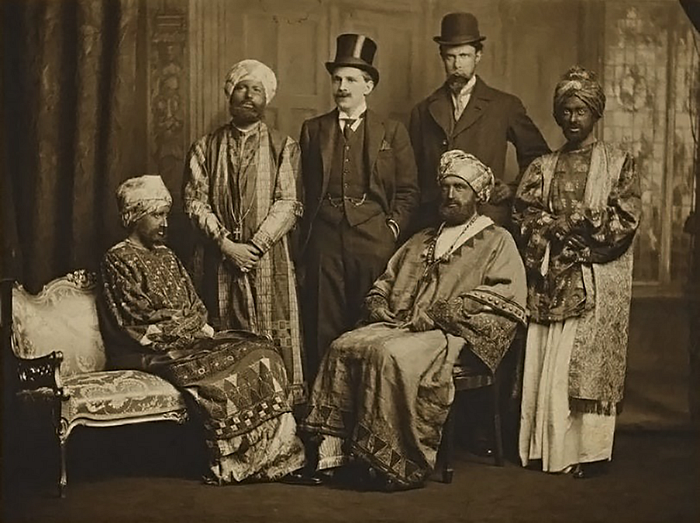
Virginia Woolf
A paragon of literary modernism beloved for her subversive queerness and contributions to feminist thought, the author of Mrs Dalloway was also a virulent anti-Semite — this despite having married a Jewish man. Oh, and she also wore blackface and spoke in gibberish to impersonate the retinue of the Emperor of Abyssinia (Ethiopia) during a famous prank on the British Navy by members of the Bloomsbury group.
Michel Foucault
Foucault was the 20th century's most influential thinker in the social sciences and humanities — with nearly one million citations in academic literature, according to Google Scholar. He also advocated for pedophilia. From The Atlantic: "In a radio interview in 1978, Michel Foucault said of sex with minors that assuming 'that a child is incapable of explaining what happened and was incapable of giving his consent are two abuses that are intolerable, quite unacceptable.'" Even worse, Foucault murdered any number of men by knowingly infecting them with HIV. He even attempted to justify his homicidal behavior with his theory of the "limit experience."
Dr. Seuss
Before he became an icon, Theodor Seuss Geisel published astonishingly racist political cartoons and advertisements.
Charles Darwin
Despite his notional belief in abolition, Darwin believed whites were more evolved than "savage races," whom they would—as an unfolding of natural selection—"exterminate and replace." Oh, and he was a eugenicist: in The Descent of Man, he muses that it would be best to simply let the weak die.
Laura Ingalls Wilder
In Little House on the Prairie, Wilder's characters employ the phrase "The only good Indian is a dead Indian" several times. The American Library Association (ALA) even dropped Wilder's name from its children's literature award over her "dated cultural attitudes toward Indigenous people and people of color."
Allen Ginsberg
Perhaps the quintessential beat poet and a tireless champion of gay liberation, the author of "Howl" was also a pedophile and active member of the North American Man/Boy Love Association (NAMBLA).
Mary Wollstonecraft
In her revered classic, A Vindication of the Rights of Women, Wollstonecraft repeatedly analogizes the plight of white women to that of black slaves.
Oscar Wilde
A writer of unparalleled wit—The Importance of Being Earnest, The Picture of Dorian Gray—Wilde was an enthusiastic, even rapacious, pederast. An oft-ignored example of his wit: "Little boys should be obscene and not heard."
Walt Whitman
The most American of poets was, like Wilde, also a pederast who practiced his "boy love" right to the end of his life. By some accounts, he was even tarred and feathered and run out of Long Island for trifling with one of his male students.
Simone Beauvoir
Before penning The Second Sex and becoming an international feminist icon, Beauvoir was a Nazi collaborator — a Vichy propagandist, to be precise. She was also not merely an advocate of pedophilia, but a pedophile herself (she was even fired from a teaching position for "behavior leading to the corruption of a minor"). Moreover, she groomed young women, even minors, to have their virginity taken by her walleyed lover, Jean-Paul Sartre. In other words, she was the Ghislaine Maxwell of post-war French intellectualism.
Jean-Paul Sartre
Aside from his appetite for young women, particularly his students, the famous French philosopher and novelist advocated for the abolition of age of consent laws — as did so many left intellectuals of his time.
Edith Wharton
The author of The House of Mirth was quite mirthless when it came to the Jews. "Edith Wharton was vehemently anti-Semitic, even by the standards of her milieu and her era," writes Francine Prose. On her deathbed, Wharton claimed "she 'hated the Jews' because of the Crucifixion."
Roald Dahl
The beloved children's author (Charlie and the Chocolate Factory, Matilda, The BFG, James and the Giant Peach) was also an unrepentant, even proud, anti-Semite.
Gore Vidal
The cantankerous literary provocateur famously feuded throughout his life with William F. Buckley, founding editor of National Review. Vidal was also involved in the founding of NAMBLA and, according to his sister and nephew, quite likely a child molester. He was also fond of blaming victims of sex abuse. Asked about his opinion on Roman Polanski's raping of a 13-year-old girl, Vidal said: "I really don't give a fuck. Look, am I going to sit and weep every time a young hooker feels as though she's been taken advantage of?"
Charlotte Perkins Gillman
Despite occasionally espousing progressive views on race, the feminist author was also a social Darwinist, a member of eugenics and nationalist organizations, and opposed immigration (as means to safeguard white Protestant supremacy). She even wrote an essay in the American Journal of Sociology titled "A Suggestion on the Negro Problem," which proposed ways to remove black Americans from the country. At least one scholar has argued that her classic short story "The Yellow Wallpaper" is imbued with racist paranoia.
If you're going to Mao up the canon, don't half-ass it. Really get in there. Don't rest until every last one of your heroes who ever thought a single thought on the wrong side of history is not only dead—but forgotten. And don't delay: time is short, justice is impatient, and you have a lot of reading to do.
Or you could, you know, get therapy.