
Introduction
Most people think financial bugs need complex logic, deep crypto flaws, or advanced exploitation techniques.
But sometimes… all it takes is speed.
While reading older HackerOne reports, I found a fascinating vulnerability reported by cablej (Report ID #429026). The bug was not in payments, not in banking APIs, and not in authentication.
It was in a retest confirmation feature.
By sending the same request multiple times at the exact same moment, the system paid the researcher more than once for a single retest.
- No alerts.
- No warnings.
- No immediate detection.
And after two weeks, real money appeared in the bank account.
HackerOne paid $2,500 for this report — and deservedly so.
Let's break it down step by step in very simple language.
Report Overview:
- Report ID: 429026
- Reported By: cablej
- Bounty Paid: $2,500
- Vulnerability Type: Race Condition
- Affected Feature: Retest Confirmation & Payments
What Is a Race Condition? (Simple Explanation)
A race condition happens when:
The server processes multiple requests at the same time, without properly checking if the action was already completed.
In short:
- The system assumes only one request will arrive
- The attacker sends many requests together
- The server gets confused
- The same action happens multiple times
Think of it like this:
- You press the "Pay" button once
- The system gives money
- You press it 5 times at the same moment
- The system pays 5 times
That's exactly what happened here.
The Vulnerable Feature: Retest Payments
HackerOne allows researchers to:
- Request retests
- Confirm retests
- Receive payment for successful retests
The payment is triggered when the researcher confirms the retest.
The mistake:
- HackerOne did not properly lock the payment action
- It trusted that the confirmation would be sent only once
Step-by-Step Exploitation
Step 1: Receive Retest Email
The researcher first received a retest request email from HackerOne.
This email contained a link that triggers the retest confirmation request.
Step 2: Intercept the Request
Using Burp Suite, the researcher:
- Clicked the retest confirmation link
- Intercepted the HTTP request
- Right-clicked it
- Selected "Copy as curl command"
Now the request could be replayed from the command line.
Step 3: Send Multiple Requests at Once
Here is the clever part
Instead of sending the request once, the researcher ran:
(request) & (request) & (request) & (request) & (request)This sends multiple confirmation requests simultaneously.
- No delay.
- No waiting.
- All at the same time.
Step 4: Check Payments Page
After sending the requests, the researcher visited:
https://hackerone.com/settings/bountiesAt the bottom of the page, under Retest Payments, the same payment appeared multiple times.
This already confirmed the bug visually.
Step 5: Wait (The Scary Part)
Nothing happened immediately.
- No error.
- No warning.
- No rollback.
After two weeks, a message arrived from HackerOne staff.
Then the researcher checked the bank account.
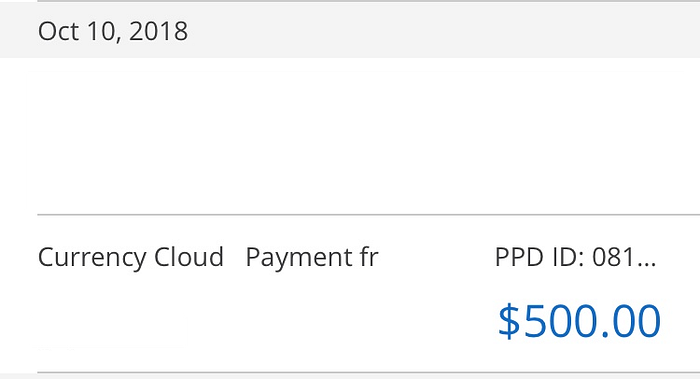
$500 was paid multiple times
This proved the race condition worked in real life, not just UI-level.
Impact Analysis
This bug was extremely dangerous.
Why?
- Direct financial loss
- No immediate detection
- Exploitation could remain hidden for weeks
- Could be repeated multiple times
- Payment systems were affected
An attacker could:
- Trigger multiple retests
- Confirm them rapidly
- Collect money quietly
- Repeat the process again later
That's why HackerOne treated this as high-impact.
Root Cause
The backend failed to:
- Lock the retest confirmation process
- Ensure idempotency (only one payment per retest)
- Check if the retest was already paid
- Reject duplicate simultaneous requests
In short:
No server-side protection against concurrency
How This Could Have Been Prevented
HackerOne could have prevented this by:
- Using database locks
- Adding a "paid" flag check
- Rejecting duplicate confirmations
- Using atomic transactions
- Enforcing one-time tokens
These are basic backend protections for money-related actions.
How Bug Hunters Can Find Similar Bugs
Look for features involving:
- Payments
- Rewards
- Credits
- Wallets
- Refunds
- Coupons
- Retests
- Subscriptions
Then test:
- Sending the same request in parallel
- Using & in curl
- Using Burp Intruder (Pitchfork / Turbo Intruder)
- Sending rapid duplicate requests
If money or credits are involved always test race conditions.
Final Thoughts
This report proves one important lesson:
You don't always need complex payloads to find serious bugs.
Sometimes
- One request
- Sent faster
- Than the server expects
…is enough to steal real money.
That's why race conditions are:
- Hard to detect
- Easy to miss
- Extremely dangerous
And that's exactly why this bug earned $2,500.