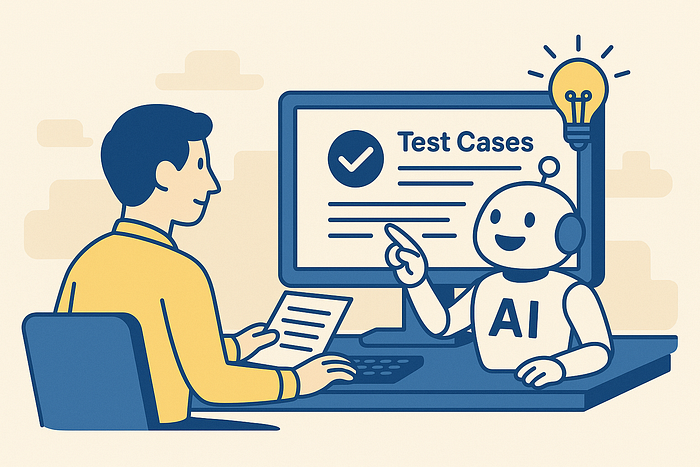
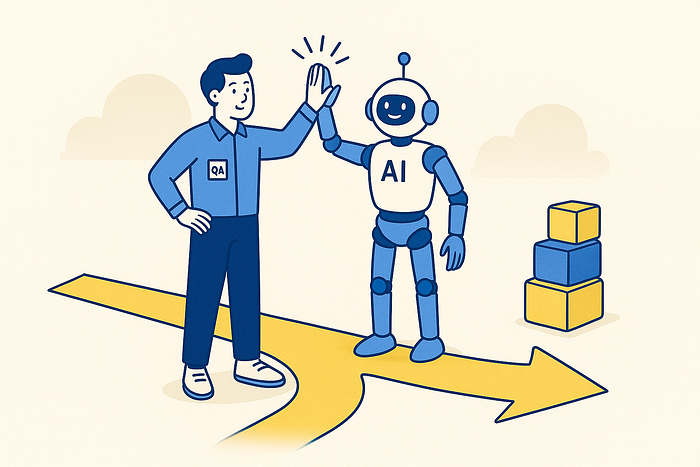
AI won't replace QA.
But QAs who can use AI will replace those who can't.
Right now, there's a storm of hype around artificial intelligence (AI). Some QA engineers expect it to take over their entire job overnight, while others dismiss it as just another buzzword. The truth lies somewhere in between — and if you're a QA engineer wondering whether to fear, ignore, or embrace AI, this article could help you understand more context.
Let's separate fact from fiction and see what AI really means for QA today.
The last two years have been a turning point for AI in software development. Tools like ChatGPT, Copilot, and TestRigor promise to generate test cases, automate scripts, and even analyze bugs. For many QA engineers, this raises a scary question: "Will AI make me obsoleted?"
The reality: AI is not here to replace QA. It's here to change how QA works.
Instead of clicking through test cases all day, QAs now have a chance to use AI to accelerate repetitive tasks, surface insights faster, and focus on higher-value work like risk analysis and exploratory testing.
But here's the catch: AI is far from perfect. It can suggest, generate, and assist, but it cannot take ownership of quality. That's still the human QA's job.
This article is the first step in my "AI in QA: The Practical Stacks" series. I'll start by answering a simple question: What can AI actually do for QA today, and where does it still fall short?
What AI Can Do Today in QA
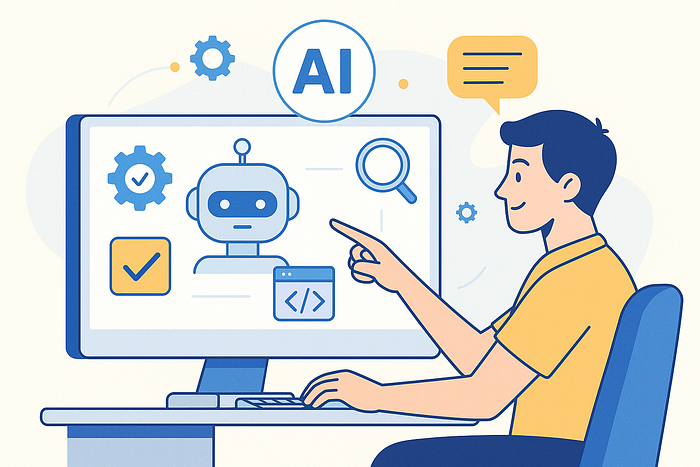
AI shines when it comes to speed and assistance. It's like having a junior QA who never gets tired of drafting, generating, or analyzing. Here are the areas where AI is already practical and reliable:
Requirement comprehension
AI can scan user stories or acceptance criteria and highlight ambiguities. Example: Feeding a JIRA ticket into an LLM to spot unclear terms like "fast response" or "user-friendly."
Test data generation
Need thousands of synthetic emails, names, or edge-case inputs? With just one prompt, AI can create realistic datasets instantly.
Test case suggestions
AI can draft test cases based on requirements. With the proper prompt, these drafts help QAs brainstorm faster. Example: "Generate 10 boundary test cases for a password field: min 8 chars, max 15 chars, and each password must include at least 1 number and 1 special character."
Automation code scaffolding
QAs can ask AI to generate boilerplate scripts in Playwright, Cypress, or Postman. This saves setup time and gives a quick starting point.
Defect log analysis
AI can cluster repetitive logs, analyze patterns in failed test runs, and even suggest likely root causes.
Documentation support
Summarizing test runs, creating release notes, or drafting QA reports — AI can cut hours of manual writing down to minutes.
Think of AI as your test accelerator, not your replacement. It can help you 60–70% of the task, and you bring the judgment to finish the job.
What AI Can't Do (YET) in QA
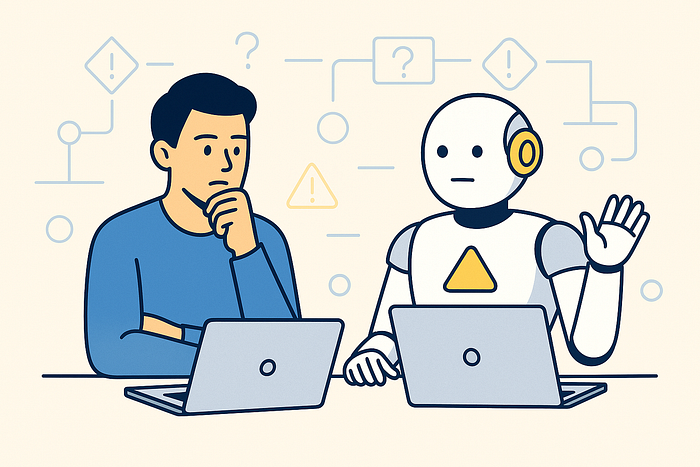
While AI is powerful at generating and assisting, there are clear limits. These are the areas where human judgment and expertise are still irreplaceable:
Own accountability
AI doesn't understand business priorities or release risks. It can suggest hundreds of test cases, but it can't decide which ones align with your product goals.
Exploratory intuition
Exploratory testing requires curiosity, creativity, and "what if" thinking. AI can mimic patterns, but it can't replicate a tester's instincts when something "feels off."
Complex automation maintenance
AI can scaffold code, but when the framework evolves or third-party systems behave unpredictably, only a skilled QA knows how to stabilize and refactor.
Contextual prioritization
Not every defect is equal. AI may flag dozens of issues, but it won't know which one would break the checkout flow and cost the business revenue tomorrow.
Full autonomy
Left on its own, AI can hallucinate results, miss critical edge cases, or generate brittle scripts. Without human oversight, the cost of false confidence is high.
Treat AI as a co-pilot, not an auto-pilot. The responsibility for quality stays firmly in the hands of the QA engineer.
Mindset Shift for QAs
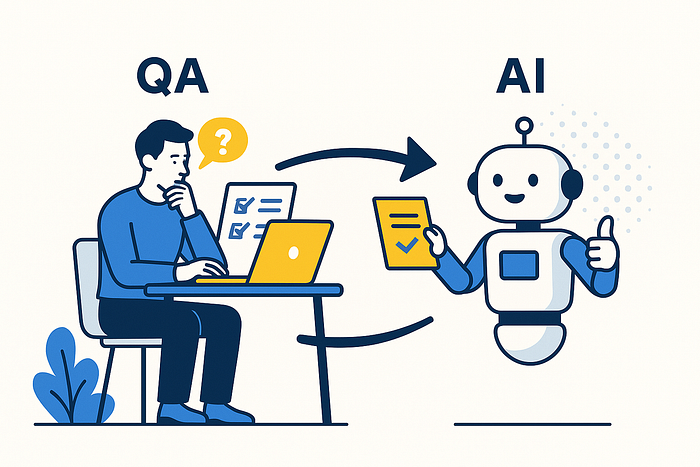
For many testers, AI feels like both a shortcut and a threat. But the truth is: the future belongs to QAs who know how to utilize it.
AI accelerates, QA validates, Humans decide what matters.
Instead of worrying about AI taking your job, start thinking of it as your assistant — a co-pilot that can handle the repetitive, time-consuming work while you focus on higher-value tasks:
- Asking the hard questions that uncover product risks.
- Designing test strategies aligned with business goals.
- Bringing creativity to exploratory testing sessions.
If you shift your mindset from "AI will replace me" to "AI will amplify me," you'll not only stay relevant but you'll become indispensable.
Treat every AI feature as a tool in your QA toolbox, not the toolbox itself. The quality mindset is what makes the difference, and that's still 100% human.
Conclusion & Next Steps
AI won't own quality — humans will.
Today's AI is excellent at acceleration: drafting test cases, generating data, scaffolding code, and clustering failures. But it still lacks what makes QA invaluable: judgment, prioritization, and ownership of risk.
If you adopt AI as your partner, you'll spend less time on repetitive work and more time doing what matters: designing smart tests, clarifying requirements, and guiding release decisions with confidence.
1 Sep 2025
Coming next in this series: AI for Test Data