
"Data is the hidden force behind gut feelings"
When I recently Googled my name, I was surprised to find pictures of me in my early farming days. Although I still consider myself a farmer, those photos took me back to a few years ago, when I decided to leave my first job and fully commit to farming.
Unlike traditional farming, though, I ventured into the advocacy side, inspired by the unique stories of African farmers — their resilience, dedication, and, at times, the challenges that stemmed from misinformation or lack of access.
I took on the role of running a community of farmers, both online and offline. I loved the opportunity to connect with them, learning firsthand about their struggles and triumphs.
Farming in our country, where labor shortages, access to market information and high production costs remain constant issues, is not for the faint-hearted.
I've witnessed farmers losing entire fields to unforeseen floods, while others have turned around and made incredible profits, buying their first cars from a single crop cycle.
What made the difference? Often, it was access to the right market.
This realization led me to create Anziasokoni, a market-driven farming initiative designed to empower farmers with vital market information and skills.
Through this initiative, I encouraged farmers to see their farms as enterprises.
In the same way a CEO or COO would manage a company, farmers must understand their consumers and learn how to "sell" their products.
Farming isn't just about planting and harvesting; it's about positioning and knowing when and where to enter the market.
I emphasized to them that soft skills apply here too — networking and collaboration can be the lifeblood of a farming business.
I saw the difference it made when farmers connected, shared resources, and helped each other navigate the various stages of production and sale.
A significant part of what I taught through Anziasokoni was the importance of data — but at that time I didn't know.
Often, when we think of "data," we picture endless rows and columns in spreadsheets, used by corporations to predict sales trends or optimize production processes.
But I showed farmers that data, in a more familiar form, has always been at the core of small-scale farming. What many of them call "experience" and "gut feeling" is, in fact, their own form of data analytics.
After each harvest, farmers gain insights — lessons learned from what went well and what didn't.
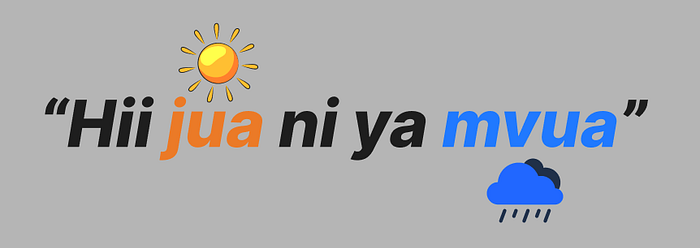
For generations, farmers have used "Hii jua ni ya mvua" to predict weather, heavily relying on seasonality and trends.
Though most of this knowledge isn't written down, it's a powerful demonstration of data in action.
Farmers know how long onions or tomatoes take to mature, when to plant to meet market demand, and the optimal timing for pesticide application. They maintain a 360-degree understanding of their crops, formed from years of observations and, yes, data.
Reflecting on my journey, I now see how data has always been the engine behind these insights. Data is what fuels our gut feelings, informs our instincts, and shapes the wisdom that we pass down.
Even without spreadsheets or technical terms, farmers have been using data to make decisions for centuries.
How data compliments gut feeling
Often, stakeholders rely on gut feeling and domain experience to make decisions. What they may not realize is that gut feeling is built on data — though it's data that hasn't been formally documented.
When data and gut feeling are combined, they create a balanced approach that can improve accuracy, confidence, and agility in decision-making.
- Data provides evidence for intuition
Gut feeling is often based on subconscious recognition of patterns from past experiences. Data can validate or refute these intuitions by providing objective evidence.
For instance, if someone has a hunch that sales will increase during a specific season, historical sales data can support this assumption, lending credibility to the intuition.
2. Data enhances creativity and risk-raking
Data shows trends and probabilities, but gut feeling often brings creativity and the willingness to take calculated risks. Intuition can lead to innovative ideas, and data can help refine and evaluate these ideas to understand their feasibility and potential impact.
3. Data speeding up decision-making
When quick decisions are needed, gut feeling can act fast, but it risks being biased. Data can streamline gut-driven decisions by adding essential information to help make faster yet informed choices.
For instance, if a company feels a need to shift product strategy due to market changes, data can quickly confirm if such a pivot aligns with current trends.
4. Data minimizing bias and overconfidence
Human intuition is often prone to biases. Data provides a reality check, helping to ensure that decisions are made based on objective information rather than solely on instinct.
For example, cognitive biases like confirmation bias can distort judgment, but data-driven insights force decision-makers to look at the facts.
5. Bridging strategy and tactics
Data is essential for long-term strategic planning, while gut feeling often guides day-to-day decisions and responses to unexpected situations.
The combination of both can ensure that tactical decisions align with the broader strategy, creating a cohesive approach to navigating challenges and opportunities.
6. Boosting confidence in outcomes
Relying solely on gut feelings can lead to uncertainty about outcomes. Data provides reassurance and builds confidence in decisions by giving clear metrics and forecasts, especially in high-stakes situations.
This way, decisions are not only made with confidence but also have measurable grounds.
Conclusion
Data is a powerful yet often unseen foundation of decision-making, especially in fields like farming, where traditional knowledge and "gut feeling" have guided actions for centuries.
While gut instincts stem from years of learned patterns, data provides the tangible proof that refines and confirms these insights.
Blending data and intuition can improve accuracy, creativity, and speed, creating a balanced approach that empowers individuals — from farmers to business leaders — to make more confident and strategic decisions.