
Practical guide to set up B2B Marketing Strategy and Organization
Creating a B2B Marketing strategy is quite different from the usual B2C Marketing strategy, sharing from an experience as a product marketer in a Tech company. I was given the chance to be a part of a team to develop a new SaaS product that serve a whole new segment for the company and in order to get our first 100 corporate clients, I was challenged and lead by both of my VP of Commercial & VP of Marketing to set up the new B2B Marketing Organization.
Here's some practical guide to implement the marketing framework mostly learnt from Salesforce and Hubspot Marketing blogs, and some of the key learning that I have gained in implementing this through phases.
- Identify and Define B2B Marketing Phase
We always start with understanding our client demography and needs that are different from the B2C segment, most common client type for B2B Segment are corporate clients, therefore from content creation and tonality of your marketing campaign messaging needs to be professional and directed straight to your service/product user (Finance, HR, Marketing or Sales person) that will act as a "Gatekeeper" and your advocate to pitch to their procurement team until to the decision maker in their company. Therefore, create an easy to remember 30 secs elevator pitch and marketing collateral (Product Presentation, Brochure & Info graphics) for this person to share the messages within their company.
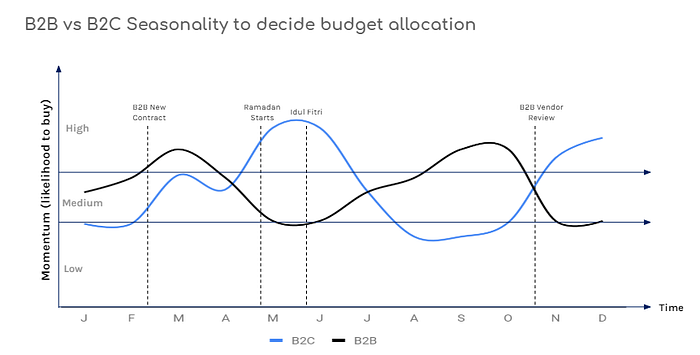
Next, identify the momentum for your Marketing campaign and Ads budget spending throughout the year. As for B2B momentum is totally the opposite from B2C segment. For example: In Indonesia, a B2C marketer in E-Commerce will spend their Advertising budget highly during Ramadan, as this is the momentum where people will shop in preparation of this festive season.
However, a B2B Marketer will hold and spend in minimum during this festive season, why? Because, people will mostly be on leave for at least 1 week. Therefore, if you spend highly on Social Media Ads, you will not get any conversion, as people will not respond to your business solution offer to improve your user daily work life or improve their businesses during their holidays.
Most importantly, understand that although the Marketing funnel stays the same with the usual, the only major differences is that in B2B setting to get 1 corporate client conversion, will take 3 different team to work in sync; (Marketing, Sales/BD and Account Management Team).

2. Designing B2B Organization Phase
From the Marketing Funnel framework above, it is important to set up 3 teams that focus on "Lead Generation", "Lead Nurture" and "Prospect" in specialize role with a shared KPI to scale, and ensure all incoming leads from your campaign are processed in timely manner.
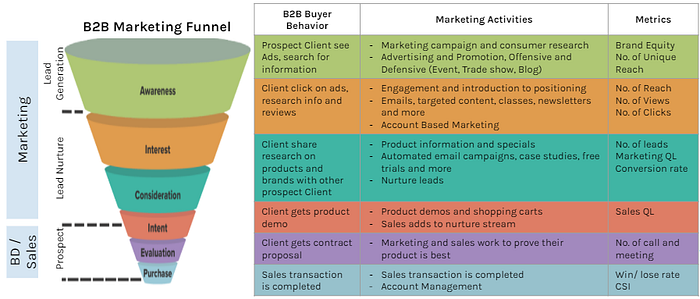
Tips in designing a B2B Marketing Organization, you will need to have "Marketing Automation" either using Hubspot or others and shared System to create effective collaboration, as information on leads might get scattered in different format between teams.
3. Create B2B Marketing Strategy Phase
Once B2B organization is set up from considering your client journey on each of the Marketing funnel and reach mutual agreement on how leads contact card will pass through different teams to be processed. Start in creating a B2B Marketing Strategy by defining each of these:
- Market and Competitor Analysis
- Market Segmentation, Targeting and Positioning
- Product/ Value Proposition
- Brand Value and Reason to Believe
- Go-to-Market Strategy (Kotler 4Ps)
- Marketing Campaign and Timeline
- Budgeting
In creating your B2B Marketing campaign, the most effective is to create "Content Marketing" communication like a research paper or info graphics talking about industry trends and findings, where you aim to be regarded as an expert/ industry leader that provide business solution for your user. Once they visit your blogs from a digital ads, it is important to focus on your lead form and landing page experience.
In comparison, 70% of marketing budget spending is mostly spend for Offline Marketing, where you provide a media/channel for your sales team to interact with prospect client through Events; PR Event, Seminar, Community Building Event or Exhibitions.
Another important tips, is to gather all required information and do weekly meeting from different departments in building your Go-to-Market strategy, to ensure as a Marketer you understand your client needs and specific wording that mostly used by them, all of these information are pooled in your Sales and Account Management team who directly interact with your user on daily basis.
4. Deploy B2B Marketing Strategy Phase
In deploying a successful Marketing Campaign, it is important to have all the enablers, trackers set up and create a monthly sharing session with your sales team, to ensure they communicate under the same value with your marketing ads and content.
The checklist I used to launch my first campaigns were to prepare:
- Homepage and Landing Page
- Lead Forms and journey
- Marketing automation set up (event trigger messages, email marketing campaign to nurture leads)
- Product/ service presentation and brochure for sales team to meet with prospects
- Sales demo assets (3min video or free trial products)
- Product/ Service value proposition introduction (30sec video)
- Press and Media Release
- Digital Marketing Ads setup
5. Sustain B2B Marketing Growth Phase
Evaluate all your Marketing Campaign effort through these metrics:
- No. of Reach
- CTR and Views
- No. of Leads Generated
- Conversion Rate of: Marketing Qualified Leads, Sales Qualified Leads
- No. of Sales Meeting
- Win/ Lose
It is important to not only monitor the outputs through all metrics mention above, but you also need to measure your Marketing input and process. What I meant by "Marketing Input" is your Assets and Collateral effectiveness through AB Testing, Sales team feedback while meeting the prospects and also to measure your Brand Equity Index (Awareness, Perception and etc).
Whereas, in Marketing Process is to measure daily your marketing and sales performance on; the marketing email delivery rate, open rate and sales response time from incoming leads to meeting and account management metrics.
Gather as much data as possible in all your client touch points, either on digital or offline marketing campaign done or from the field sales team to better your communication for improving your next marketing campaign.