

It has been a year since I wrote a little guide for people like me — self-learner product designers. I think it's time to write another part of this guide — how to grow as a product designer. This guide doesn't cover everything, but it may be useful to you. If you haven't read the first article, check it out:
Organize the process
It's not for everyone, but In my opinion, it's crucial to organize your work and study materials. Documenting your design decisions, taking notes, or collecting interesting articles or vlogs in one place is super convenient.
For me, the best tool is Notion. I use it to collect interesting articles or vlogs, document design decisions, or even write case studies. If you don't use it, I highly recommend starting.
Master design tools
To master a tool, the only way is through practice. You can practice by yourself, but if you want to save time, you'll need some guidance. There are thousands of courses, youtube videos, and articles about each design tool. Try to combine all of them to master a tool. For courses, I liked the course from Andrei Neagoie — Complete Web & Mobile Designer in 2023: UI/UX, Figma. Also, I strongly recommend using design plugins. Honestly, I can't imagine working without them.
If you use Figma, check out their Youtube channel. Watch short videos and educate yourself for free.
If you use Adobe XD, here is another great Youtube channel for you:
To save time, use shortcuts. Here is a great source for every design shortcut:
Learn fundamentals
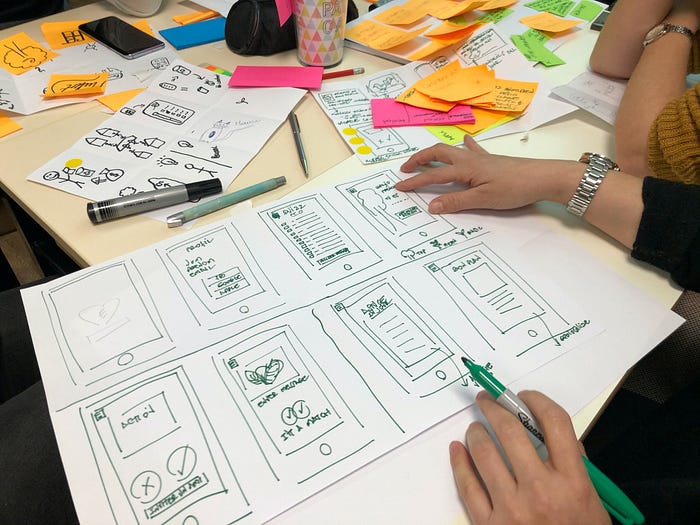
Without having a solid foundation, it's hard to learn something. There are dozens of sources about fundamentals: wireframes, user flows, sitemaps, colors, typography, shapes, forms, space, and grids; Don't spend too much time, just a few articles or videos can be enough.
Here I'll share some of the best articles I've collected:
Practice
You cannot grow as a product designer by passive learning. You need to practice, and practice a lot. It's important for your growth to work on a product. You'll do some research, define challenges and find solutions. It's far better than designing random challenges for dribble shots.
There are several ways to do this, and I have tried all of them.
Copy others
Study the work of successful designers and learn from their processes. Follow top designers on social media, read their blogs, watch their interviews and tutorials, and try to understand how they think and approach design problems.
Also, I highly recommend the cloning technique. Cloning means creating a pixel-perfect copy of your favorite website. Read my article about creating a copy of Airbnb and OpenSea 👇🏻
Work on the artificial project
If you take a course, most probably it will involve working on an artificial project. This will give you enough freedom to choose a project and practice your skillset. You can conduct discovery of products, competitive audits, and interviews, define pain points and brainstorm solutions; Basically, you can do the whole design thinking while working on the artificial project.
Also, you can use the design challenge generator tool 👇🏻
Redesign a website or app
Choose a website or application and make it better. Redesigning will benefit you in multiple ways. Define what can be improved, and in what way. For example, choose one or two functionalities and make them better. Here is my previous case study about the Tbilisi parking app redesign 👇🏻
Take side projects
The most beneficial for you as a designer is taking real, side projects. You can do it even if you have a full-time job. One way to start a side project is to volunteer. Another way is to ask around, maybe your uncle needs a website for his work? I designed a website for my boyfriend's mum and it benefited me in multiple ways:
- I had a real project in my portfolio;
- My client was a real person, so I had to work with constraints.
- I worked with the developer — he was also a beginner so it was mutually beneficial for us.
Seek Feedback
Getting feedback is one of the most important aspects of improving your skills as a designer. You can join design communities, share your work on social media, and ask for feedback from other designers or mentors.
Build a Portfolio
After finishing your first project, start building a portfolio. A portfolio is the best tool for showcasing your work and skills. You can create your website, or use platforms like Behance or Dribbble to showcase your projects, case studies, and design process.
Discover Design Systems
The design systems are becoming more and more important, and it would be helpful if you understand them. In the future, more companies will use design systems.
A design system is a set of standardized design elements that can be utilized to create a variety of applications, featuring reusable components and clear guidelines to ensure consistency across designs. Using universal assets speeds up the designing process.
For a short introduction, watch this short video 👇🏻
Material 3 and Carbon are open-source design systems, which are great source for designers. Material 3 is the latest version of Google's open-source design system. Design and build beautiful, usable products with Material 3.
Carbon is IBM's open-source design system for products and digital experiences.
Learn terminology
Knowing the terminology is essential. There are dozens of articles and guides about UX and UI terminology, but here are my favorites:
Read daily
For some people reading is not working. If you are like this, maybe watching videos can help. If you like reading, follow creators, create lists, and read. This is one of the best articles I've read in last time 👇🏻
Stay Updated
The design industry is constantly evolving, and it's important to stay updated on the latest trends, technologies, and best practices. You can follow design blogs, newsletters, podcasts, or online courses to stay informed and up-to-date.
Recommended:
High resouliton is a video series on design. This collection brings clarity to how the best companies approach, communicate, and deploy design. Watch this playlist
Conclusion
I want to share my takeaway from my journey. Learning a completely new subject takes time, and happens slowly, like hair growth. Your knowledge will grow, but you won't always see this. You must never stop learning. Be kind to yourself.