


Have you ever opened your laptop, played some music, and started building something without a plan — just because it felt good? That is vibe coding. It's a way of coding where you don't worry about rules or perfection. You just let your ideas flow and create in the moment.
Vibe coding feels like sketching with code. It may be messy at first, but it's full of energy, creativity, and often leads to surprising results.
What Is Vibe Coding?
Vibe coding is all about freedom. Instead of planning everything step by step, you simply start building. You trust your instinct, experiment, and see where it takes you. Think of it like doodling there's no pressure to make it perfect, but sometimes that doodle turns into something amazing.
Why Is Vibe Coding Booming?
- Creative freedom → Developers want to enjoy building, not just follow strict frameworks.
- Better tools → AI copilots, no-code platforms, and libraries make it easy to start quickly.
- Cultural shift → Coding is no longer only for engineers; it's becoming a creative craft.
- Burnout escape → Many developers are tired of rigid sprints and deadlines, so they turn to playful, flow-based coding.
As one tech leader said: "AI won't replace developers, but developers who use AI will replace those who don't." Tools like AI copilots fit perfectly into vibe coding, because they remove barriers and let you focus on the fun part building.
The Future Effects of Vibe Coding
The influence of vibe coding will only grow. Teams will start building prototypes faster instead of spending weeks on planning, which will help ideas reach the market quickly. We'll also see more diverse creators entering the space designers, artists, and even non-technical founders will use vibe coding to turn their ideas into real projects.
Workflows inside companies may also become hybrid. Structured coding will stay for production, but vibe sessions will be added for brainstorming and exploring new ideas. Education will also change. Instead of teaching coding only through strict rules and textbook exercises, students will learn by sketching ideas and experimenting freely.
Examples of Vibe Coding
- A designer playing with Webflow and CSS to see what looks good.
- A game developer testing mechanics in Unity without a full plan.
- A founder hacking together an AI chatbot with Copilot in one night.
- Hackathons, where teams build something in 24 hours, purely on energy and flow.
How You Can Use Vibe Coding
If you want to try vibe coding, the first step is to set the right mood. Music, lighting, or even a good cup of coffee can help you get into flow. Don't put pressure on yourself to write perfect code at the start just build and explore. Using modern tools like AI copilots, no-code platforms, or boilerplates can help you move faster and focus more on ideas than setup.
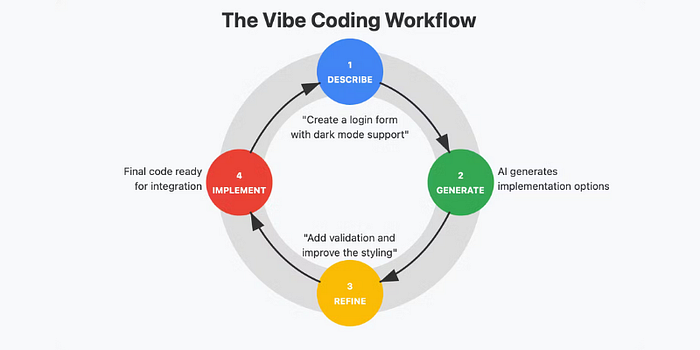
Another key is to separate your work into two phases: vibe first, refine later. Let yourself be creative in the beginning, and only worry about cleaning up your code once the idea is clear. And if possible, bring in others. Vibe coding with teammates or friends feels a lot like a jam session in music everyone adds their own touch, and together, something exciting comes out of it.
Vibe coding is not here to replace structured programming. Instead, it adds another layer to it. Just like artists start with rough sketches before creating a masterpiece, developers can start with vibes before polishing their final product.
At the end of the day, vibe coding reminds us why we love coding in the first place the freedom to create, the joy of experimenting, and the thrill of turning nothing into something, simply because the vibe was right.
Thank you! See you Later
A Message from AI Mind
Thanks for being a part of our community! Before you go:
- 👏 Clap for the story and follow the author 👉
- 📰 View more content in the AI Mind Publication
- 🧠 Improve your AI prompts effortlessly and FREE
- 🧰 Discover Intuitive AI Tools